Warning: Cannot modify header information - headers already sent in /home/u278635817/domains/mymorninglife.com/public_html/wp-content/plugins/artigosgpt/artigosgpt.php on line 29509
Warning: Cannot modify header information - headers already sent in /home/u278635817/domains/mymorninglife.com/public_html/wp-content/plugins/artigosgpt/artigosgpt.php on line 29509
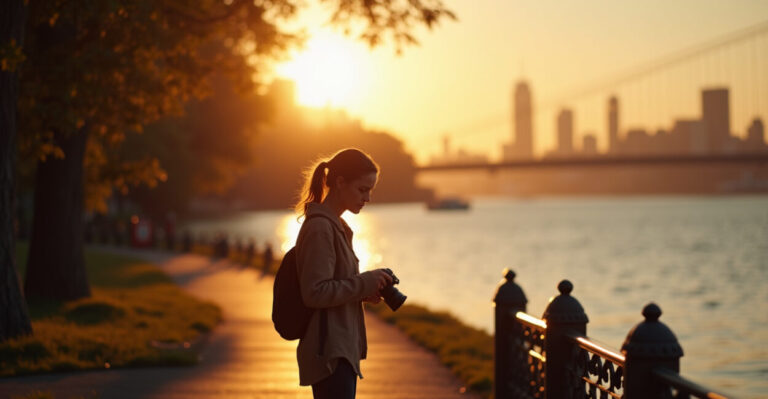
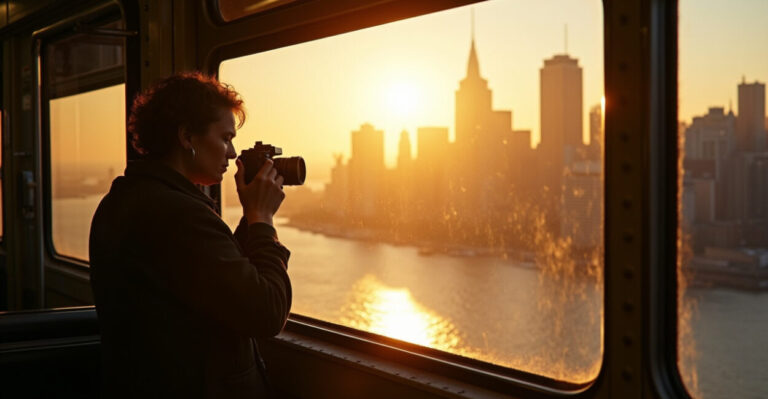
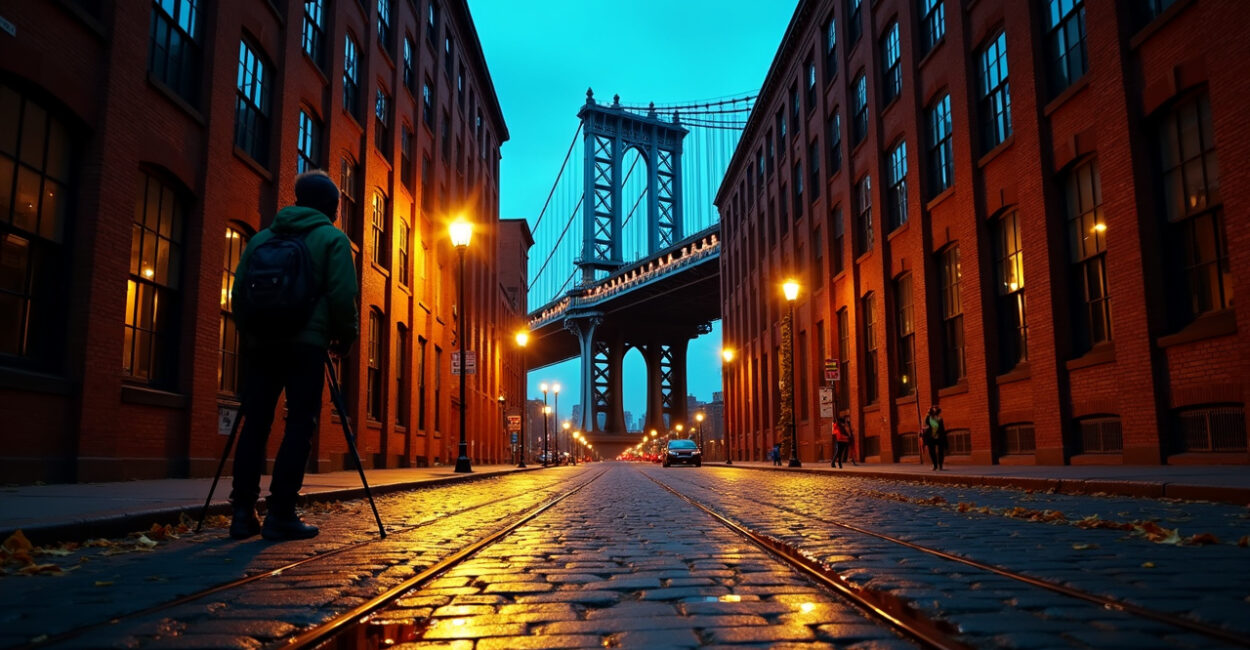
There’s a moment at dusk when the Manhattan Bridge frame in DUMBO turns a dozen phones into the same flat photo — and you can either blend in or take a shot that stops people mid-scroll. DUMBO photos can be iconic without being cliché. This guide gives practical timing, exact alleys, composition tweaks, and crowd-busting moves so you walk away with images that feel yours.
Why the Golden Hour Isn’t Always Your Best Hour
Golden hour draws the crowd, not always the best light for unique DUMBO photos. The soft light is lovely, yes — but so is standing-room-only. Try the 30 minutes before golden hour for crisp contrast, or 20–40 minutes after sunset for deeper blues and lit bridge cables. Early morning (before 7 a.m. in summer) gives clean streets and reflective puddles after rain. Each slot changes the mood and how people move through your frame. Pick the mood, then pick the minute.
The Exact Alleys and Vantage Points Locals Use (that Tourists Miss)
There are three alleys within two blocks that shift the whole composition. Front and center at Washington Street works, but step one block east to Water Street for a tighter bridge arch. Head south on Plymouth Street to catch brick textures and a low-angle perspective. For reflections, use the small cul-de-sac near Jay Street after light rain. These shifts give you control over foreground elements — parked bikes, fire escapes, cobblestones — which make your DUMBO photos feel specific, not stock.
The One Composition Rule I Break That Improves Most Shots
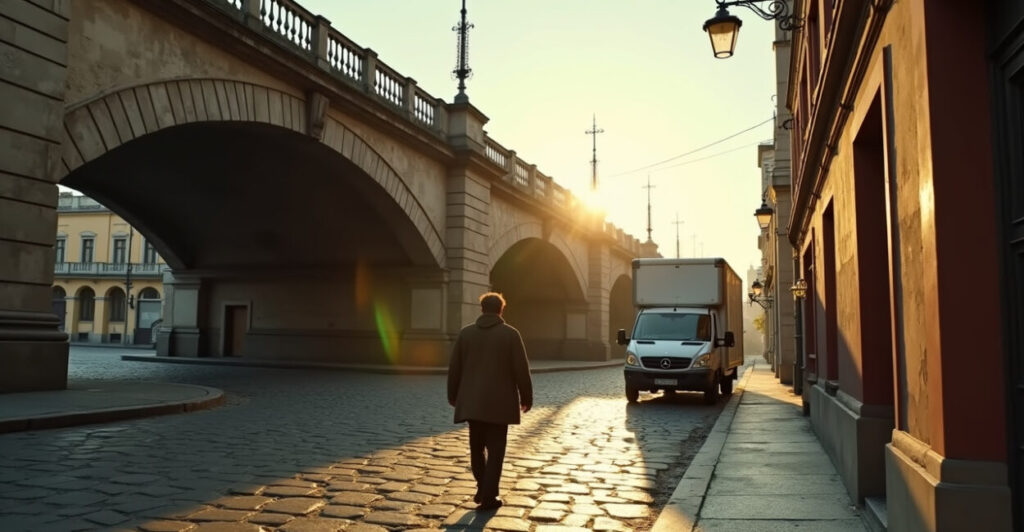
I often ignore perfect symmetry to add a human element or a leading line. Symmetry is safe; a tiny person walking, a parked delivery truck, or a tilted lamppost gives scale and a story. Try a 60/40 split: bridge frame on one side, lively street details on the other. Use foreground textures (cobblestones, puddles) as leading lines to the bridge. Expectation/Reality: expectation — pristine centered bridge; reality — a version with grit and context that feels honest and memorable.
Timing Tactics to Dodge the Tourist Crush
Two simple timing tactics beat most crowds: shift fifteen minutes or arrive staggered. Tour groups and Instagram shoots cluster at predictable times — 30 minutes before sunset and on weekend mornings. Aim 15–30 minutes earlier or later. On weekends, shoot right after brunch (midday lull) or late at night (under dramatic streetlights). If you’re with a friend, have one person act as a decoy to gently draw attention while you capture the empty space. Small timing shifts yield big differences in freedom to compose.
Camera Settings and Quick Edits for Standout Images
Lock down a three-shot workflow: exposure, detail, and mood. Start with a base exposure that preserves highlights on bridge cables. Take a detail shot at a tighter focal length for textural crops. Walk back for a mood frame with wider lens and slight underexposure to deepen color. Use a low ISO for cleaner shadows and a small aperture (f/8–f/11) for street-to-bridge sharpness. In post, increase clarity on bricks, lower highlights on sky, and add a 2–4% vignette to focus the eye.
Common Mistakes Photographers Make in DUMBO — And Exactly What to Avoid
Here are the errors that kill a great DUMBO photo and how to skip them.
- Waiting only for golden hour — you’ll fight the crowd; try the less obvious windows.
- Centered symmetry without foreground interest — adds no story; include scale or texture.
- Ignoring reflections and puddles — they add depth and color; scout after rain.
- Over-editing contrast and saturation — the bridge looks fake; aim for mood, not neon.
A Brief Mini-story That Explains Why Change Works
I once waited an hour for a perfect centered shot and left with the same photo as ten others. On a whim I circled a block, found a wet patch that mirrored a lamppost, and shot a low frame with a commuter walking toward the bridge. The image felt like a moment, not a postcard. Two days later, that off-center shot performed far better online than my “perfect” frame. Small choices — angle, foreground, timing — decide whether a photo is remembered.
For historical context on bridge architecture and preservation, the NYC government site offers solid background on the Manhattan Bridge and surrounding zoning. For public transit updates and weekend service changes that affect arrival times, check current schedules from the Metropolitan Transportation Authority.
NYC.gov resources on bridges and planning and MTA service updates can help you plan the exact minute to arrive.
Last thought: The best DUMBO photos don’t copy a postcard — they show the place from the angle only you noticed. Pick a small difference and commit to it.
What Lens Should I Bring for Classic DUMBO Photos?
For most iconic DUMBO photos, a wide-angle lens between 24mm and 35mm on full-frame (or 16–24mm on crop sensor) is ideal. It captures the bridge frame and foreground street without extreme distortion. Add a 50mm for tighter compositions and a 85mm if you want compressed backgrounds or candid portraits against the bridge. Bring a small travel tripod if you plan long exposures after sunset; it helps keep images sharp and gives you time to fine-tune composition without haste.
When is the Absolute Quietest Time to Shoot in DUMBO?
The quietest window is typically weekdays before 7 a.m., especially Tuesday to Thursday. Early mornings after a weekday rain are even better because puddles add reflections and most foot traffic pauses. Late nights (after 10:30 p.m.) can be quiet too, but lighting and safety vary by night — stay aware. If you can’t do dawn, aim for mid-afternoon on a weekday when tour groups take lunch and many locals are at work. Small shifts from peak times radically lower the crowd.
How Do I Handle People in My Shots Without Making Them the Subject?
Use people for scale and motion rather than the main subject. Shoot with a slightly slower shutter (1/30–1/60 sec) to capture a soft blur of movement while keeping the bridge sharp; it gives life without focusing on a single person. Another trick: include a small human figure at the edge of the frame to show scale. If someone blocks a perfect moment, wait a minute — often they move on. Always be respectful; if you want a clear street, ask politely and you’ll often get cooperation.
Any Legal or Permit Issues for Photographing in DUMBO?
For casual photography, no permit is required on public streets and sidewalks. Permits become necessary for commercial shoots, heavy equipment, tripods that block pedestrian flow, or if you need to control traffic or block access. For large-scale or paid shoots, contact NYC Film Office or local Parks authorities in advance. When in doubt, consult official guidance so your shoot stays legal and smooth. Respect private property and posted signage to avoid conflicts during your session.
What Quick Edits Make DUMBO Photos Pop Without Looking Over-processed?
Start by fixing exposure and white balance, then gently increase clarity to bring out brick textures. Reduce highlights slightly to recover bridge cables and brighten midtones to lift street detail. Use selective contrast on the foreground and a small vignette to guide the eye. Keep saturation modest — a 5–10% tweak often suffices. Finally, crop to remove distractions and tighten composition. The aim is subtlety: enhance what felt right in camera, don’t reinvent it in post.