

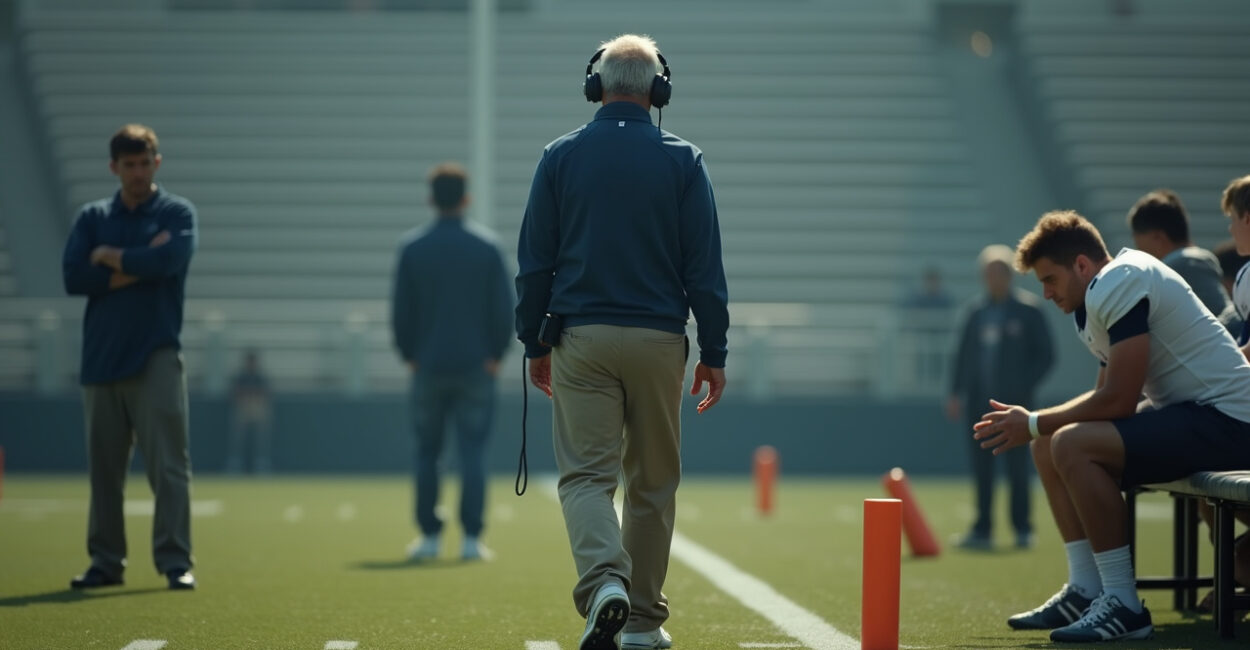
The moment a coach walks away from the sideline because his mental health is in crisis, everything around him feels fragile. That was the image when Sherrone Moore’s struggles moved from private to public — a coach, a program, a conversation that forces fans and institutions to ask uncomfortable questions. This piece looks straight at that moment: the timeline, public responses, and the systems that shape how coaches are seen and cared for.
The Moment That Made the Issue Visible
When Sherrone Moore stepped back, it stopped being just his problem. The play-by-play wasn’t what grabbed attention — it was the sudden human crack in a role built to look unbreakable. Coverage spiked, social feeds lit up, and the question shifted from “what happened?” to “why did it happen?” That shift matters because it forces stakeholders to move from rumors to facts, from blame to responsibility. Fans saw a short clip; staff felt the ripple for months.
Timeline: From Private Signs to Public Announcement
There’s rarely a single headline event — crises usually follow a pattern. In Moore’s case, small signals (missed meetings, guarded interviews) escalated into official statements and leave. The sequence matters: early stressors, mounting pressure, one visible incident, and then institutional response. Mapping that timeline shows where interventions could have been effective and where attention lagged. It also reveals how fast public opinion can outpace internal support plans.

How the Public Responded — Praise, Criticism, and Assumptions
Public reaction split along familiar lines: empathy versus performance demand. Some fans and colleagues offered support and privacy. Others demanded instant answers or replacements. That split reveals a cultural tension: we say we care about mental health, but we often treat leaders as interchangeable. Social media amplified both compassion and harsh judgment, and that amplification influenced decisions within the program and among potential hires.
The Institutional Playbook: What Universities Typically Do (and Don’t)
Universities often lack a clear, humane playbook for coaching mental health. Policies exist for conduct and leaves, but mental health protocols are uneven. Athletic departments may focus more on PR than care, offering short-term statements and sparse follow-up. Good institutions combine medical assessment, confidential counseling, workload adjustments, and clear return-to-work plans. When that’s missing, staff and athletes pick up the slack — and that’s not sustainable.
The Cultural Forces That Shape Coaching Stress
Coaching culture prizes toughness and constant performance — and punishes vulnerability. Expectations — recruiting wins, media savvy, donor pressure — compound over years. Compare expectation versus reality: coaches are treated like CEOs but insured like hourly staff. That mismatch creates chronic stress. A short comparison makes it clear: the expectation is unbroken leadership; the reality is human burnout. That gap is where policy change and cultural shift must meet.
What Went Wrong — Common Errors Institutions Repeat
Organizations usually repeat a small set of predictable mistakes. Here are the most common errors to avoid:
- Assuming PR statements replace sustained support.
- Delaying medical evaluation while legal teams assess liability.
- Isolating the coach instead of including a coordinated care plan.
- Treating time off as a punishment rather than treatment.
These errors turn a manageable crisis into a reputational and human disaster. Sherrone Moore’s case shows how quickly good intentions can be undone by bad execution.
The Path Forward: Realistic Fixes That Actually Help
Real change starts with concrete policies, not platitudes. Universities should establish clear mental health protocols for staff that include immediate clinical assessment, protected leave, phased return plans, and third-party oversight. Training for athletic staff on recognizing burnout and mandatory, confidential counseling access should be standard. Funding and donor expectations must align with these realities — otherwise, the same cycle repeats.
Sherrone Moore’s situation is a mirror. It reflects what we expect from coaches and what we refuse to provide. That tension is the real story.
NCAA policy pages and American Psychological Association resources show how institutions and clinicians frame best practices for mental health care in high-pressure roles.
What stays with me is a single image: a coach sitting alone after a game, not defeated by the score but by everything that isn’t visible on a stat sheet. If institutions want different outcomes, they have to change the script.
What Signs Suggested Sherrone Moore Needed Help?
Early indicators often include behavior changes that look small: missed meetings, guarded interviews, reduced energy, or sudden withdrawal. In Moore’s situation, people close to the program noticed shifts in routine and decision-making before the public incident. Those early signs matter because they’re opportunities for intervention. When teammates, staff, or family raise concerns, institutions should treat them as clinical flags—not performance complaints—and act quickly with assessment and support.
How Should Universities Balance Privacy and Transparency?
Balancing privacy and transparency requires a clear protocol: confirm basic facts, state that privacy will be respected, and promise updates tied to concrete milestones (medical clearance, return-to-work plan). Over-sharing violates trust; under-sharing fuels rumor. The best approach protects individual confidentiality while committing to regular, honest updates about program operations, interim leadership, and support measures so stakeholders aren’t left to guess.
Could Better Policies Have Prevented the Public Crisis?
Often, yes. Preventive policies include routine mental-health screenings, mandatory counseling access, and crisis response plans. If those systems are in place, small problems rarely turn into public breakdowns. In Moore’s case, a quicker clinical assessment and phased workload reduction might have prevented escalation. That said, prevention isn’t failproof; crises still happen. The key is timely, coordinated care when they do.
What Role Do Fans and Media Play in These Situations?
Fans and media shape the narrative fast. Sensational coverage can stigmatize and pressure institutions into premature decisions. Thoughtful reporting, however, can prompt accountability and improvements in care. Fans matter because their reactions influence donor pressure and institutional choices. If supporters demand humane treatment and informed reporting, universities are more likely to adopt better policies and offer care over optics.
How Can Coaches Protect Their Mental Health in High-pressure Roles?
Coaches should build routines that include scheduled downtime, clear boundaries between work and home, and trusted confidants outside the athletic hierarchy. Regular therapy, a medical liaison within the institution, and agreed-upon workload limits help. Importantly, coaches need contractual protections for medical leave so seeking help doesn’t risk their career. These measures reduce career-ending stress and improve long-term performance.