

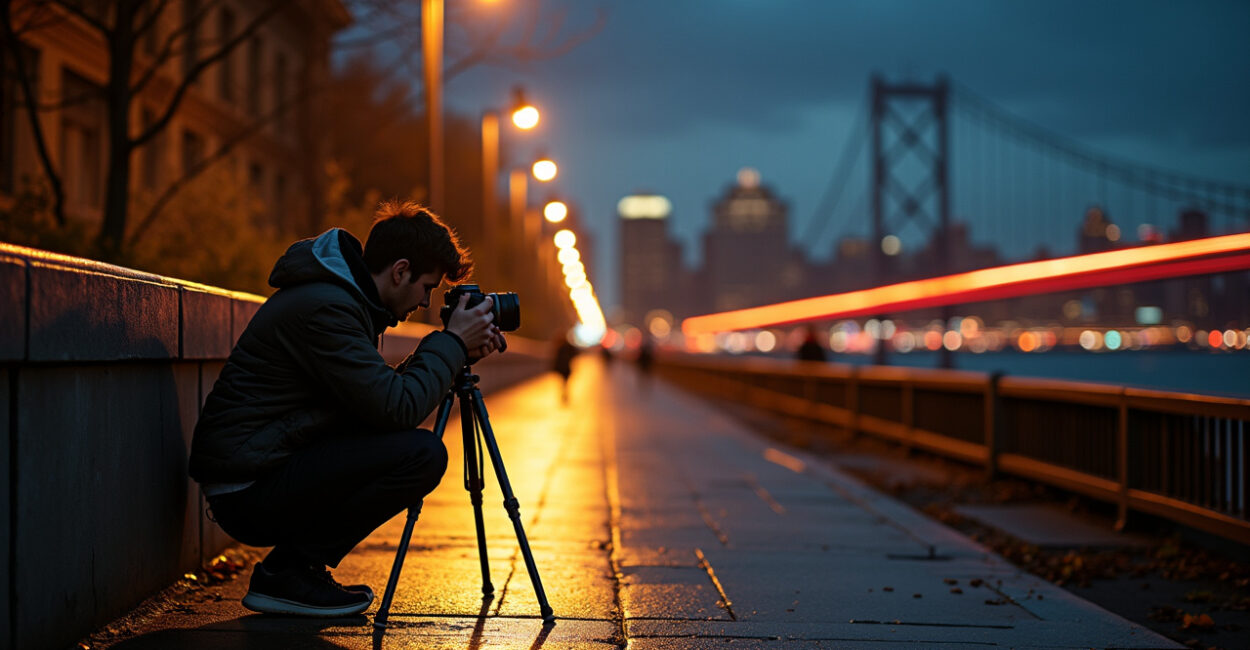
Halfway up the Brooklyn Heights Promenade, a taxi’s brake lights smear into a neon ribbon across the East River. That ribbon tells you everything about shooting Nightscapes NYC: it’s not bravery or the fanciest gear — it’s choices. The right exposure, a steady platform, and a few tricks to let the city glow without washing out the neon. Read on and you’ll stop guessing in the dark.
How to Lock Your Camera Steady When Sidewalks Wobble
Shake is the enemy of sharp night city shots. Tripods are obvious, but in NYC streets you’ll often need faster setups. Use a small travel tripod and a weighted bag. If you don’t have one, brace against lamp posts, railings, or the concrete edge of a bench and use mirror lockup or electronic front curtain shutter.
- Use a remote release or 2‑second self-timer.
- Drop to ISO 400–800 if you can’t stabilize for longer than 1/4s.
- For sub‑second exposures on the move, try panning at the speed of passing traffic for streaky light trails.
The ISO Myth: When Higher is Your Friend and When It Ruins the Shot
People say “always keep ISO low.” That’s a myth for city scenes. Modern sensors handle ISO 1600–3200 surprisingly well. Use ISO to balance shutter speed and aperture for the look you want. For skyline panoramas with stars, ISO 200–400 keeps clean tones. For neon alleys and handheld shots, ISO 1600–3200 can preserve color and let you stop motion. Know your camera’s sweet spot — shoot a quick bracket to compare noise vs detail.
Exposure Recipes for Common New York Night Scenes
Different scenes need different rules. Below are starting points you can adapt quickly.
| Scene | Aperture | Shutter | ISO | Notes |
|---|---|---|---|---|
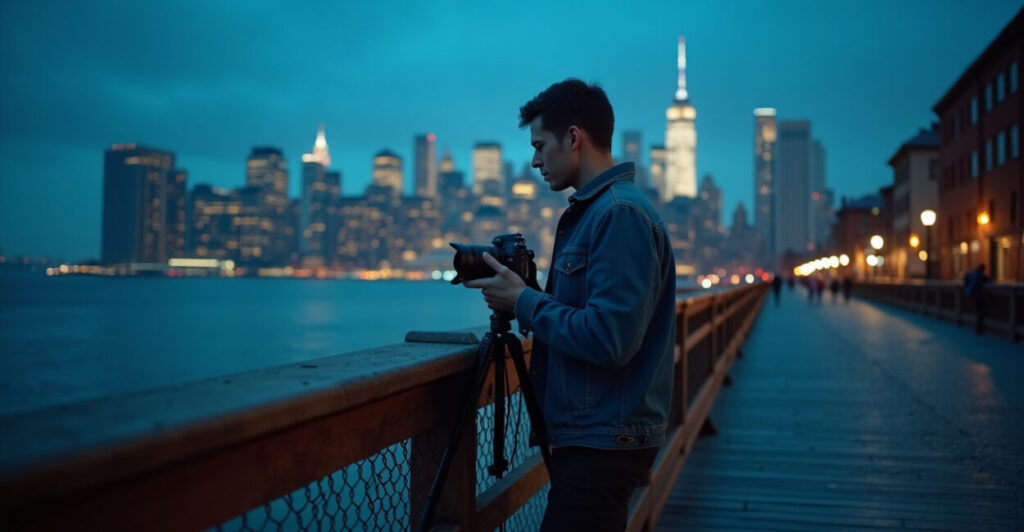
| Skyline from Brooklyn Promenade | f/8 | 4–15s | 100–200 | Use tripod, mirror lockup |
| Times Square neon alley | f/2.8–4 | 1/30–1/125s | 800–3200 | Handheld or small tripod |
| Reflections on wet pavement | f/5.6–8 | 1/2–2s | 200–800 | Polarizer off; include people for scale |
| Light trails on FDR Drive | f/11 | 10–30s | 100 | Neutral density rarely needed at night |
Neon and Color: Avoid Blown Highlights, Keep Mood
Neon wins or ruins an image fast. The city’s brightest signs clip easily. Expose for highlights, then lift shadows in post. Use spot meter on the brightest sign or take a -1.0 to -2.0 EV exposure to protect color pockets. Shoot RAW for maximum recovery. White balance: set to Auto RAW or pick a Kelvin between 3200–4200K for true neon tones. For dramatic color contrast, favor cooler overall WB and preserve warm neon as accents.
Reflection Hacks: Make Puddles and Glass Sing
Wet streets and shop windows are free studio modifiers. Move low and close to the surface—reflections get stronger at shallow angles. Use a small aperture (f/5.6–11) to keep foreground reflections sharp with the skyline. If reflections are weak, try a longer exposure to smudge commuter movement into soft color streaks. Avoid polarizers unless you want to reduce reflections; most nightscapes benefit from keeping them.
Common Mistakes That Kill a Nightscape
Here are the quick don’ts:
- Relying solely on Auto ISO — it hunts in the dark and shifts noise mid-sequence.
- Overexposing neon — highlights clip and flatten color.
- Using too wide an aperture for skyline panoramas — you lose edge-to-edge sharpness.
- Ignoring white balance — mixed light sources create muddy tones.
- Shooting handheld for exposures over 1/30s without bracing.
Fix these and your shots move from “I tried” to “that’s New York.”
When to Use Long Exposure Vs. High ISO: A Quick Decision Flow
Long exposure paints motion; high ISO freezes it. Choose by intent.
- If you want light trails, silked water, or ghosting pedestrians → tripod + long exposure (5–30s).
- If you need portability or a quick handheld shot of neon → higher ISO and faster shutter (1/30–1/250s).
- If wind or vibration is present, favor higher ISO and faster shutter to avoid blur.
Comparison: a 15s tripod shot of the skyline gives crystalline lights and reflections; a handheld ISO 1600 version captures the same scene but with grain and less dynamic range. Both are valid — pick the mood.
Small practical authority note: the National Weather Service provides reliable sunset and twilight times for planning shoots in NYC, and the NYC Department of Transportation posts area alerts that can affect access to key vantage points. Check them before you head out — timing and logistics matter as much as camera settings. National Weather Service and NYC DOT are good starting points.
Final Provocation: Shoot with a Plan, Not Just a Wish
Nightscapes NYC reward preparation. Scout at golden hour, note lamp types, and plan exposures. Take one risky frame that breaks the rules. One great image often comes from trying something dumb that turned out deliberate. Walk away when your feet hurt and your brain buzzes — the city will still be there tomorrow, and you’ll see it with fresher eyes.
What Gear Do I Absolutely Need for Nightscapes NYC?
At minimum: a camera with decent high‑ISO performance, a compact travel tripod, and a fast prime or a versatile zoom (like 24–70mm). Add a remote shutter release or use a 2‑second timer to avoid shake. Bring a small beanbag or a strap to anchor the tripod on railings. Extra: a headlamp with red mode and spare batteries. The gear list is about flexibility—lightweight, stable, and capable of handling ISO up to 3200 comfortably for handheld moments.
How Do I Expose for Neon Signs Without Blowing Out Colors?
Meter and expose for the brightest part of the neon sign, or take a bracketed sequence (-1 to +1 EV). Use spot metering on the sign and check the histogram to avoid spikes at the far right. Shooting RAW gives you headroom to recover highlights, but it’s smarter to protect them in-camera. If you must preserve shadow detail, take a second exposure for the shadows and blend in post. Keep an eye on white balance; neon shifts drastically between sources.
What Shutter Speed Should I Use for Light Trails on Manhattan Bridges?
For clean car light trails on bridges, start at 10–20 seconds and adjust based on traffic flow. Longer exposures (20–30s) produce continuous ribbons of light with minimal gaps. Use f/8–f/11 to keep both foreground and skyline sharp. If cars are sparse, increase exposure time. Lock down the tripod and use mirror lockup or electronic shutter if available. A low ISO such as 100–200 reduces noise and preserves color saturation for long exposures.
Can I Shoot Nightscapes NYC Handheld, and When Should I Avoid It?
Handheld is possible for quick neon frames or scenes lit by bright signs; use shutter speeds of at least 1/60s to minimize people blur, or 1/125s for moving cars. Increase ISO as needed but watch noise. Avoid handheld when you need pinpoint sharpness across a wide scene, like skyline panoramas or reflective river shots—these require tripod stability and longer exposures. Also avoid handheld in windy conditions; vibrations ruin detail even at faster shutter speeds.
How Do I Balance Dynamic Range Between Bright Signs and Dark Streets?
Use exposure bracketing and blend in post, or make a single exposure that preserves highlights and lift shadows selectively in RAW processing. Graduated blending works well when the bright elements are in a distinct area of the frame. If bracketing isn’t an option, prioritize highlights and accept deeper shadows for mood. Consider shooting multiple frames for focus stacking and dynamic range recovery. Finally, use local adjustments rather than global pushes to keep neon from looking synthetic.