

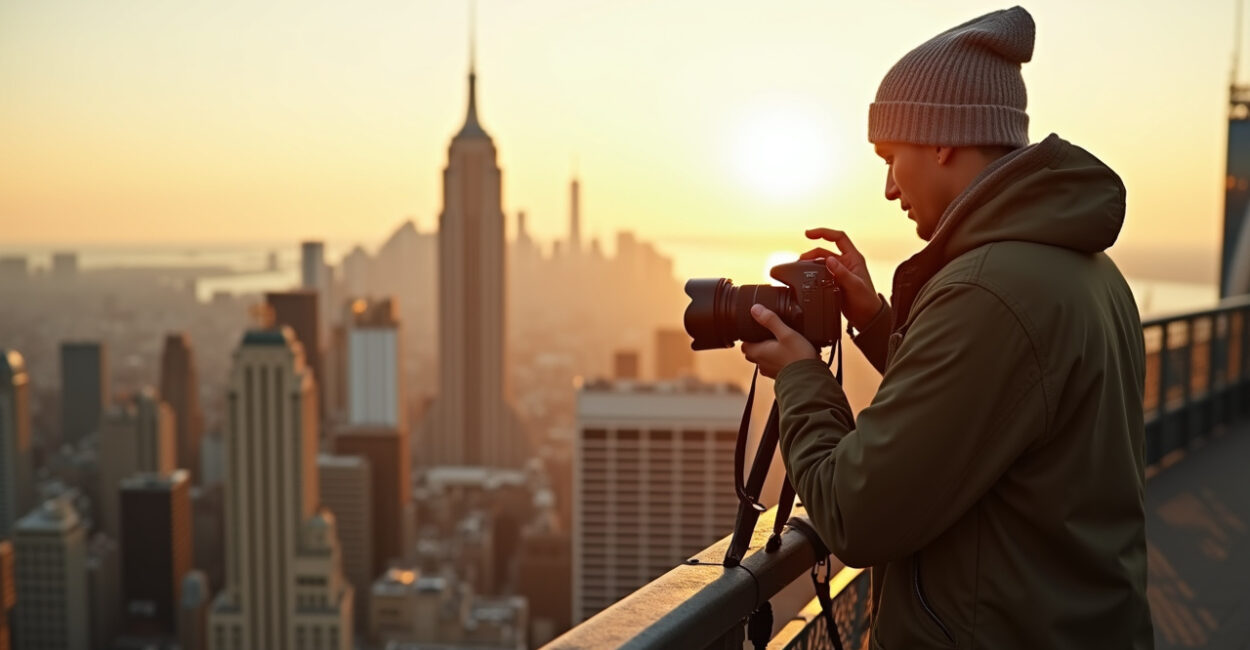
The light at the Top of the Rock can either make your photo sing or bury it in flat gray. Stand on that observation deck at the right minute and you get crisp contrast, clean shadows, and the kind of cityscape people stop scrolling for. Miss the timing or pick the wrong lens and you end up with another forgettable skyline shot. This guide gives timing, lens choices, framing tricks, weather hacks, and quick camera settings so your Top of the Rock visit pays off.
Why the 20 Minutes Around Golden Hour Matter More Than You Think
The first 20 minutes before and after golden hour change everything. Light softens, contrast drops, and skyscrapers stop acting like flat shapes. On clear days, that window gives you warm highlights and long shadows that carve the city. On hazy days, it diffuses into a pastel panorama—still pretty, but very different. Aim to be on the deck 15 minutes early. That buffer buys you scouting time and a shot before the crowd converges.
The Sunrise Vs Sunset Trade-off: Pick Your Lane
Sunrise gives calm streets and reflective glass with east-facing highlights. Sunset brings warmer tones and the Empire State backlit for drama. If you want fewer people and sharper air, choose sunrise. If you want bold warm colors and twinkling lights, choose sunset. Note: sunset is busier and often cloudier because of afternoon weather buildup. For a mix of both, check hourly forecasts and aim for mornings after cool, clear nights.
Lens Choices That Actually Change the Shot
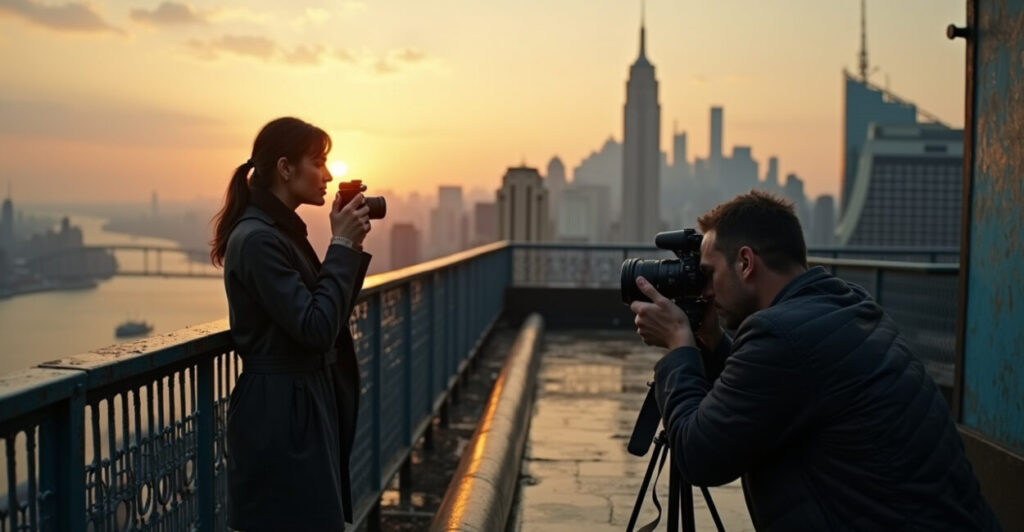
Wide-angle makes the skyline feel vast; a short tele gives compressed layers and a tight Empire State. My rule: bring a 24mm (or 16–35mm) and a 70–135mm prime. That combo covers sweeping panoramas and punchy compressions. Swap to the tele for tighter skyline slices and to flatten distance between buildings. Use a wide for foreground elements—like railing or people—to add scale and depth. Avoid ultra-zoom kit lenses if you want crispness; primes win for edge-to-edge sharpness.
Framing Tricks for Cleaner, More Dramatic Cityscapes
Forget centered horizons. Place the skyline on the lower third for sky drama, or low on the frame to emphasize foreground textures. Use strong verticals—antennae, corners, or building edges—as natural frames. Snap a few shots through the slats of the deck railing for layered depth. Also try shooting from slightly higher or lower than eye level. Small shifts often fix cluttered roofs and distracting signage without Photoshop.
Weather Secrets: When Clouds Help and When They Hurt
Cloudy days are not a loss. High, textured clouds add scale and contrast. Low, flat clouds kill contrast and mute colors. Best-case: scattered clouds at golden hour for streaky highlights and deep shadows. Check radar and wind at NOAA for reliable short-term forecasts. If visibility dips under 6 miles, pivot to graphic shots—close crops and verticals—rather than wide panoramas that will look washed out.
Quick Camera Settings for Crisp, Contrasty Images
Start at ISO 100–200, aperture f/5.6–f/8 for sharpness, and shutter speed fast enough to kill handshake—1/125s or faster if you’re handheld. For low light, use a monopod or tripod and switch to a 1/60s–1/15s bracket with careful technique. Shoot RAW and dial in -0.3 to -0.7 exposure compensation to keep highlights readable. If HDR blending, capture three stops apart to preserve window detail and skyline texture.
Common Mistakes to Avoid (and a Quick Mini-story That Proves It)
Don’t rely on the deck’s railing for composition—move, crouch, or use a longer lens instead. Common errors: shooting too late, using the wrong lens, ignoring weather, overexposing highlights, and failing to scout. A colleague once spent 30 minutes fighting glare at sunset. He switched to a 100mm, crouched behind a bench, and captured the Empire State cut by sunset rays. Same hour. Different gear and angle. That one change turned a frustrating visit into a shareable image.
Two authoritative notes: for city pollution and visibility data, refer to the EPA’s air quality resources at EPA. For official Top of the Rock hours and ticketing updates, check the venue’s site before you go.
Final Nudge
Show up early, choose one clear goal—panorama or tight drama—and bring two lenses. The deck won’t change, but your choices will. Take the shot that makes someone stop the scroll and ask where you were.
What Time Should I Arrive for Sunrise at Top of the Rock?
Arrive 20–30 minutes before official sunrise. That gives you time to get through lines and scout angles while the light is still low and soft. Early arrival also secures a good spot on the observation deck when the sun peeks up. If you want calm air and cleaner visibility, pick a clear morning after a cool night. Bring a light jacket—it can feel colder up there—and plan to shoot both before and a few minutes after sunrise for the best range of tones.
Which Lenses Are Essential for the Best Top of the Rock Shots?
Bring a wide prime (around 24mm or wider) and a short telephoto (70–135mm). The wide captures sweeping city panoramas and foreground elements for scale. The tele compresses layers and isolates landmarks like the Empire State Building. Avoid heavy all-in-one zooms if image quality is a priority. If you can only take one lens, choose a 24–70mm for flexibility. Pack a small tripod or monopod if you plan longer exposures near twilight to keep images sharp.
How Does Weather Affect Visibility and Color at the Top of the Rock?
Weather changes both clarity and mood. Clear, cool mornings yield the sharpest visibility and crisp contrast. Scattered clouds at golden hour create dramatic highlights and depth. Low, uniform clouds flatten the scene and kill color. Wind can reduce haze but also bring in new cloud layers quickly. Always check short-term forecasts from reliable sources like the National Weather Service before you go. If visibility is poor, shift to tighter frames and creative compositions rather than wide panoramas.
What Camera Settings Work Best for Handheld Golden Hour Shots?
Use ISO 100–400, aperture f/5.6–f/8, and a shutter speed that avoids blur—typically 1/125s or faster for handheld. If light drops, increase ISO before dropping aperture to keep sharpness. Shoot RAW to recover shadows and highlights later. Try slight negative exposure compensation (-0.3 to -0.7 EV) to protect highlights on glass and reflective building surfaces. If you own image stabilization, engage it; if not, brace against railings or use a monopod to steady longer exposures during twilight.
Can I Shoot Long Exposures from the Top of the Rock, and How?
Yes, but you need a stable setup. Bring a compact tripod or monopod and secure it to avoid jostling from wind or crowds. Use a remote shutter or a two-second timer to cut vibration. Start with ISO 100, aperture f/8–f/11, and experiment with shutter speeds from 1/4s to several seconds depending on light. For nighttime trails and city glow, bracket exposures and combine them in post. Keep an eye on lights and moving objects—long exposures blur traffic nicely but can wash out small highlights if overdone.