

Do you feel like meal prep promises less time and more sanity but ends up another chore? Meal prep can transform rushed weekdays into calm, nourishing routines when rethought for 2025 realities.
In a world of hybrid work, tighter schedules, and craving for fresh flavors, Meal prep must be smarter: portable, freezer-friendly, and joyful. This piece shows how Mason jar salads and frozen quinoa grain bowls solve weekday lunch friction.
Read on to discover quick systems, freezer strategies, ingredient combos, and practical steps to make Meal prep effortless, tasty, and reliable for busy 2025 lives.
Why Rethink Meal Prep For 2025
Busy lives demand efficient meal planning, batch cooking, and grab-and-go solutions. Meal prep now favors preservation, flavor layering, and portable containers.
With changing work patterns and tighter time windows, meal planning, portion control, and nutrition balance matter more than ever for weekday meals and long-term habits.
Mason jar salads as a fresh solution
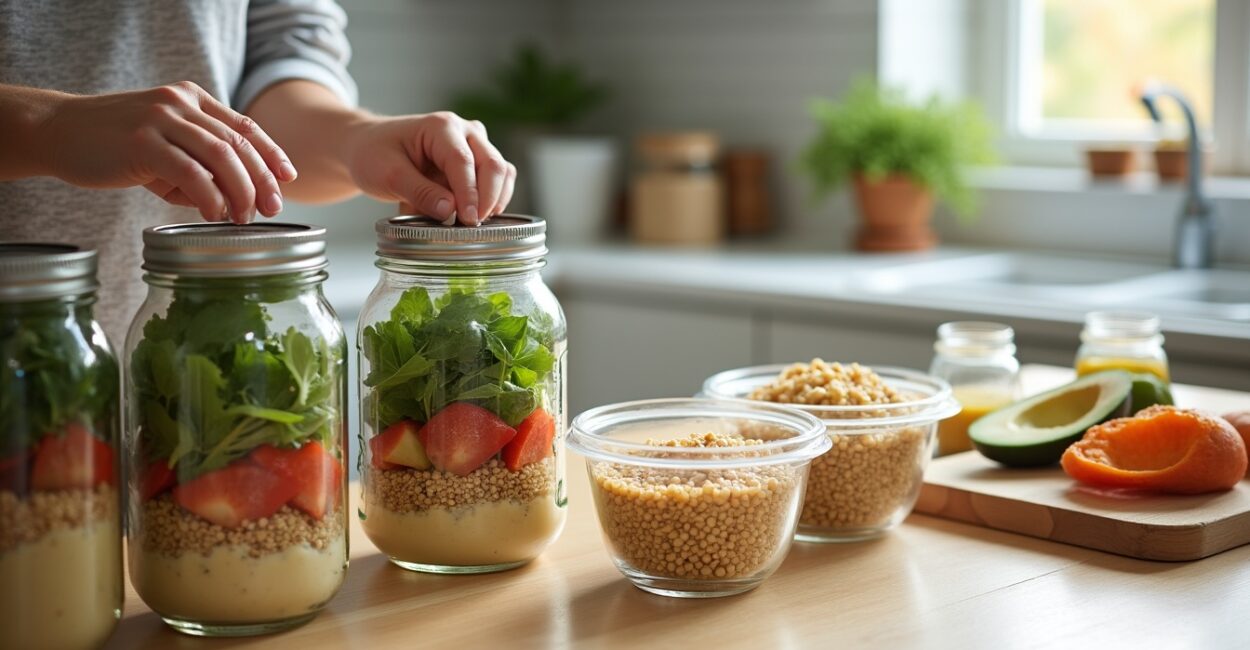
Mason jar salads protect crunch and dressing separation using layered vegetables, grains, and proteins. They’re portable, visually appealing, and fridge-stable for days.
Layering keeps textures fresh while providing fiber, vitamins, and easy assembly. Use sturdy greens, roasted veggies, and a protein base like chicken or chickpeas.
Frozen quinoa grain bowls for convenience
Frozen quinoa grain bowls freeze well, retain nutrients, and reheat evenly. They give weekday lunches that feel homemade with minimal active time.
Combine cooked quinoa, roasted vegetables, and a sauce packed separately. Freeze in single portions for effortless reheating and balanced macros.
Essential Tools And Pantry Staples
Right containers, airtight bags, and a good freezer change the Meal prep game. Mason jars, silicone trays, and airtight tubs matter for longevity and convenience.
A smart pantry of grains, canned beans, spices, and dressings speeds batch cooking and flavor adaptation across weekly menus and leftovers.
Must-have containers and gadgets
Invest in wide-mouth Mason jars, BPA-free containers, and a microplane. These support layering salads, freezing bowls, and quick zesting for fresh flavor.
Reusable silicone bags, instant-read thermometers, and a sturdy cutting board reduce friction and speed up weekly prep sessions significantly.
Pantry staples to stock weekly
Keep quinoa, brown rice, canned tomatoes, beans, olive oil, vinegars, and spices on hand. They form the backbone of nutritious, transportable meals.
Frozen veggies, lemons, tahini, and shelf-stable proteins like canned tuna or chickpeas ensure you can assemble Mason jar salads and grain bowls any day.

Designing Balanced Mason Jar Salads
Layer with dressing at the bottom, sturdy vegetables next, grains or proteins mid, and greens on top. This structure preserves crunch and flavor for days.
Think color, texture, and macro balance: combine healthy fats, lean proteins, fiber-rich grains, and varied vegetables to keep lunches satisfying and nutritious.
Layer order that preserves freshness
Place dressing first, then hearty veggies, then grains or proteins, and finish with delicate greens. Shake into a bowl before eating for optimal texture.
Seal jars tightly and store upright. Most Mason jar salads last three to four days, depending on ingredients and dressing acidity.
Flavor combinations that travel well
Try Mediterranean (cucumber, feta, chickpeas, lemon-oregano) or Asian (edamame, carrot, sesame-tamari, cilantro) for bold, fridge-friendly flavors.
Use preserved ingredients like roasted peppers or pickled onions for brightness. Herbs and acidic dressings keep the flavors lively across weekdays.
Freezing And Reheating Quinoa Grain Bowls
Cook quinoa to slightly al dente, cool quickly, and portion into freezer-safe containers. Add roasted veggies and protein, then freeze flat for quick thawing.
Reheat gently in a microwave or stovetop with a splash of water or broth. Add fresh toppings after reheating to restore texture and freshness.
Best practices for freezing grains
Cool cooked quinoa rapidly to avoid bacterial growth, portion into meal-sized containers, and label with date and contents for easy rotation.
Freeze in thin layers to speed thawing and preserve texture. Use airtight containers or vacuum-sealed bags for best quality up to three months.
Reheating tips for busy weekdays
Microwave covered with a damp paper towel or reheat on low heat with a splash of stock. Stir gently to loosen and avoid dryness.
Add crunchy toppings and fresh herbs after reheating. A squeeze of lemon or a drizzle of vinaigrette brightens frozen bowls instantly.
Weekly Workflow: A Repeatable System
Create a short, repeatable Meal prep routine: plan, shop, batch cook, assemble, and store. Systems reduce decision fatigue and increase consistency.
Block 60–90 minutes on a weekend or midweek reset to prepare bases, roast veggies, and portion jars or bowls for the coming days.
Simple weekly checklist
- Plan two salad and two bowl variations for the week.
- Shop for fresh produce, proteins, and pantry staples.
- Batch cook grains and roast vegetables.
- Assemble Mason jars and freeze grain bowls in portions.
- Label and store for grab-and-go weekdays.
Time-saving batch-cook methods
Roast a large sheet pan of mixed vegetables while quinoa cooks. Use the oven for proteins like salmon or tofu simultaneously.
Divide cooked ingredients into portions immediately to avoid over-handling. Efficient sequencing turns 90 minutes into a week’s worth of lunches.
Nutrition, Variety, And Personalization
Balance calories, protein, fiber, and healthy fats. Meal prep isn’t one-size-fits-all — personalize for energy needs, dietary preferences, and flavor goals.
Rotate proteins, grains, and dressings to avoid boredom. Use seasonal produce and global sauces to keep meals exciting and nutrient-dense.
Macro-friendly swaps and upgrades
Swap quinoa for farro or barley for different textures. Increase protein with tempeh or Greek yogurt-based dressings to meet satiety goals.
Add seeds, nuts, or avocado for healthy fats. Simple swaps tailor meals for weight goals, athletic recovery, or general wellness.
Keeping variety without extra time
Mix three sauces and four proteins into a rotation for dozens of combinations. Use spice blends to make similar ingredients feel new.
Prep a few versatile dressings and toppings. Recombining bases with different condiments creates fresh meals without more cooking time.
Costs, Sustainability, And Storage Strategies
Meal prep saves money and reduces food waste when planned thoughtfully. Bulk grains, seasonal produce, and freezer use maximize value.
Choose reusable containers and compost food scraps to reduce environmental impact. Efficient storage extends freshness and improves weekday convenience.
Quick comparison: Mason jar salads vs frozen quinoa bowls
| Feature | Mason Jar Salads | Frozen Quinoa Bowls |
|---|---|---|
| Prep time | 15–25 minutes per batch | 30–45 minutes to cook and portion |
| Shelf life | 3–5 days refrigerated | Up to 3 months frozen |
| Texture on eat | Crunchy and fresh | Warm and hearty |
| Best for | Immediate weekday lunches | Freezer-first, reheatable meals |
Budget-friendly shopping tips
Buy grains and legumes in bulk, choose seasonal produce, and use frozen vegetables when affordable. Plan recipes around sales and leftovers.
Cook large batches and freeze extras. Proper portioning prevents overeating and stretches grocery budgets across multiple meals.
Sustainable storage and labeling
Label containers with contents and date. Use glass jars and reusable bags to reduce single-use plastic and improve long-term storage safety.
Rotate older items forward. A FIFO (first-in, first-out) system prevents waste and keeps daily meals consistently fresh.
Conclusion — Make Meal Prep A Joyful Habit
Rethinking Meal prep with Mason jar salads and frozen quinoa grain bowls turns weekday stress into predictable nourishment. Small systems free mental energy.
Start simple: choose two jar salads and two frozen bowls, commit one hour to batch-cook, and enjoy the calm of ready-made, delicious weekday meals.
Faq
How long do Mason jar salads last in the fridge?
Most Mason jar salads keep well for three to five days when layered correctly with dressing at the bottom and greens on top. Use hearty ingredients like carrots or cabbage to extend texture life. Store upright, check for softness, and consume within the week for best quality and safety.
Can quinoa grain bowls be frozen and reheated without losing texture?
Yes, quinoa freezes and reheats well if cooked slightly al dente and cooled quickly before freezing. Portion into airtight containers and reheat gently with a splash of liquid. Fresh toppings restore texture. Follow safe thawing practices for best results and food safety.
What are quick protein options for both jars and bowls?
Efficient proteins include canned tuna, rotisserie chicken, chickpeas, tempeh, and tofu. These store well in the fridge or freezer, integrate easily into Mason jar salads or quinoa bowls, and provide balanced macros without long cooking times, ideal for busy schedules seeking nutritious lunches.
How can I prevent salads from becoming soggy midweek?
Prevent sogginess by layering: dressing first, durable veggies second, grains and proteins third, greens last. Keep jars sealed and upright. Avoid soft ingredients like tomatoes near greens; add them just before eating. Proper acidity in dressings can also preserve texture longer.
What schedule works best for busy people to maintain Meal prep?
Block 60–90 minutes once or twice weekly to batch-cook grains, roast vegetables, and assemble jars or frozen bowls. Use a simple rotation of two to three base recipes, vary dressings, and label portions. This routine reduces daily decision fatigue and increases consistency.
Further reading: check guidance on balanced meals from Harvard T.H. Chan School of Public Health and freezing safety at USDA.