Warning: Cannot modify header information - headers already sent in /home/u278635817/domains/mymorninglife.com/public_html/wp-content/plugins/artigosgpt/artigosgpt.php on line 29509
Warning: Cannot modify header information - headers already sent in /home/u278635817/domains/mymorninglife.com/public_html/wp-content/plugins/artigosgpt/artigosgpt.php on line 29509
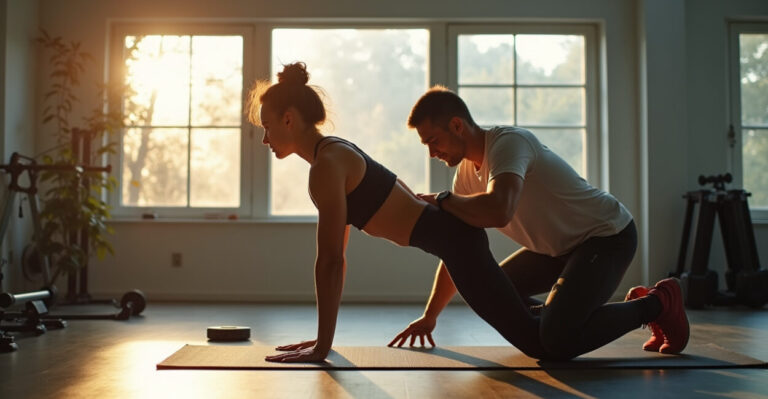
Three minutes into a sweat session I didn’t plan, my shoulders screamed and my spine felt like a locked suitcase. I rolled out a mat, did a 20-minute yoga flow, and walked out taller, calmer, and surprisingly stronger. That’s the power I want to give you: short sequences that build strength and loosen joints, whether you’re finishing a lift or need a focused stand-alone practice.
1. The Quick Win: Why 20 Minutes Actually Moves the Needle
Twenty minutes can change how you move for the rest of your day. Yoga done with clear intention gives both strength and mobility because it targets end-range control and mid-range stability at once. In practical terms: holding a loaded lunge builds single-leg strength, while flowing through a low lunge with breath opens the hip capsule. Many underestimate short sessions—expect visible posture and breathing improvements in a week if you practice three times. Yoga isn’t always slow; it can be deliberate, challenging, and efficient.
2. Flow a — Strength-focused: Full 20-minute Sequence
Goal: build real-world strength without bulky equipment. This is a compact sequence you can do after resistance training or on its own. Follow pose order, breathe with purpose, and use the scaling notes to make it harder or easier.
- 0:00–2:00 — Cat/Cow with 4 deep diaphragmatic breaths (warm-up)
- 2:00–6:00 — Sun Salutation A x3 — inhale reaches, exhale fold; add chaturanga for strength
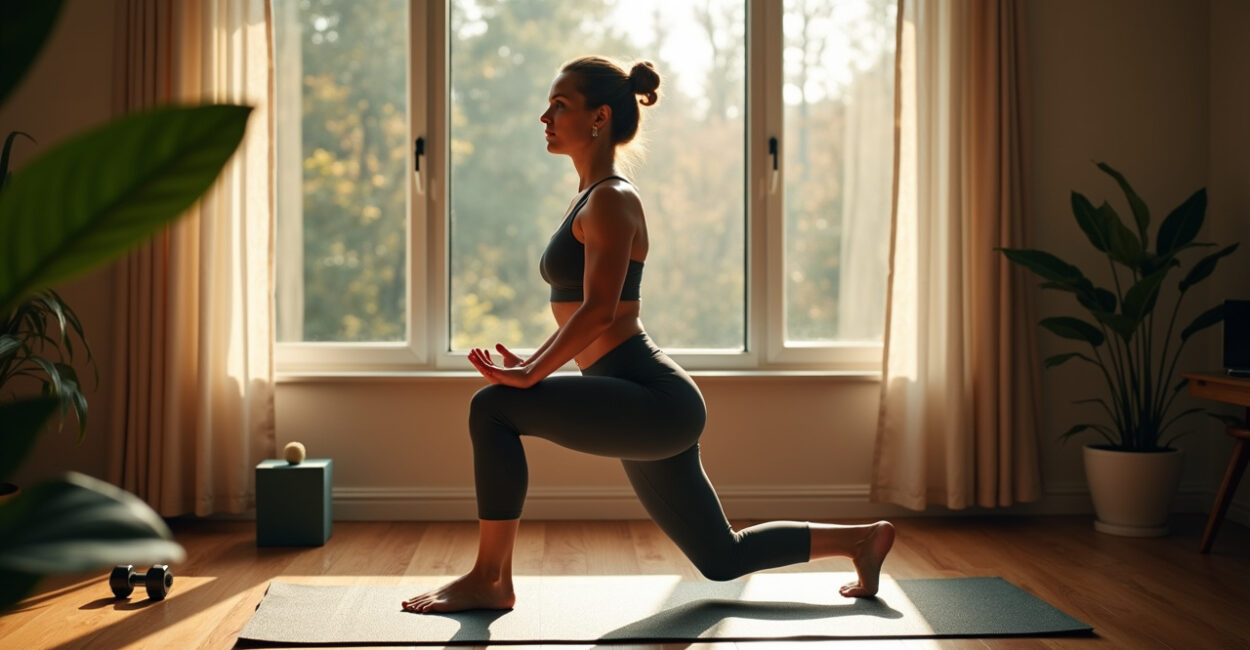
- 6:00–10:00 — High lunge flow (5 breaths each side) — hold final rep for 30s
- 10:00–14:00 — Warrior II into Reverse Warrior (3 rounds each side) — focus on knee tracking
- 14:00–18:00 — Three-legged plank to knee drive x6 each side (core + hip flexors)
- 18:00–20:00 — Bridge hold (2 x 30s) then counterpose: supine twist
Breathing cue: breathe into the belly on inhales; firm the core on exhales. Scaling: drop to knees for plank variations; use blocks under hands for lunges.

3. Flow B — Mobility-focused: Open, Release, and Restore in 20
Goal: regain range without losing strength. This flow is intentional and slow. It targets stiff shoulders, tight hips, and a guarded thoracic spine—areas that kill mobility. Start with diaphragmatic breathing to calm the nervous system. Move through long holds (6–8 breaths) and small active movements inside those holds to teach control at end ranges. Yoga here acts like a targeted physical therapy session but with flow and breath. Use this after cardio or a desk day to feel immediate flexibility gains.
4. The Sequence Cheat Sheet: Pose Order, Cues, and Scaling
Simple structure wins: warm, load, challenge, release. Here’s a compact cheat sheet you can memorize and use any time.
- Warm: Joint circles, cat/cow — 2–3 minutes
- Load: Standing lunges, plank variations — build strength
- Challenge: Balance holds, single-leg moves — test stability
- Release: Long hip and thoracic holds — restore mobility
Key cues: “lift through the sternum” for thoracic extension, “anchor the back heel” for Warrior II stability, and “soften the jaw” to drop unnecessary tension. Scaling: use blocks, straps, or a chair. For strength increase, slow the lowering phases—eccentric control builds muscle quickly in yoga too.
5. What Most People Do Wrong (and How to Fix It)
Common mistake: mistaking motion for mobility. People often flow fast and assume mobility improved. Reality: range without control is injury waiting to happen. Fix it by adding active holds—move inside the end range rather than flopping into it. Another error is skipping breath cues; breath guides tension and depth. Finally, too much stretch, too little load—add isometric holds or slow negatives to translate range into usable strength. These small changes turn yoga from a feel-good pastime into practical movement work.
6. A Surprising Comparison: Yoga Vs. Traditional Stretching
Expectation: stretching makes you flexible; yoga builds strength. Reality: well-designed yoga does both.
Think of traditional static stretching as a key that opens a lock. Yoga is the combination lock—once opened, it teaches you how to hold, move, and control that new range. After six weeks of 20-minute yoga flows, people often report equal or greater functional gains than with static stretching alone. For a deeper dive into mobility science, see research on muscle-tendon adaptation at NCBI and recovery guidelines from established sports medicine sources like Hospital for Special Surgery.
7. Quick Program: Three 20-minute Sessions for a Week
Play with emphasis: strength, mobility, and a hybrid day. Here’s a simple schedule that fits most lives:
- Day 1 — Strength Flow A (post-lift or standalone)
- Day 3 — Mobility Flow B (after long sit or cardio)
- Day 5 — Hybrid: short strength + long hip holds
Mini-story: A friend who only ran and lifted found her knee pain went away after a week of two 20-minute sessions. The difference wasn’t fancy gear—just attention to hip control and breath. That’s the beauty of short, smart yoga practice: high ROI for time spent.
Now: pick one sequence and commit for three sessions. Small, consistent practice beats sporadic perfection. Your joints, posture, and daily energy will notice fast.
Closing
Twenty focused minutes of yoga can make you stronger, freer, and less prone to aches. Not tomorrow—today. Roll the mat, breathe with intent, and let the next two dozen minutes change how you move.
How Often Should I Do These 20-minute Yoga Flows to See Results?
Aim for three sessions a week to notice meaningful change in strength and mobility within two to four weeks. Consistency is the lever: short daily doses work too, but three well-executed 20-minute sessions combine recovery and stimulus effectively. If you pair a flow after strength training, reduce intensity to prioritize recovery. Track a simple metric—comfort in a deep squat or shoulder reach—to see objective progress. Adjust based on soreness; these flows are flexible and scale easily.
Can Beginners Safely Follow These Sequences?
Yes. Every sequence includes scaling options so beginners can use knees, blocks, or a chair to reduce load. Start slow: focus on breath cues and form rather than depth or range. A beginner should prioritize control—steady progress beats overreaching. If you have a specific injury or condition, consult a clinician. Otherwise, the 20-minute length is ideal: long enough to gain benefit, short enough to avoid overuse. Progress by adding reps, longer holds, or reduced support.
Should I Do These Flows Before or After Strength Training?
Both options work but serve different goals. Do the strength-focused flow after lifting to target accessory strength and help recovery. Use the mobility flow as a warm-up before heavy lifts to open joints and improve movement patterns. If you’re pressed for time, a hybrid 20-minute session that includes dynamic mobility then light strength work can prime performance. Listen to your body: if you feel drained, prioritize mobility and save maximal effort for your main lift day.
What Equipment or Props Are Helpful for These 20-minute Flows?
Minimal gear is needed: a mat, a yoga block (or stack of books), and a strap (or towel) cover most scaling needs. A chair helps for balance or to offload weight during plank or standing poses. For added resistance you can use light dumbbells in standing flows, but they’re optional. The real leverage comes from breath control and targeted holds, not equipment. Keep props simple and use them to refine alignment and comfort, especially if you’re rehabbing an area.
How Do I Know If I’m Pushing Too Hard During a Flow?
Pay attention to sharp pain, joint grinding, or breath-holding—those are signs to back off. Good discomfort feels like a burn in working muscle and improves over sessions; bad pain is localized and sudden. Use pain as feedback: reduce range, add support, or shorten holds. Recovery markers—sleep quality, mood, and morning stiffness—also tell you if intensity is right. When in doubt, favor control and breath. A sustainable practice is consistent, not maximal every time.