

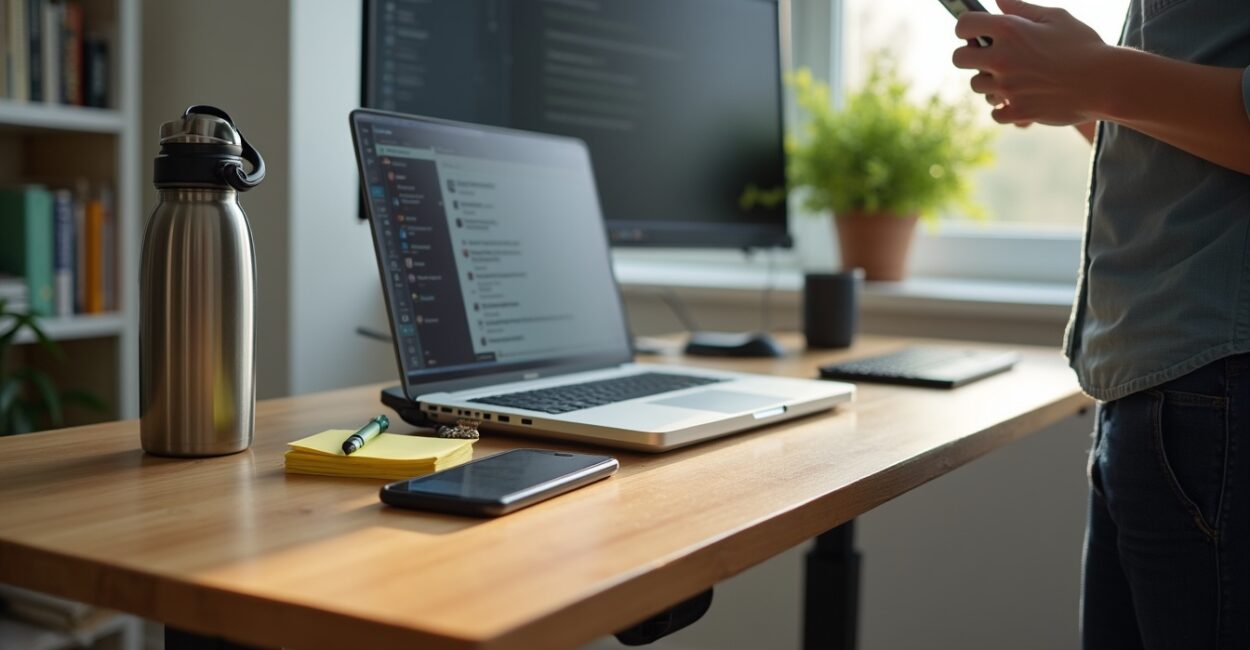
Remote productivity is more than ticking boxes — it’s the art of staying focused, creative, and healthy while working away from the office. Discover practical gear and routines that transform distractions into momentum.
In a world where distributed teams, hybrid schedules, and asynchronous communication dominate, optimizing remote productivity is essential for career growth and wellbeing. This guide pairs ergonomic choices, premium audio, and communication boundaries to boost focus.
Read on to learn high-impact strategies: how a standing desk and Sony WH-1000XM5 headphones change your workflow, and concrete Slack boundary tips to protect deep work and mental space.
Contents
ToggleWhy Remote Productivity Matters Now
Remote productivity determines output, work-life balance, and team cohesion across time zones. It influences retention, creativity, and long-term performance for remote workers and managers alike.
With global hiring and flexible schedules, optimizing for focus, ergonomics, and communication becomes a competitive advantage for individuals and organizations striving for sustained success.
The real cost of poor setup
Poor ergonomics and constant interruptions erode focus, increase fatigue, and reduce creativity. Simple changes can reverse decline and restore consistent output.
Prioritizing posture, sound control, and messaging boundaries directly improves attention, reduces burnout risk, and raises perceived professionalism in distributed teams.
What success looks like
Remote productivity success shows up as predictable deep-work blocks, fewer context switches, and measurable outcomes. It’s sustainable, not frantic, and supports wellbeing.
Teams that value focus report higher creativity, clearer priorities, and stronger cross-time-zone collaboration—outcomes driven by intentional tools and habits.
Ergonomics: Standing Desks That Boost Focus
A standing desk reduces sedentary harm, increases blood flow, and changes your mental state. Small posture shifts often yield big productivity gains for remote workers.
When paired with movement routines and proper monitor height, a standing desk becomes a productivity lever that supports focus, energy, and long-term health.
Choosing the right standing desk
Select a desk with stable lift, programmable heights, and sufficient surface for monitors and accessories. Durability matters for daily transitions between sitting and standing.
Consider motor noise, weight capacity, and cable management. A well-chosen desk integrates with existing equipment and encourages movement throughout the day.
Daily standing routines
Alternate sitting and standing in 30–60 minute blocks to maintain circulation. Pair standing with active tasks like calls or creative work for variety and momentum.
Use a timer, change shoes, and include brief stretches. These micro-habits sustain comfort and make standing a productive, lasting habit.
Sound and Focus: Sony Wh-1000xm5 Headphones
High-quality noise cancellation can be transformative for remote productivity. The Sony WH-1000XM5 blocks distractions, improves concentration, and elevates audio clarity for calls and music.
These headphones support spatial audio, adaptive ANC, and long battery life—features that help you enter deep-work states in noisy home or co-working environments.
Why ANC matters for deep work
Active noise cancellation reduces background noise, lowering cognitive load and enabling longer periods of uninterrupted concentration. It’s a core tool for remote focus.
ANC paired with a consistent routine signals the brain: it’s time to focus. Over time, the headphones become a behavioral cue for sustained attention.
Optimizing headphone use
Use ambient sound modes for quick situational awareness. Keep battery cycles healthy and adjust EQ for voice clarity during calls and reduced fatigue for long sessions.
Combine headphones with ergonomic breaks and standing routines to maintain comfort and prevent sensory overload during extended work blocks.
Communication Boundaries: Slack Tips That Protect Focus
Slack and instant messaging can fragment your day. Clear boundaries and settings protect deep work and reduce reactive stress for remote teams.
With thoughtful status use, scheduled notification windows, and channel guidelines, Slack can support asynchronous productivity without constant interruption.
Set status and notification rules
Use focused statuses and do-not-disturb windows to signal deep work. Encourage teammates to respect these indicators for uninterrupted time blocks.
Customize notification priorities and mute nonessential channels. A disciplined notification strategy reduces context switching and preserves attention.
Channel etiquette and expectations
Define channel purposes and response-time expectations. Use threads and pinned resources to reduce repetition and keep channels organized for async collaboration.
Encourage short updates and async decision notes. Clear conventions cut down on redundant pings and make communication efficient and predictable.
Combining Gear and Habits for Consistent Output
Remote productivity is best when equipment and routines align: use a standing desk, noise-cancelling headphones, and Slack boundaries together for compounding benefits.
Small combos—standing during creative work, WH-1000XM5 for focused sessions, and strict Slack windows—create a rhythm that boosts clarity, speed, and satisfaction.
Designing your productivity stack
Map your day into deep-work blocks, collaborative windows, and buffer times. Match each block to gear and environment for seamless transitions.
Prioritize one or two tools, then refine routines. Consistent repetition turns deliberate practices into effortless productivity habits over weeks.
Measure what matters
Track output, not hours. Use short weekly reflections to adjust your desk setup, headphone use, and Slack rules to continuously improve focus and wellbeing.
Quantify deep-work minutes and blocked interruptions. Over time, data guides small improvements that compound into meaningful performance gains.
Implementation Plan and Quick Wins
Take immediate action with a simple plan: adjust ergonomics, optimize audio, and lock down communication rules. Quick wins build momentum for larger changes.
Follow a short roadmap to embed habits and evaluate impact. Small shifts in environment and policy produce clear boosts in remote productivity.
Four-step setup checklist
- Assemble and calibrate your standing desk to ergonomic heights.
- Pair your Sony WH-1000XM5 and set adaptive ANC preferences.
- Schedule two daily deep-work blocks and enable DND during them.
- Create Slack channel guidelines and set clear response expectations.
Execute these steps over a single week. Review comfort and focus after seven days and iterate where needed to lock improvements in.
Quick wins for today
Clear your workspace, enable focus mode on headphones, and silence nonessential Slack channels. These actions reduce friction and immediately increase concentration.
Short, consistent rituals—like a five-minute setup before each block—make it easier to enter flow and maintain reliable remote productivity.
Costs, Roi, and Practical Comparisons
Investing in a standing desk and premium headphones often pays for itself through improved concentration, fewer sick days, and higher-quality output in remote roles.
Compare costs against productivity gains and health benefits to justify purchases—small investments can yield sustained returns in performance and wellbeing.
Budget vs. premium gear
Basic sit-stand desks and mid-range headphones are affordable. Premium options like stable electric desks and WH-1000XM5 deliver better durability and superior experience.
Assess lifespan, warranty, and ergonomic features. Often, higher upfront cost reduces replacement cycles and supports consistent, long-term productivity.
Cost-benefit snapshot
| Item | Average Cost | Key Benefit | ROI Estimate |
|---|---|---|---|
| Electric standing desk | $300–$800 | Reduced fatigue, improved posture | Months to 1 year via reduced absenteeism |
| Sony WH-1000XM5 | $400–$450 | Superior ANC for deep focus | Immediate productivity increase |
| Slack workflow setup | Free–$50 (tools/guides) | Fewer interruptions, faster decisions | Weeks via time reclaimed |
Conclusion — Make Remote Productivity Your Superpower
Remote productivity combines thoughtful gear, deliberate habits, and clear communication. A standing desk, Sony WH-1000XM5 headphones, and Slack boundaries create a reliable framework for deep work.
Start small: choose one change this week and measure impact. Over time, these choices compound into sustained focus, creativity, and greater job satisfaction for remote professionals.
Faq
How do standing desks improve remote productivity?
Standing desks reduce sedentary strain and increase blood flow, both of which support alertness and focus. Alternating between sitting and standing helps maintain energy, decreases discomfort, and encourages short movement breaks that reset attention and reinforce productive habits.
Are Sony WH-1000XM5 headphones worth the investment for work?
The WH-1000XM5 provide industry-leading noise cancellation, clear call quality, and comfortable long-term wear. For anyone needing fewer interruptions and better audio for videoconferences, they often justify their cost through improved concentration and reduced fatigue during extended workdays.
What are effective Slack boundary tips to protect deep work?
Use do-not-disturb windows during scheduled deep-work blocks, set clear channel purposes, and establish explicit response-time expectations. Encourage async updates, rely on threads, and normalize delayed replies to reduce reactive culture and protect uninterrupted focus periods.
How do I measure improvements in remote productivity?
Track deep-work minutes, number of interruptions, and output tied to meaningful goals. Use weekly reflections and simple metrics like tasks completed and focus time. Compare baseline data after introducing a standing desk, headphones, or Slack rules to quantify gains.
Can small teams implement these changes quickly?
Yes—small teams can adopt quick policies like focused time blocks, shared Slack etiquette, and subsidized equipment. Start with one pilot, gather feedback, and expand. Rapid iteration ensures buy-in and demonstrates tangible improvements in productivity and morale.
Helpful resources: Sony WH-1000XM5 product page, Slack documentation, and a productivity study on remote work from a reputable research institution: Harvard Business Review.