Warning: Cannot modify header information - headers already sent in /home/u278635817/domains/mymorninglife.com/public_html/wp-content/plugins/artigosgpt/artigosgpt.php on line 29509
Warning: Cannot modify header information - headers already sent in /home/u278635817/domains/mymorninglife.com/public_html/wp-content/plugins/artigosgpt/artigosgpt.php on line 29509
You wake up, look in the mirror and wonder why your skin still looks tired, even after sleep. I get it, mornings are rushed and the temptation to skip steps is real, you deserve simple wins that actually show.
Here’s a dermatologist-approved morning skin routine that fits into five minutes, promises a glow before breakfast, and works for sensitive skin. I’ll explain why cleanser, vitamin C serum, EltaMD SPF, and a one-minute massage matter, plus pro shortcuts you can do while the coffee brews.
No fluff, just what to use, how to layer, what to avoid, and tiny rituals that change everything, read on and try this tomorrow.
Why This Skin Routine Actually Changes Mornings
Ponder this, many routines are long, but impact is what counts. The right order boosts protection and radiance, while the wrong one wastes products. Dermatologists agree that cleanser first, then vitamin C, massage, and SPF are the fast lane to visible glow.
The Cleanser That Preps Without Stripping
Pick a gentle, fragrance-free cleanser for sensitive skin, think gel or creamy milk textures. Massage briefly, rinse with lukewarm water, pat dry, never rub aggressively.
- Use a pH-balanced formula
- Avoid harsh exfoliating cleansers in the morning
- Choose sulfate-free if you have redness
Bad cleansers set your skin back for the whole day because they break the barrier. A mild cleanser preserves moisture and lets vitamin C and SPF work properly.
Why Vitamin C Serum Matters in This Skin Routine
Vitamin C brightens, neutralizes free radicals, and enhances SPF performance. Apply a few drops to slightly damp skin and let it absorb for 30–60 seconds before the next step.
- Use L-ascorbic acid 10–20% for proven results
- Choose stable formulations with ferulic acid for longevity
- For sensitive skin, start at 5–10% and build up
If irritation appears, reduce frequency to every other morning, or switch to a vitamin C derivative like magnesium ascorbyl phosphate, which is gentler but still effective.
One-minute Facial Massage That Multiplies Glow
Ponder this trick, a one-minute massage increases blood flow, helps product absorption, and firming benefits show quickly. Use fingertips in upward strokes and gentle tapping around the cheekbones and jawline.
| Step | Duration |
|---|---|
| Cheeks upward strokes | 20 seconds |
| Tapping under eyes and temples | 20 seconds |
| Jawline sweep | 20 seconds |
It’s fast, feels indulgent, and primes skin to hold hydration and makeup better. Try it for a week and you’ll notice more glow in photos.
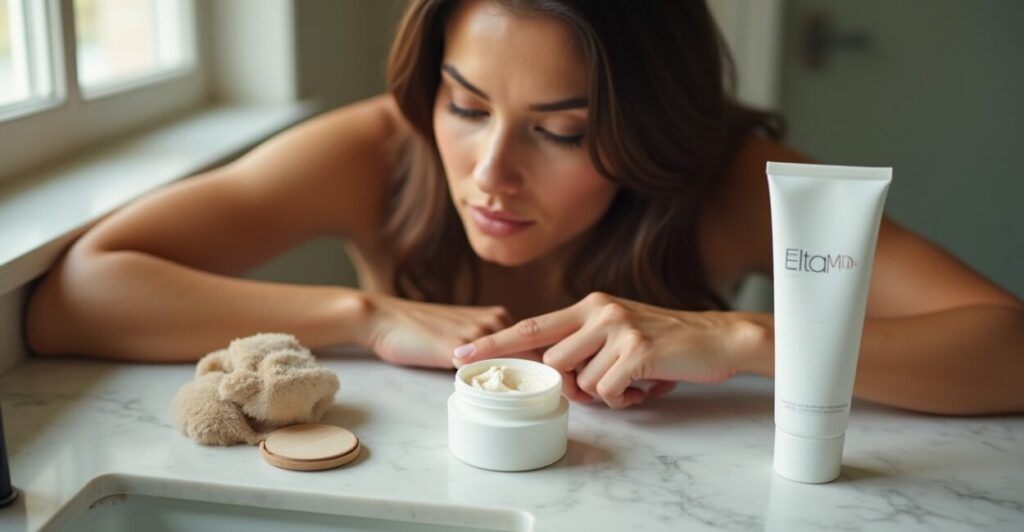
How to Layer SPF (EltaMD) Correctly for Sensitive Skin
Here’s the rule, sunscreen is the final step and must be reapplied if you’ll be in sun longer than two hours. EltaMD is often recommended for sensitive skin because it’s mineral-based and gentle.
- Apply at least a nickel-sized amount to face
- Wait 30 seconds after moisturizer for even spread
- Reapply every two hours if exposed to sun
Layering matters, if you use a rich moisturizer wait for it to sink in, then apply EltaMD. If makeup follows, use a brush and a light hand so SPF stays intact and effective.
Common Mistakes People Make with Their Skin Routine
Stop doing these, they cancel out your efforts fast and feel like harmless shortcuts.
- Skipping sunscreen because you’re indoors
- Applying vitamin C and sunscreen at the exact same moment
- Rubbing products aggressively into the skin
All three errors reduce efficacy: UV indoors still adds up, vitamin C needs a moment to absorb, and rubbing damages the barrier. Fix these and your morning routine becomes surprisingly powerful.
Pro Shortcuts for Glowing Skin Before Breakfast
Short on time, but want results, try these pro tips while you make coffee. One, apply cleanser the moment you wake and rinse mid-shower. Two, pat vitamin C on before you brew, then massage during the kettle’s whistle.
Need evidence you can trust, check expert guidance at American Academy of Dermatology and patient-friendly research at NIAMS. These shortcuts are small changes with big payoff so you step out feeling confident.
FAQ
How Soon Can I See Results from This Skin Routine
Most people notice subtle brightening and improved texture within two weeks, especially if using vitamin C consistently. Redness and barrier repair might take longer, around four to six weeks, depending on your skin sensitivity. Consistent sunscreen use prevents new damage immediately, but cumulative benefits like fewer dark spots and improved firmness usually show after months of daily protection and proper layering.
Can I Use Vitamin C and EltaMD Sunscreen Together on Sensitive Skin
Yes, you can use vitamin C in the morning followed by EltaMD sunscreen, they complement each other. Apply vitamin C first, wait 30–60 seconds to absorb, then use your moisturizer if needed and finish with EltaMD. If irritation occurs, reduce vitamin C concentration or frequency, or switch to a gentler derivative. This layering boosts antioxidant protection while ensuring the mineral sunscreen forms a protective barrier.
What Cleanser Ingredients Should People with Sensitive Skin Avoid
Avoid sulfates like sodium lauryl sulfate and strong chemical exfoliants in morning cleansers, they strip oils and increase irritation. Fragrance and high ethanol content can also disrupt the skin barrier. Instead look for soothing ingredients like glycerin, ceramides, and niacinamide. These maintain hydration and reduce redness while still removing oil and residue from overnight, creating a calm base for vitamin C and SPF application.
Is the One-minute Facial Massage Safe Every Morning
Yes, a gentle one-minute facial massage is safe and beneficial most mornings, it stimulates circulation and product absorption. Use light pressure and upward motions to avoid stretching. Avoid massaging active breakouts aggressively and don’t use rough tools on inflamed skin. If you have a chronic condition like rosacea, consult your dermatologist first to tailor pressure and technique so the massage supports skin health without provoking flare-ups.
How to Adapt This Routine If I Use Prescription Topical Treatments
If you use prescription retinoids or topical antibiotics, follow your dermatologist’s schedule. Often vitamin C can be used in the morning while retinoids stay at night, but spacing matters if both cause irritation. Start with lower concentrations, patch test, and introduce one product at a time. If unsure, reference your prescriber or authoritative guidance such as CDC for medication safety and speak to your dermatologist about sequencing.