

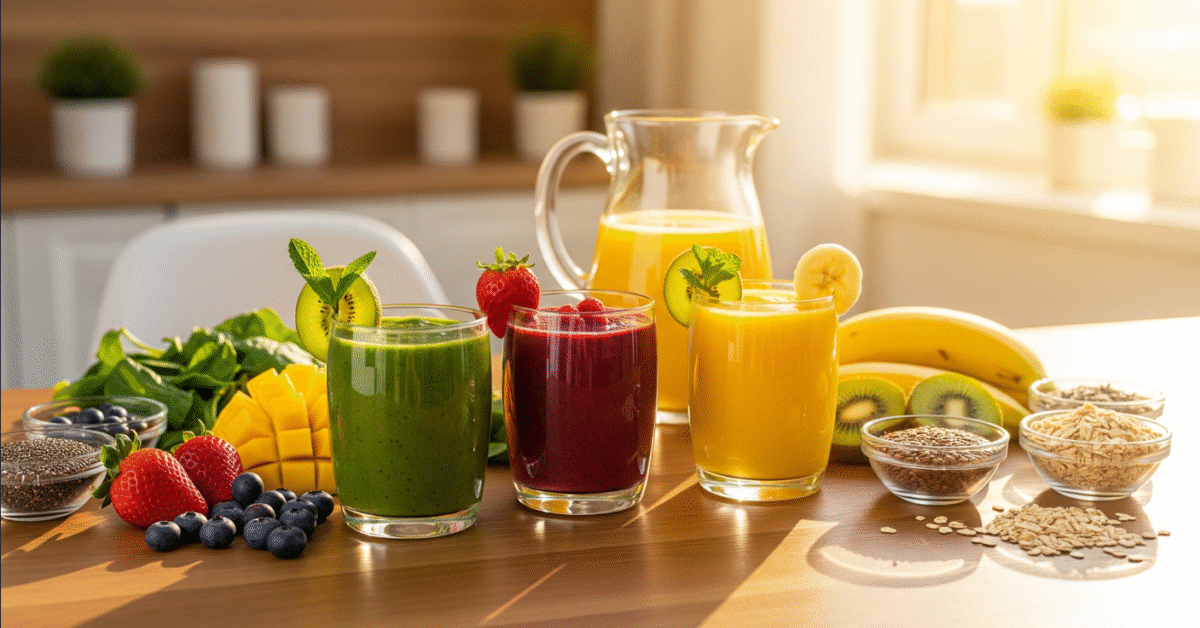
Morning smoothies are quick, nutrient-dense drinks that jumpstart your day with vitamins, protein, and healthy fats. They matter because a balanced smoothie can support energy, digestion, and focus in minutes, so you can replace a rushed breakfast with real nourishment. To start, pick a base, add produce, protein, and a healthy fat, then blend for under five minutes.
Many people skip breakfast or grab processed options when short on time; morning smoothies solve that by being portable, customizable, and easy to prep ahead. This article shows practical recipes, ingredient swaps, and science-backed tips to help you make smoothies that meet goals like energy, gut health, or muscle recovery.
Below you’ll find seven focused sections covering flavors, nutrition strategies, quick recipes, meal-prep tips, equipment advice, comparisons, and an FAQ to answer common concerns about morning smoothies.
Contents
ToggleMorning smoothies for energy and focus
Quick energy-boosting blends
To get sustained energy from morning smoothies, combine complex carbs, protein, and healthy fats. Oats, banana, Greek yogurt, and a tablespoon of nut butter deliver slow-burning fuel that avoids mid-morning crashes. Adding a small portion of spinach or kale contributes micronutrients and fiber without overpowering taste.
Include a source of protein like whey, plant-based powder, or silken tofu to stabilize blood sugar and support cognitive focus. A pinch of cinnamon or a shot of cold brew can enhance alertness without excessive caffeine. Experiment with portion sizes to fit your calorie needs and activity level.
When prepping, portion ingredients into single-serve bags or jars so you can blend right away. This strategy reduces decision fatigue and keeps your morning routine efficient while preserving the nutritional balance that powers attention and productivity.
Ingredients that improve mental clarity
Choices like berries, avocado, chia seeds, and high-quality protein support brain function in morning smoothies. Berries add antioxidants and low-glycemic carbs; avocado offers monounsaturated fats that help cognitive performance; chia seeds provide omega-3 precursors and soluble fiber to steady glucose.
Protein sources such as plain Greek yogurt, collagen peptides, or pea protein supply amino acids essential for neurotransmitter synthesis. Small amounts of matcha, cacao nibs, or fresh ginger can boost alertness and circulation without a heavy caffeine hit.
Balancing carbohydrates and fat is key: too many fast carbs can cause a sugar spike and dip, while balanced macros help you maintain steady energy and mental clarity through the morning hours.
Timing and portion tips for busy mornings
Drink a moderate-sized smoothie (300–450 ml) 20–60 minutes before work or exercise to feel energized without stomach discomfort. If you plan to work out, add slightly more carbohydrates and easy-to-digest protein to support performance and recovery. For sedentary mornings, focus on fiber and healthy fats to prolong fullness.
Keep portable options in insulated bottles if you need to take your smoothie on the go. Pre-portioning ingredients into freezer bags speeds assembly; toss the frozen bag and liquid into the blender, blend, and you’re done. This approach saves time and reduces morning stress.
Adjust calories based on goals: aim for 250–400 calories for a light breakfast, or 400–600+ if you need a meal replacement. Tracking how different combos affect your focus helps you dial in the ideal morning routine.
Fruit-forward morning smoothies and flavor variations
Popular fruit combos for taste and nutrition
- Berry Banana: mixed berries, banana, Greek yogurt, almond milk
- Tropical Green: mango, pineapple, spinach, coconut water
- Stone Fruit Twist: peach, nectarine, oats, vanilla protein
- Apple Cinnamon: apple, rolled oats, almond butter, cinnamon
Fruit-forward morning smoothies are designed to maximize flavor while keeping nutrition balanced. Use whole fruits to retain fiber and micronutrients, and prefer frozen fruit for texture and convenience. Combining fruits with a creamy element (yogurt, avocado) enhances mouthfeel and satiety.
To prevent overly sweet results, pair fruit with neutral bases like unsweetened plant milk or water, and include a protein source. Lime or lemon juice brightens flavor and adds vitamin C, which helps with the absorption of plant-based iron when greens are included.
Balancing sweetness without added sugar
Rely on ripe fruit, dates in small amounts, or a splash of 100% fruit juice to add sweetness naturally. Avoid syrups and flavored yogurts that can spike sugars and reduce nutrient density. A small amount of vanilla extract or cinnamon can create perceived sweetness without extra calories.
Fiber-rich ingredients—oats, chia, flax—slow sugar absorption, lowering glycemic impact. Pairing sweet fruit with protein and fat (nuts, seeds, yogurt) further manages blood sugar and prevents energy crashes later in the morning.
For those tracking sugar intake, choose berries and green apples over tropical fruits like mango and pineapple, and always check labels when using packaged protein powders or milks to avoid hidden sugars.
Seasonal fruit swaps and sustainable choices
Adapt morning smoothies to seasonal produce: stone fruits in summer, citrus in winter, and apples in autumn. Seasonal fruit tends to be tastier, more affordable, and has a smaller carbon footprint. Frozen fruit is a sustainable, low-waste option since it reduces spoilage and is often flash-frozen at peak ripeness.
Consider buying in bulk and freezing portions to lower cost per serving. Local farmers’ markets are excellent sources for fresher, seasonal varieties that can elevate your smoothie’s flavor profile without added sugar or preservatives.
When possible, choose organic for high-pesticide-risk fruits (like berries) and wash produce thoroughly. These small choices help you enjoy better taste and nutrition while supporting more sustainable food practices.
Protein-packed morning smoothies for muscle and satiety
Best protein sources to add
High-quality proteins for morning smoothies include whey, casein, pea, soy, and collagen. Dairy sources (Greek yogurt, cottage cheese) add creaminess and calcium, while plant proteins (pea, hemp) are excellent for vegan options. Collagen supports connective tissue but lacks a full amino acid profile, so pair it with other proteins if needed.
Egg white protein and silken tofu are gentle on digestion and mix smoothly. Choose unflavored or minimally sweetened powders to avoid excess sugar. A 20–30 gram protein target in the morning supports muscle maintenance and prolonged fullness.
Blending protein into morning smoothies is convenient post-workout and helps meet daily protein goals without a heavy meal, ensuring both recovery and satiety throughout the morning.
Macros and calorie targets for goals
Tailor morning smoothies based on goals: for weight management, aim for 300–450 calories with 20–30 g protein, moderate carbs, and healthy fats. For muscle gain, increase to 400–700 calories with 25–40 g protein and additional carbs for energy. For general wellness, 250–400 calories with balanced macros works well.
Track hints like adding 1/2 cup oats for extra carbs or one tablespoon of nut butter for healthy fats. Small adjustments—extra milk, a scoop more protein powder, or an extra banana—change calorie counts quickly and can be used to meet daily requirements.
Use a food scale and an app to monitor macros if precision is important. Over time, you’ll learn which ingredient combinations consistently meet your calorie and macro needs for any given day.
Sample high-protein recipes (no-cook)
Try a Berry & Oat Protein Smoothie: 1 cup mixed berries, 1/2 cup oats, 1 scoop whey or pea protein, 1 cup unsweetened almond milk, and 1 tsp honey. Blend until smooth for a balanced post-workout option. This offers carbs, protein, and fiber in one glass.
Another option is a Green Protein Smoothie: 1 cup spinach, 1/2 avocado, 1 banana, 1 scoop collagen or whey, 1 cup water or coconut water. It’s nutrient-dense, creamy, and supports muscle repair with healthy fats and protein. Both recipes blend in under five minutes.
Adjust portion sizes for your needs and swap ingredients for allergies—use oat milk for dairy-free versions or hemp protein for nut-free options—keeping the structure of carbs, protein, and fat intact.
Gut-friendly morning smoothies and digestion support
Ingredients that promote gut health
- Plain yogurt or kefir for probiotics
- Banana or cooked oats for prebiotic fiber
- Ginger and turmeric for anti-inflammatory support
- Chia seeds or flax for soluble fiber and omega-3s
In morning smoothies, include fermented dairy like kefir or plant-based fermented options to introduce beneficial bacteria. Prebiotic fibers such as inulin (found in chicory), banana, and oats feed those microbes and support regularity. Keep added sugars low to avoid feeding undesirable bacteria.
For sensitive stomachs, blend ingredients until very smooth and avoid high-FODMAP items if they cause bloating. Sipping slowly and pairing smoothies with a small protein-rich snack can aid digestion and reduce discomfort.
How to add probiotics and fiber
Add plain Greek yogurt, kefir, or a scoop of probiotic powder to morning smoothies to introduce useful strains. Combine with fiber sources like psyllium husk, chia seeds, or ground flaxseed to support stool bulk and gut transit time. Start with small amounts and increase gradually to prevent gas.
Whole fruits and vegetables supply soluble and insoluble fiber; blending does not remove fiber but it can alter texture and digestion speed. If you want slower digestion, include more whole nuts or seeds; for faster nutrient absorption, use more liquid and blend thoroughly.
Hydration matters for fiber function—drink water with your smoothie and throughout the morning to help fiber move smoothly through the digestive tract and avoid constipation.
Meal timing and digestive ease
Consume gut-focused morning smoothies when your stomach feels calm; for some people that’s immediately upon waking, while others prefer waiting 30–60 minutes. If you experience bloating, reduce high-FODMAP fruits (like apples and pears) and test alternatives such as berries or kiwi.
Blending rather than juicing preserves fiber and slows gastric emptying, which can minimize blood sugar spikes and improve satiety. Keep portion sizes reasonable and avoid pairing high amounts of fruit with sweetened yogurts to reduce fermentation-related discomfort.
If chronic digestive issues occur, consult a healthcare provider to tailor smoothie ingredients to your needs and consider testing for intolerances or SIBO to optimize your morning routine safely.
| Ingredient | Gut Benefit | How to Use |
|---|---|---|
| Kefir | Probiotics | Use 1/2–1 cup as base |
| Chia seeds | Soluble fiber | 1 tbsp, soak or blend |
| Banana | Prebiotic fiber | 1 small, frozen for texture |
Meal-prep, equipment, and time-saving hacks
Batch prepping for weekday mornings
- Portion fruit, greens, and add-ins into freezer bags
- Label bags with date and preferred liquid
- Pre-measure protein powder into small containers
Batch prepping morning smoothies accelerates your routine: pre-assembled freezer packs take only a minute to dump into the blender. Use glass jars to store any leftover smoothie in the fridge for up to 24 hours, though fresh is best for texture and nutrient retention. Invest in airtight containers to preserve freshness.
Rotating base ingredients and proteins each week keeps variety while simplifying shopping. Assemble packs on a weekend or the night before—this workflow keeps your morning under five minutes and reduces food waste.
Best blenders and tools for smooth texture
A high-powered blender yields smoother texture, especially with fibrous greens and frozen fruit; consider models from reliable brands that handle ice and seeds. Personal blenders are compact and efficient for single servings and easy to clean. Look for BPA-free pitchers and dishwasher-safe parts for convenience.
For inexpensive options, pre-soak tougher ingredients (like oats or chia) to soften them before blending. A tamper tool helps process thick mixes evenly. Small strainers or nut milk bags are useful if you prefer ultra-smooth textures without pulp.
Regular maintenance—cleaning the blade assembly and gasket—extends appliance life and prevents off-flavors in your morning smoothies. Replace worn seals promptly to keep blends consistent and safe.
Speed hacks: how to make a smoothie in under five minutes
Keep key ingredients within reach: a jar of protein, a tub of frozen fruit, and a chilled base. Pre-portion freezer packs and store liquids in the fridge. Use a personal blender that blends quickly and rinses out in seconds to avoid long clean-up times.
Start with liquids in the blender, add soft ingredients, then frozen items to help blades circulate. Blend on high for 30–60 seconds depending on power. Serve in an insulated bottle if you need portability. These small habits reliably keep your smoothie routine fast and stress-free.
For ultimate speed, prepare night-before combos and store them in sealed jars; just shake, top with nuts or seeds if desired, and go. This method reduces morning friction while preserving flavor and nutrients.
| Tool | Why It Helps |
|---|---|
| High-powered blender | Smoother texture, handles frozen fruit |
| Personal blender | Fast single-serve prep and easy cleaning |
| Freezer bags | Batch prepping and portion control |
Comparisons and customization: dairy-free, keto, and low-sugar options
Dairy-free and vegan swap ideas
For dairy-free morning smoothies, use plant milks (oat, almond, soy), silken tofu, or pea protein to maintain creaminess and protein. Coconut yogurt adds richness, though it’s lower in protein; pair it with protein powder to balance macros. Frozen bananas or avocado create a thick texture without dairy.
Fortify with plant-based fats—nut butter or flaxseed—to improve satiety. Be mindful of total calories when using denser ingredients; adjust portions if weight control is a goal. Label ingredients if prepping for a household with allergies to avoid cross-contamination.
Choosing unsweetened plant milks keeps added sugar low while delivering hydration and a smooth base for various flavor profiles in morning smoothies.
Keto and low-carb morning smoothies
Keto-friendly morning smoothies prioritize fat and protein over carbs. Base your blend on avocado, coconut cream, unsweetened almond milk, and a low-carb protein powder. Add MCT oil or nut butter for energy and satiety. Keep fruit minimal—berries in small quantities are the usual choice for flavor without excessive carbs.
Monitor total net carbs if you’re tracking ketosis; incorporate fiber-rich ingredients to offset the glycemic impact and improve fullness. Unsweetened cocoa, cinnamon, and vanilla can enhance taste without carbs. Avoid honey, maple syrup, and high-sugar fruits.
Consult with a healthcare provider when adopting keto long-term, especially if you have medical conditions; tailored guidance ensures safe and effective macronutrient adjustments.
Low-sugar swaps and sweeteners to consider
Replace sugar with whole-food flavor boosters: cinnamon, vanilla, citrus zest, and fresh herbs like mint. Use small amounts of stevia or monk fruit if you need non-caloric sweetness, but test their flavor profile as some find them bitter. Dates add natural sweetness but increase sugar, so use sparingly.
Pair sweet ingredients with sources of fat and protein to blunt blood sugar spikes. For people monitoring glycemic response, prioritize vegetables, berries, and unsweetened dairy or plant milk. Tracking blood sugar responses occasionally can inform which combos work best for you.
Always read labels for added sugars in protein powders and flavored milks—opt for unsweetened varieties to control total sugar content in your morning smoothies.
Conclusion
Morning smoothies offer a fast, flexible way to pack fruits, vegetables, protein, and healthy fats into a single meal that supports energy, digestion, and performance. By adjusting ingredients you can meet goals like sustained focus, gut health, or muscle recovery while keeping prep under five minutes.
Try batch prepping, choose quality protein and fiber, and use simple swaps to fit dietary needs. Experiment with the recipes and tips above to create morning smoothies that become a dependable, nutritious start to your day—then share your favorites or tweak them to suit your routine.
FAQ
How often can I have morning smoothies?
You can enjoy morning smoothies daily if they’re balanced with protein, healthy fats, and fiber. Rotate ingredients to ensure varied nutrients and avoid excess sugar. Monitor portion sizes to match your calorie goals and activity level.
Are morning smoothies good for weight loss?
They can support weight loss when portioned for a calorie deficit and high in protein and fiber to promote fullness. Avoid added sugars and use nutrient-dense ingredients to keep you satisfied until your next meal.
Can I prepare smoothies the night before?
Yes—store smoothies in airtight containers in the fridge for up to 24 hours, though texture and some nutrient levels may change. For best texture, freeze pre-portioned packs and blend in the morning.
Which protein powder is best for morning smoothies?
Choose based on dietary needs: whey for complete amino acids, pea or soy for vegan profiles, and collagen for connective tissue support. Pick unflavored or low-sugar options to control added sugars and flavor.
Do morning smoothies help with digestion?
Yes—adding probiotics (kefir, yogurt), prebiotic fibers (banana, oats), and soluble fiber (chia, flax) supports gut health. Start with small amounts and increase gradually to avoid bloating.
Sources: USDA, Harvard Health, Mayo Clinic