

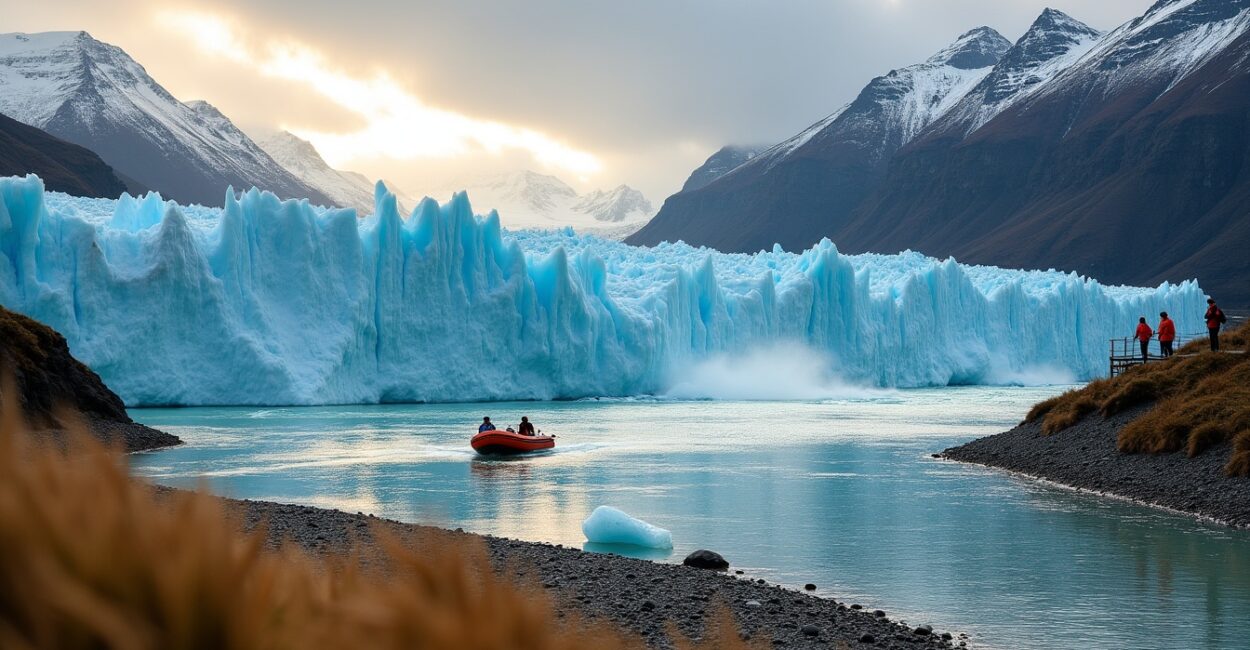
Patagonia pulls at a deep part of the imagination: wide windswept plains, soaring peaks and glaciers that groan like ancient ships. If you crave dramatic nature and cinematic skies, Patagonia is the destination that answers that call.
In 2025 Patagonia stands out as a travel hotspot—eco-conscious routes, improved access, and bold new trails make it timely and urgent. This guide highlights seven standout Patagonia locations, from Perito Moreno to Torres del Paine, explaining what makes each one a must-visit.
Read on to discover unforgettable viewpoints, practical travel tips, and the emotional reasons these Patagonian places capture hearts. You’ll leave with clear ideas for routes, seasons, and the experiences worth planning around.
Perito Moreno Glacier — the Living Ice
First Impressions and Accessibility
Perito Moreno delivers spectacle: thunderous ice calving, blue walls, and easy viewing platforms. Many visitors witness enormous chunks breaking off and crashing into turquoise waters.
Accessible from El Calafate, the site blends convenience with drama. Regular shuttles and well-maintained walkways make it ideal for photographers and families alike.
Why It Matters
This glacier is part of the Southern Patagonian Ice Field and one of the few advancing glaciers worldwide, offering rare lessons in climate, geology and resilience.
Wildlife viewing, boat excursions, and guided ice treks turn a visit into an immersive education on ice dynamics and regional conservation efforts.
El Chaltén & Mount Fitz Roy — Trekking Heart of Patagonia
Trail Culture and Community
El Chaltén is Patagonia’s trekking hub: rugged trails, cozy refugios, and a tight-knit outdoors community. Hikers gather for sunrise views of Fitz Roy’s spires.
The village’s commitment to sustainable trekking and low-impact travel helps preserve trails and alpine flora across the Andes foothills.
Top Routes and Scenic Rewards
Classic treks include Laguna de los Tres and Laguna Capri, each offering intimate views of granite faces and glacial lakes under ever-changing skies.
Expect wind-carved trees, abundant birdlife, and photogenic panoramas—ideal for anyone seeking alpine challenge without extreme technical climbing.
- Pack layered clothing and a windproof shell.
- Book refugio nights during high season early.
- Respect trail markers and local conservation rules.

Torres Del Paine — Iconic Peaks and Patagonian Grandeur
Signature Landscapes
Torres del Paine offers jagged towers, turquoise rivers and sprawling steppe—Patagonia’s signature scenery concentrated into a compact national park.
The park’s varied ecosystems include lenga forests, glaciers and abundant wildlife like guanacos and Andean condors circling the wind currents.
Planning the Experience
Choose between multi-day circuit treks or day hikes to iconic viewpoints. Weather shifts quickly; plan flexible schedules and early starts for best light and calm winds.
Park permits, certified guides for technical routes, and sustainable lodging are essential considerations for preserving this fragile, popular landscape.
Ushuaia & Tierra Del Fuego — the End of the Road
Wild Coastlines and Maritime History
Ushuaia, perched on the Beagle Channel, is Patagonia’s southern gateway: maritime museums, historic ports and windswept beaches framed by mountains.
The region mixes Magellanic forests with fjords and island wildlife, giving visitors sea-kayak, whale-watching, and cultural heritage options.
Getting There and Local Logistics
Flights, ferries and coastal roads link Ushuaia to mainland Patagonia. Seasonal services and weather-dependent schedules require flexible bookings and local updates.
Pack waterproof layers and allow buffer days for excursions; surprises like sudden fog or calm seas shape adventure opportunities here.
- Check seasonal ferry and flight timetables before booking.
- Reserve whale-watching or island tours in advance.
- Pack waterproof, insulated clothing and quick-dry layers.
- Confirm transfers between port and accommodation the day prior.

Lago General Carrera & Marble Caves — Turquoise Wonders
Why the Caves Captivate
The Marble Caves on Lago General Carrera form sculpted tunnels and swirling blue corridors carved by water over millennia—pure Patagonian magic in stone and light.
Boat and kayak trips reveal reflective surfaces and vivid mineral patterns, creating intimate encounters with geological time and luminous water.
Best Seasons and Practical Tips
Late spring to early autumn offers calm waters and stable weather for boat access. Local operators prioritize safety and low-impact visits to preserve formations.
Bring a camera with polarizer, dress in layers, and allow time for quiet appreciation; these caves reward slow, deliberate exploration.
| Activity | Best Season | Difficulty |
|---|---|---|
| Boat sightseeing | Oct–Mar | Easy |
| Kayak exploration | Nov–Mar | Moderate |
| Photography tours | Oct–Apr | Easy |
- Wear non-slip shoes for boat decks.
- Bring sun protection; reflections are strong.
- Choose certified operators for safety and conservation.
Valdés Peninsula — Wildlife and Marine Spectacles
Marine Mammals and Birdlife
Valdés Peninsula is a UNESCO-listed reserve where Southern right whales, orcas and elephant seals congregate seasonally—Patagonia’s marine stage of life.
Birdwatchers spot penguins, cormorants and coastal raptors against windswept beaches and tidal flats rich in biodiversity and conservation stories.
Responsible Wildlife Viewing
Guided tours enforce viewing distances and time limits to protect animals. Choose operators committed to research and low-impact observation practices.
Plan visits during key seasons: whales in winter-spring, elephant seals in late spring and penguins in summer—each month offers different highlights.
Patagonian Road Trips, Logistics and Seasonal Timing
Planning Routes and Transport
Road trips across Patagonia showcase estancias, steppe, lakes and passes. Gravel roads and long distances demand careful fueling, spare tires and contingency days.
Public transport exists between hubs, but rental vehicles and guided overland operators provide flexibility for remote detours and photo stops.
When to Go and What to Pack
Summer (Dec–Feb) gives longer daylight and warmer temperatures; shoulder seasons offer solitude and dramatic light. Winter travel is for prepared adventurers seeking quiet landscapes.
Essential gear: layered clothing, windproof jacket, sturdy boots, navigation tools and backup communications. Respect local regulations and leave no trace.
- Research road conditions before departure and refill at major towns.
- Book accommodations in advance for high season dates.
- Carry water, snacks, and a first-aid kit for remote drives.
Patagonia’s seven standout places—from the roaring Perito Moreno to the sculpted Marble Caves—share a single emotion: awe. Each site delivers a distinct note in a larger symphony of ice, wind, sea and stone.
Return to the opening image of vast, cinematic landscapes and you’ll see why Patagonia remains a top travel hit for 2025: it challenges, calms and transforms. Plan deliberately, travel respectfully, and let these places change how you see the natural world.
Faq
When is the Best Time to Visit Patagonia for Clear Weather and Hiking?
The optimal window for clear weather and accessible trails in Patagonia is late spring through early autumn, roughly November to March. This period offers longer daylight, milder temperatures, and the most reliable conditions for trekking in areas like Torres del Paine and El Chaltén. Shoulder seasons—October and April—provide fewer crowds and vibrant seasonal shifts but may include more variable weather patterns, so plan for flexibility and layered gear in all months to adapt to sudden wind or rain.
How Can I Responsibly View Wildlife in Patagonia Without Disturbing Habitats?
Responsible wildlife viewing in Patagonia requires choosing certified guides, maintaining recommended distances, and following park regulations. Avoid approaching animals, remain on marked paths, and limit noise and flash photography. Supporting conservation-focused operators and donating to local research initiatives helps protect habitats. Observe seasonal restrictions—breeding or resting zones may be off-limits—and always store waste and food securely to prevent attracting wildlife to human areas. Your respectful behavior directly supports long-term preservation efforts.
What Essential Gear Should I Pack for a Multi-day Trek in Patagonia?
Pack layered clothing including a breathable base layer, insulating mid-layer, and a windproof, waterproof shell. Sturdy waterproof hiking boots, gaiters, a warm hat, and glove liners are crucial. Carry a quality sleeping bag rated for local conditions, a lightweight tent or refugio reservations, navigation tools, and a small repair kit. Bring sun protection, high-energy snacks, and a basic first-aid kit. Also include a lightweight stove if camping, and ensure all gear is tested beforehand to avoid surprises on remote trails.
Are Guided Tours Necessary, or Can I Explore Patagonia Independently?
Independent travel in Patagonia is feasible for experienced hikers and well-prepared travelers, especially around established hubs like El Chaltén and El Calafate. However, guided tours add safety, local knowledge, and logistical ease for remote areas, glacier treks, or routes with variable conditions. For technical climbs or wildlife-focused excursions, certified guides enhance conservation practices and reduce risk. Evaluate your experience, season, and comfort with navigation before choosing independent routes versus guided options.
How Do Conservation and Local Communities Shape Travel Experiences in Patagonia?
Conservation and community stewardship are central to authentic Patagonian travel. Local estancias, guide associations, and protected-area policies shape visitor access, trail maintenance, and wildlife protections. Many communities offer cultural experiences—gaucho traditions, sustainable lodging, and regional cuisine—that deepen travel meaning. By choosing operators who reinvest in conservation and hiring local guides, visitors directly support livelihoods and habitat protection. Prioritizing low-impact travel preserves Patagonia’s landscapes for future generations and enriches your journey.
External sources: National Geographic on Patagonia, UNESCO: Valdés Peninsula, and park resources like Torres del Paine administration.