

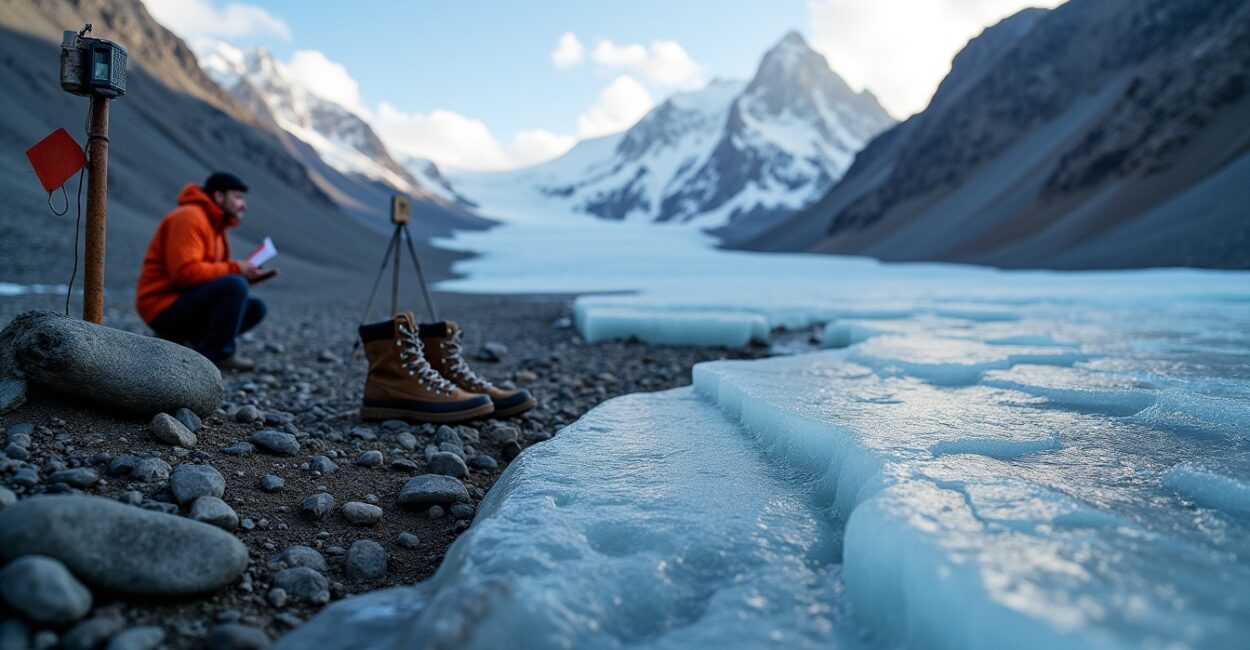
Montblanc glaciers are retreating before our eyes—ancient ice that carved valleys and fed rivers is shrinking, altering trails, refuges and the stories hikers tell. This visible loss evokes urgency and wonder: what happens when a mountain’s icy crown fades?
Scientists track Study glacier retreat on Montblanc—Mer de Glace shows visible loss, affecting local trails and refuges. This article explains the causes, on-the-ground impacts and what visitors and communities can expect, mixing field data, human stories and practical advice.
Read on to discover clear signs of glacier retreat, how local ecosystems and alpine shelters are affected, steps researchers take to measure change, and actions you can support to protect Montblanc glaciers.
Signs of Change on Montblanc Glaciers: What to Look For
Visual Cues and Landscape Shifts
Thin blue ice, exposed moraine and widening crevasses are obvious signs that Montblanc glaciers are thinning. Photographs over decades reveal the glacier tongue pulling back from stable landmarks.
Treeline advances and new lakes appearing at glacier fronts signal broader landscape change, altering water runoff and mountain aesthetics for visitors and guides alike.
Local Trail and Refuge Impacts
Trails near retreating ice become unstable as permafrost thaws. Rockfalls and eroded paths endanger hikers and force rerouting. Refuge access sometimes changes seasonally.
Refuges that relied on predictable snow bridges now face supply challenges and shorter operating seasons, affecting local economies and mountain culture.
Why Montblanc Glaciers Are Retreating: the Science
Climate Drivers and Warming Trends
- Rising summer temperatures accelerate melt.
- Reduced winter snowfall limits seasonal recovery.
- Black carbon and dust lower ice albedo, increasing absorption.
- Long-term warming shifts glacier mass balance.
Climate change increases energy inputs into the glacier system, shifting the balance from accumulation to ablation. This means less ice is added each year than melts away.
Researchers use temperature series, satellite imagery and field stakes to quantify mass loss. These methods show consistent decline across many Montblanc glaciers.
Ice Dynamics and Retreat Mechanics
Glacier flow slows as the ice thins, reducing its ability to replenish lower zones. This dynamic feedback speeds retreat and changes crevasse patterns.
Meltwater lubricates the bed in summer, sometimes increasing short-term flow but ultimately contributing to ice loss and altered drainage networks.

Mer De Glace Case Study: Visible Loss and Human Stories
Historical Perspective and Photographic Records
Historic postcards and modern drone shots document dramatic retreat at Mer de Glace. Once a sweeping ice river, it now reveals terraces of moraine and exposed rock.
Generations of guides recount changing landscapes: routes that were once snowbound are now rocky, altering alpine traditions and seasonal rhythms.
Community Effects and Refuge Changes
Guides and refuge managers adapt routes and safety protocols as ice retreats. Some mountain huts face supply logistics and visitor-safety dilemmas as access shifts.
Local tourism pivots toward sustainable experiences and education, creating new narratives around conservation while coping with uncertain seasons.
Measuring Retreat: Tools, Data and What They Reveal
Remote Sensing and Field Methods
Satellites, LiDAR and GPS provide precise maps of ice extent and volume change. Field stakes and ground-penetrating radar confirm thickness trends on the ground.
Combining methods yields robust records that show annual and multi-decadal loss, guiding local adaptation and policy responses.
Key Metrics and Recent Findings
| Metric | Trend (last 30 years) | Implication |
|---|---|---|
| Surface area | Decline ~20–30% | Reduced catchment and altered river timing |
| Ice volume | Decline ~30–40% | Long-term water storage loss |
| Equilibrium line altitude | Rises by 50–100 m | Smaller accumulation zones |
These metrics show persistent negative mass balance. As volume falls, seasonal river flows will change and glacier-fed habitats will shrink.

Practical Guidance for Visitors and Local Planners
Safety and Trail Planning
- Check recent glacier reports before heading out.
- Use a guide for unfamiliar or changing routes.
- Wear appropriate gear for scree and unstable ground.
- Respect closure signs and avoid risky crossings.
- Report observed changes to local authorities.
Routes once covered in snow may now cross loose moraine; careful preparation reduces risk. Local alpine clubs publish updates that hikers should consult.
Refuge Adaptation and Infrastructure
Refuges may need relocation, reinforced foundations or altered supply lines as permafrost thaws. Planning must prioritize safety and minimal ecological footprint.
Community-led monitoring supports adaptive management, ensuring shelters meet changing seasonal needs without compromising alpine environments.
Conservation, Policy and Community Action
Local Initiatives and Conservation Strategies
Protected-area management, sustainable tourism and reforestation in lower basins reduce downstream impacts. Community engagement is essential for lasting solutions.
Educational programs at visitor centers and refuges foster stewardship and support for mitigation efforts across the Montblanc glaciers region.
Policy Levers and Research Priorities
Climate mitigation, emissions reduction and investment in monitoring networks are critical. Policies should fund research, adaptation and resilient infrastructure for alpine communities.
Cross-border cooperation across the Mont Blanc massif enhances data sharing and coordinated responses to glacier retreat.
The Human Side: Stories, Emotions and Future Visions
Personal Narratives from Guides and Residents
Guides recount emotional farewells to familiar ice routes and a deep sense of loss as landmarks disappear. These stories humanize data and motivate action.
Residents balance nostalgia with resilience, innovating livelihoods and interpreting changing landscapes for visitors in responsible ways.
Imagining Resilient Futures
Communities envision adaptive tourism, scientific hubs and conservation education that celebrate the mountain while confronting its changes. Hope emerges from collaboration.
Supporting research, sustainable travel and local stewardship helps preserve Montblanc glaciers’ legacy and the cultural fabric tied to these mountains.
Conclusion: What Montblanc Glaciers Tell Us and What We Can Do
Montblanc glaciers are a visible gauge of climate change—melting ice reshapes trails, refuges and communities. The story of Mer de Glace illustrates broad trends that demand both local adaptation and global mitigation.
By learning the signs, supporting scientific monitoring, choosing responsible travel and backing policy that reduces emissions, visitors and locals can help protect the mountain’s future and honor the emotional bonds we share with these ancient icefields.
Frequently Asked Questions
How Fast Are Montblanc Glaciers Retreating Right Now?
Recent measurements show many Montblanc glaciers losing between 0.5 and 1.5 meters of thickness annually in lower zones, with surface area reductions of roughly 20–30 percent over decades. Rates vary by glacier, altitude and seasonal weather patterns, but the consistent decline underscores ongoing climate-driven loss.
Can Refuges and Trails Survive Continued Glacier Retreat?
Refuges and trails can adapt, but survival requires planning, investment and flexible management. Some structures may need relocation or reinforcement as permafrost thaws. Trail rerouting and improved hazard monitoring will help maintain access while protecting visitors and ecosystems.
What Role Do Tourists Play in Protecting Montblanc Glaciers?
Tourists can reduce impact by choosing sustainable travel, following local guidance, supporting conservation fees and learning about glacier science. Responsible behavior—staying on marked routes, using guides, and backing local initiatives—helps preserve fragile alpine environments and funds monitoring efforts.
Are There Reliable Sources to Track Glacier Changes in the Mont Blanc Massif?
Yes. Scientific institutions like the French National Centre for Scientific Research and alpine research observatories publish regular updates. Satellite platforms and national park reports also provide reliable data for tracking extent, volume and seasonal changes in Montblanc glaciers.
What Practical Steps Can Local Governments Take to Respond to Glacier Retreat?
Local governments should fund monitoring networks, update land-use plans, reinforce infrastructure, and promote sustainable tourism. Cross-border coordination and investments in research and early-warning systems help communities manage hazards and preserve cultural and ecological values.
External sources: scientific updates from CNRS and glacier monitoring at the Global Glacier Research Network provide detailed data and context for Montblanc glaciers.