
Warning: Cannot modify header information - headers already sent in /home/u278635817/domains/mymorninglife.com/public_html/wp-content/plugins/artigosgpt/artigosgpt.php on line 29509
Warning: Cannot modify header information - headers already sent in /home/u278635817/domains/mymorninglife.com/public_html/wp-content/plugins/artigosgpt/artigosgpt.php on line 29509
It hits you at 3:00 p.m.: email ping, shoulders tight, and focus gone. A two-minute breath at your desk changes that. Desk meditation is the tiny reset that keeps your day moving—no retreat, no yoga mat, just your chair and five calm minutes. Read on for posture cues, quick visualizations, and timing tips that actually fit a packed workday.
Why a 5-minute Pause Beats Another Coffee
Five focused minutes will lower your stress faster than a second cup of coffee. Caffeine jacks your heart rate; a short seated practice drops it back down. You don’t need silence or a special room. Sit, breathe, and shift your nervous system. In open offices, a coworker once asked if I’d been on vacation—after a two-minute desk meditation. The change was visible.
The Posture That Does the Work (without Looking Odd)
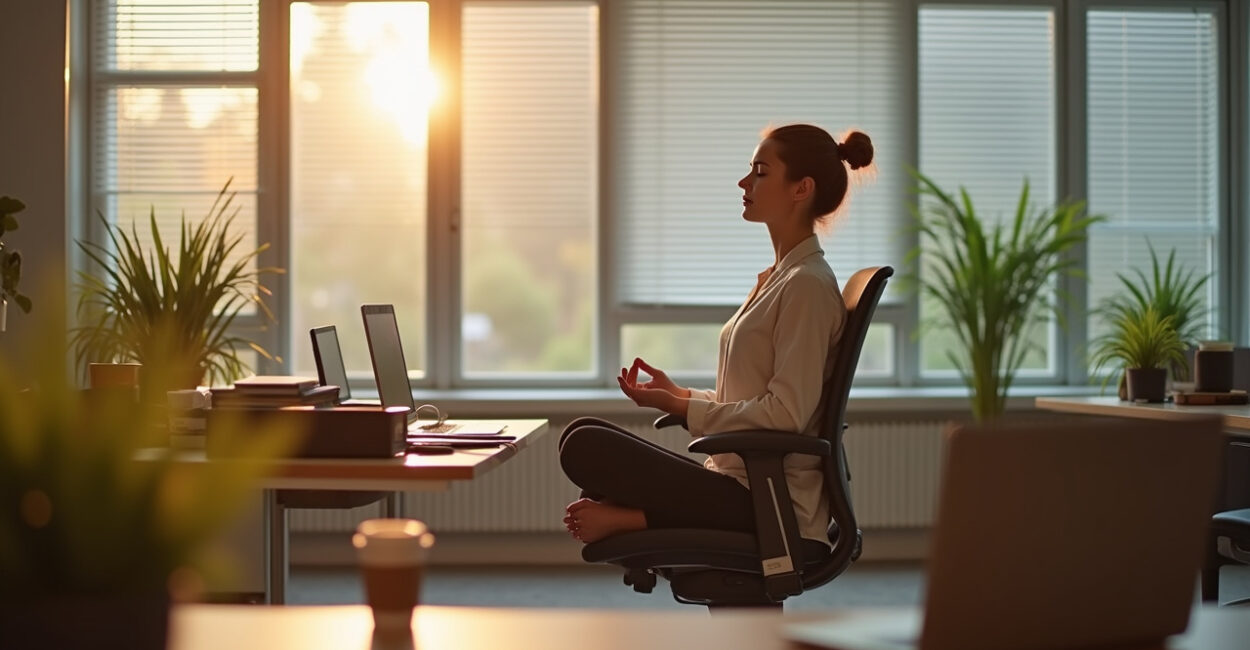
Sit near the edge of your chair. Feet flat, knees at hip level. Shoulders soft, chin slightly tucked. Hands rest on thighs or the desk. Good posture unlocks breathing and focus. If you lean back, your breath shortens. If you hunch, your chest collapses. Small cues: press both feet into the floor for five seconds, then release; let your ribs lower. That’s immediate grounding.

Three Micro-visualizations You Can Do at Your Desk
Visualizations are quick mental tools that steer attention away from chaos.
- Window view: Imagine a clean window. Watch a single cloud pass. Inhale for four counts, exhale for six. Repeat three times.
- Warm anchor: Picture a warm light at your sternum spreading outward. With each breath it expands, easing tension in your shoulders and jaw.
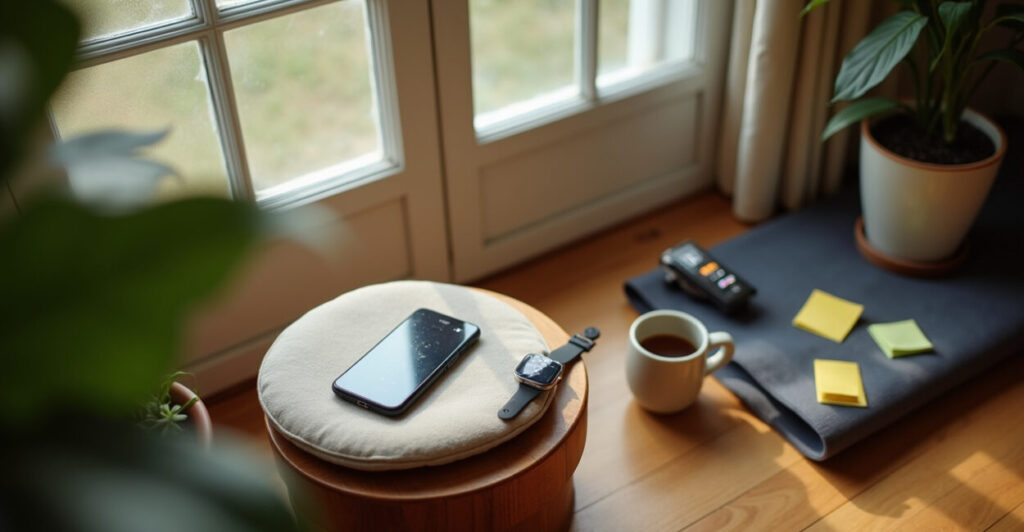
- Inbox shrink: Visualize each task as a sticky note. Watch three of them peel off and float away. Mentally set them aside for now.
When to Use Desk Meditation: Timing Tricks That Actually Work
Use it between meetings, after a stressful call, or when focus fizzles. Set micro-deadlines: try a 2-minute reset before lunch, a 5-minute calm mid-afternoon, and a 1-minute breath before your last email. Pair sessions with triggers: after a meeting notification ends, sit. After three deep breaths, open your next task. Little habits beat big intentions.
What to Avoid: Common Mistakes That Kill the Calm
Don’t overcomplicate it. People think meditation needs silence, incense, or perfect posture. They force long inhales, chase thoughts, or judge themselves for “not being mindful.” Avoid scanning your to-do list while breathing. Also skip multitasking—meditation plus email is just inefficient breathing. Finally, don’t expect an instant epiphany. Small, regular resets compound.
Expectation Vs. Reality: The Surprising Comparison
Expectation: sit for 20 minutes and emerge transformed. Reality: five minutes at your desk, done daily, yields steadier focus and fewer guerrilla panics. The real win is consistency. Imagine your attention as a battery: long sessions can be a full charge, but tiny top-ups keep you working without dips. Over time, those micro-meditations add up to clearer decisions and less rework.
A Quick Example: How One Meeting Went from Chaotic to Calm
We were mid-review when temper flared and notes scattered. Someone closed a laptop. Someone else inhaled sharply. I suggested a ninety-second desk pause. We all sat upright, pressed feet to floor, and used the window cloud visualization three times. The tone shifted; a tense sentence turned into a constructive question. The meeting ended in action items, not blame. Small reset, huge outcome.
Want evidence this works beyond vibes? Research links below show brief mindfulness practices change stress markers and attention span over time. Try it now: set a 5-minute timer and do the posture + warm anchor visualization.
Sources: National Institute of Mental Health and American Psychological Association offer accessible summaries on short mindfulness practices and stress reduction.
Ready for a tiny habit that compounds? Close your eyes for one full breath. That’s the first step.
How Do I Start a Desk Meditation If People Are Watching?
Begin with subtle posture changes: sit up, place feet flat, and soften shoulders. Use eyes-open techniques like the “window view” visualization so it looks like you’re thinking, not zoning out. Keep breaths quiet and brief—rules of thumb: inhale for four, exhale for six. You can also nod slightly or glance at a neutral point on your desk. These small moves signal calm without drawing attention, letting you reset in plain sight.
What If My Mind Won’t Stop During a Five-minute Pause?
Normal. The mind wanders. Treat thoughts like passing messages. Don’t chase or argue with them. Label them quickly—“planning,” “worry”—then return to the breath or your visualization. Use a timer so you don’t watch the clock. Even repeated interruptions are progress: each time you bring focus back, you’re training attention. After a few sessions you’ll notice the gaps between thoughts lengthen and the practice becomes easier.
Can Short Desk Meditations Actually Improve Productivity?
Yes. Studies show brief mindfulness reduces reactivity and improves working memory—both key for productivity. Think of desk meditation as a software update for attention: it clears temporary glitches like stress and scattered focus so you make better decisions. The trick is frequency. A five-minute pause between intense tasks prevents burnout and lowers the chance of mistakes that eat time later. Small investments now save bigger hours later.
How Do I Fit Desk Meditation Into Back-to-back Meetings?
Use micro-pauses: 30–90 seconds before your next meeting is enough. Stand or sit up straight, press feet into the floor, and do three slow breaths. If you have a minute, try the warm anchor visualization. These tiny resets improve clarity and tone. Also, schedule a single five-minute calendar block mid-day labeled “focus reset.” People rarely book over a tiny personal pause, and it protects your attention for the rest of the afternoon.
Are There Any Health Risks to Doing Desk Meditation Frequently?
Generally, no. Desk meditation is low risk and can lower blood pressure and stress hormones. If you have a history of trauma or panic attacks, certain visualizations might be triggering—stick to breath-based grounding or consult a mental health professional. Also, avoid tensing during posture alignment; gentle cues are enough. If you feel faint or dizzy, stop, rest, and breathe normally. For persistent symptoms, talk to your doctor.