Warning: Cannot modify header information - headers already sent in /home/u278635817/domains/mymorninglife.com/public_html/wp-content/plugins/artigosgpt/artigosgpt.php on line 29509
Warning: Cannot modify header information - headers already sent in /home/u278635817/domains/mymorninglife.com/public_html/wp-content/plugins/artigosgpt/artigosgpt.php on line 29509
You’re in the middle of a deadline meltdown: inbox exploding, heart racing, thoughts like a blender. One simple, five-minute breath reset can stop that spiral and give you clear headspace. This is not fluff — it’s a focused three-step breath reset you can use during crises or tight deadlines. Read on for exact counts, posture tips, quick variations, and what to avoid so the nervous system actually calms down fast.
The One-sentence Promise: Calm in Five Minutes
Do this for five minutes and your body will stop treating a task like a life-or-death emergency. That’s a bold line, but physiology backs it up: slow, controlled breathing shifts the nervous system from fight-or-flight to rest-and-digest. You don’t need a yoga mat or an hour. You need clear steps, consistent counts, and to stop multitasking while you breathe. If you try this during your next crisis, you’ll notice fewer racing thoughts and steadier hands within minutes.
The Three-step Method — Exact Counts and Posture
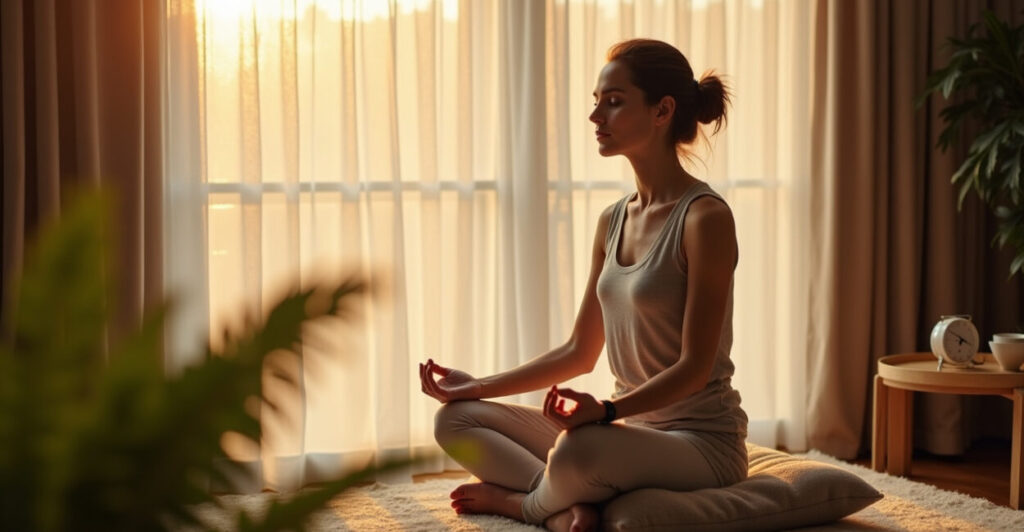
Step 1: Ground (30 seconds). Sit or stand tall. Place one hand on your belly. Breathe in for 4, out for 4 for five breaths to settle the chest. Step 2: Reset (3 minutes). Inhale for 4, hold 1, exhale for 6—repeat for 20–25 cycles. Step 3: Reinforce (1–1.5 minutes). Inhale 4, exhale 8 with soft belly engagement. Eyes open, shoulders relaxed. Use the counts like a scaffold — don’t force them. If 4-6-8 feels hard, drop to 3-4-6 and build up.
The Mechanism That Nobody Explains Right Away
Breathing changes chemistry. Slow exhalations increase vagal tone and lower heart rate. That tells your brain it’s safe. Think of the breath as a dimmer switch for stress hormones. A quick, sharp breath spikes adrenaline; a long, paced exhale tells the body to lower cortisol. This is why the exhale is often longer in the reset. You’re not just “relaxing”; you’re flipping a neurochemical switch that affects attention, memory, and decision-making in real time.
Three Quick Variations for Tight Spaces and Meetings
Variation A — The Desk Reset (sneaky): 90 seconds of 4-1-6 with your eyes down. Hands on lap. Variation B — The Standing Pause: two minutes of 3-1-5 while you lean against a wall. Variation C — The Micro-Breathe: 6 long exhales over 30 seconds between calls. Each option fits different crises: panic, decision fatigue, or back-to-back meetings. Use the micro-breathe when you can’t step away. Use the desk reset if you need to seem engaged while calming down.
Expectation Vs. Reality: What It Will Actually Feel Like
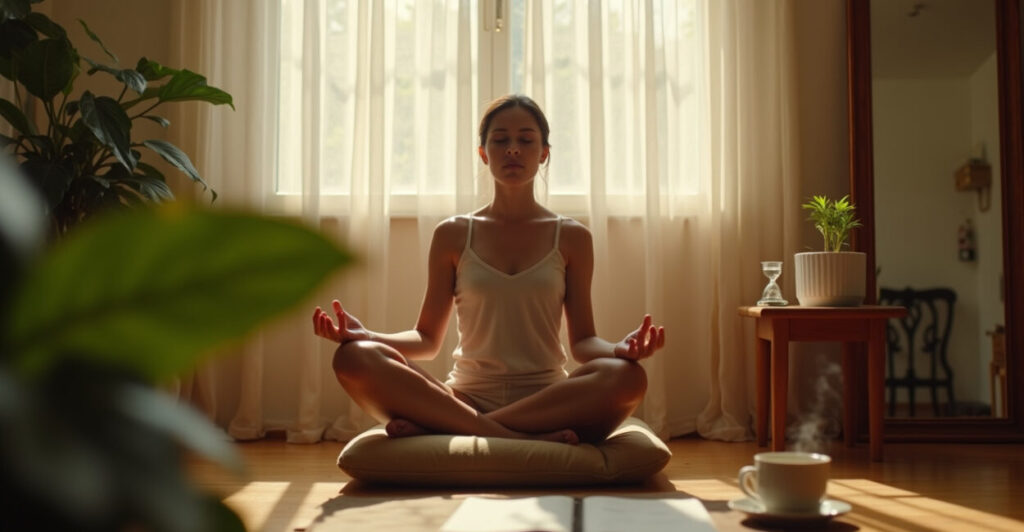
Expectation: instant nirvana. Reality: subtle shift. The first minute often feels awkward — chest pops, thoughts wander. By minute three you’ll notice steadier thoughts, less urgency, and clearer options. After the five-minute session you might still be busy, but you’ll be able to prioritize instead of panic. Comparison: before the reset you chase the next task like a fire. After, you triage like a calm surgeon. The change is practical and fast, not mystical.
Common Mistakes — What to Avoid
Don’t: hold your breath until lightheaded, breathe through your chest only, or expect immediate mood swings. Do avoid breath-holding beyond the gentle counts given. People also make the mistake of trying to multitask while breathing — scrolling makes the reset ineffective. Finally, beware of forcing long inhales; push longer exhales instead. These errors turn a five-minute tool into wasted time. Short checklist: stop multitasking, keep posture neutral, lengthen the exhale, and use hand-on-belly feedback.
Quick Proof and Trusted Sources
Clinical research links paced breathing to lower blood pressure and reduced anxiety. For physiology details, see resources like the National Institutes of Health and university studies that examine vagal tone and respiration. National Institutes of Health and scholarly work from medical schools show consistent benefits from slow breathing protocols. This isn’t anecdote — it’s reproducible in labs and practical enough for a five-minute reset in a noisy office.
How Long Until I See Effects?
Most people notice a change within three minutes: slower heart rate, clearer thoughts, less urgent breathing. The full calming cascade—reduced cortisol, steadier blood pressure—takes longer and depends on baseline stress. Use the five-minute reset regularly to build faster responses over time. Immediate benefits are noticeable and practical: fewer impulsive emails, better decisions, and less muscle tension. Practice makes the switch quicker next time you face a tight deadline or sudden crisis.
Can I Do This If I Have Asthma or Heart Issues?
If you have asthma, COPD, or heart conditions, check with your clinician before starting new breathing patterns. Many people with mild asthma benefit from paced breathing, but certain holds or long exhales can feel uncomfortable. Doctors at major hospitals often recommend tailored breathing exercises; you can also consult resources from recognized medical centers for guidance. Start slowly, avoid breath holds that make you dizzy, and stop if you feel tightness or pain. Medical clearance is wise for chronic conditions.
What If I Feel Lightheaded or Panic During the Exercise?
Lightheadedness happens when you hyperventilate or push counts too hard. Stop, return to natural breaths, and sit down. If panic spikes, shorten inhales and focus on gentle, slow exhales. You can also switch to box breathing with equal counts (e.g., 4-4-4-4) until you steady. The goal is not to force calm but to guide your system. If panic persists, seek professional support. Breathing helps most people, but it’s one tool among many and not a replacement for therapy when needed.
How Often Should I Practice to Get Fast Results?
Daily practice speeds mastery. Aim for one full five-minute reset each morning and then shorter micro-resets during the day when needed. Consistent practice trains your vagal response, making the reset work faster under pressure. Even three sessions a week will improve baseline stress levels. Think of it like physical training: occasional practice helps, but regular practice rewires your reflexes so that the breath becomes an automatic tool in crises and tight deadlines.
Can I Use Apps or Timers to Help?
Apps and timers are helpful for beginners to maintain steady counts and avoid clock-watching. Use a simple timer or a gentle chime app that signals inhale and exhale lengths. Avoid apps that overcomplicate with visuals or long sessions you won’t do. The best tool is one you actually use. If you prefer numbers, a discreet watch vibration every inhale/exhale can be enough. Over time you’ll internalize the counts and won’t need external aids.