

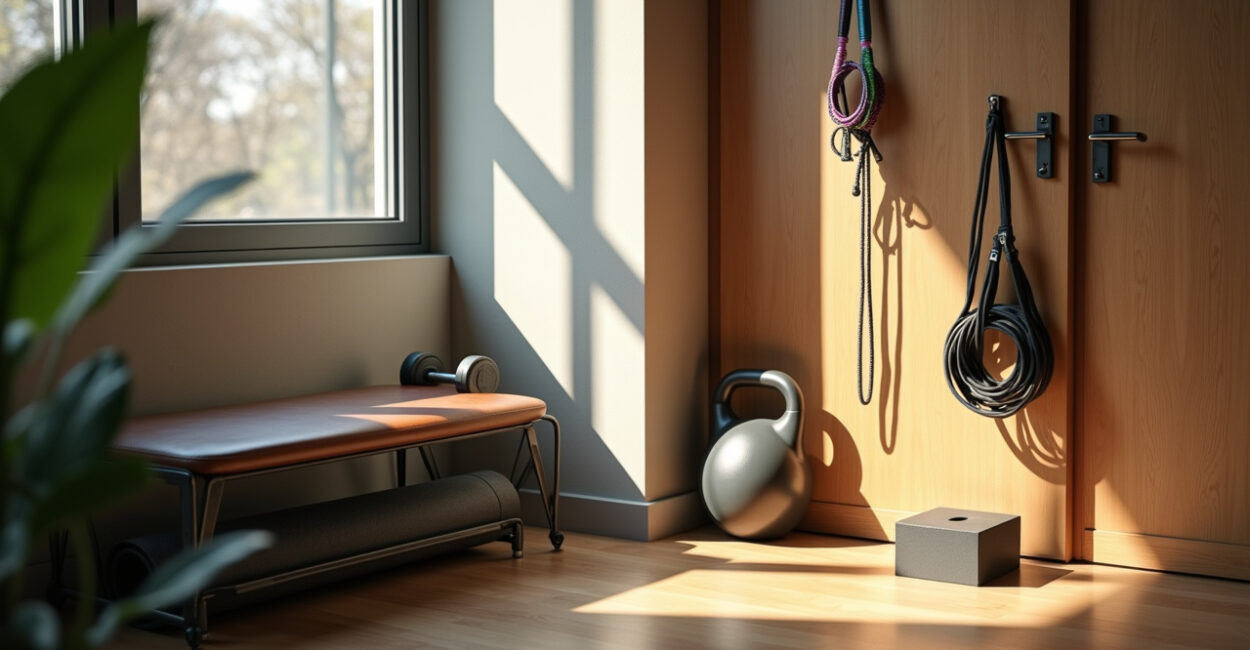
Imagine clearing one small corner of your apartment and turning it into the most useful 6-square-foot fitness zone you’ve ever owned. This equipment guide will help you pick seven high-impact, space-smart items that actually change results — not just collect dust. Read the next few sections and you’ll know what to buy first, what to skip, and how each piece pays off for your goals, space, and style of training.
The One Purchase That Gives the Biggest All-around Return
Adjustable dumbbells often beat a rack of plates. They let you move from heavy sets to light conditioning in seconds. For strength, hypertrophy, and conditioning, a good pair replaces five to eight fixed dumbbell sizes. The equipment guide logic here is simple: more exercises, less space, fewer decisions between sets. Consider cost-per-exercise: adjustable sets cost more up front but cut clutter and deliver more usable weight range per dollar over time.
What to Buy First Based on Your Primary Goal
If your goal is strength, buy a barbell and a compact squat stand first. If you want fat loss or general fitness, start with a rower or a high-quality kettlebell. This equipment guide advice is about prioritization: pick the tool that makes your chosen workouts unavoidable and enjoyable. A short list of examples helps decide fast:
- Strength: barbell + squat stand
- Conditioning: rower or assault bike
- Compact cardio: foldable treadmill or jump rope
- Functional/mobility: kettlebell + yoga mat

The Space-smart Kit for Tiny Rooms (what Fits and Why)
Small spaces demand multipurpose gear. Think vertical storage, foldable designs, and items that stack. A foldable bench, a set of resistance bands, and a compact rack can recreate 80% of gym routines in 20% of the floor space. Compare expectation vs reality: you might expect a treadmill to be essential, but a quality rower packs away and offers full-body work with a smaller footprint. Avoid wide machines unless you have a dedicated room.
The Budget Vs. Value Comparison You Actually Need
Spending less doesn’t always save you money. Cheap gear breaks and forces repeat purchases. Better to spend on one durable item that changes your routine. Here’s a quick comparison:
- Cheap brands: low cost now, high replacement cost later.
- Mid-range: best balance for most people.
- High-end: worth it for heavy daily use or long-term investment.
Rule of thumb: pay more for parts that move and bear load — bearings, plates, straps — and save on static items like mats.
Seven Essential Picks: Exactly What to Buy (and Why)
This is the actionable core of the equipment guide. The seven items below are listed with a use-case and cost-benefit note.
- Adjustable dumbbells — use-case: full-body strength; cost-benefit: replaces many pairs, saves space.
- Kettlebell (single or duo) — use-case: swings, conditioning, core; cost-benefit: cheap, versatile.
- Compact barbell + foldable squat stand — use-case: heavy lifts; cost-benefit: near-barbell performance without a full power rack.
- Rowing machine — use-case: low-impact cardio and conditioning; cost-benefit: full-body burn in limited space.
- Resistance band set — use-case: mobility, warm-ups, added resistance; cost-benefit: extremely inexpensive, travel-ready.
- Adjustable bench (folding) — use-case: pressing and support; cost-benefit: expands exercise variety massively.
- Jump rope or compact cardio tool — use-case: HIIT and quick sessions; cost-benefit: highest calories-per-dollar.
Common Mistakes People Make When Building a Home Gym
People buy what looks cool, not what they’ll use. A common error: buying a large machine for motivation — then never using it. Another mistake is ignoring flooring; cheap floors bounce and damage plates. What to avoid:
- Skipping proper storage — clutter kills consistency.
- Buying for “future me” — future you rarely shows up.
- Choosing single-use machines over versatile gear.
- Neglecting maintenance — a rusty chain or loose bolts ends sessions early.
The Test Run: How to Decide Within 30 Days
Try this: live with the gear you think you want for 30 days. If you still use it three times a week, it was a good purchase. If not, sell it and buy the next high-impact item on this equipment guide list. Short experiments beat long regrets. Mini-story: a neighbor bought an expensive treadmill, used it twice, and swapped it within three months for adjustable dumbbells and a rower that are now central to their routine.
For durability and safety standards, check trusted sources when comparing brands. For example, exercise physiology resources at CDC – Physical Activity and equipment testing from university kinesiology departments like manufacturer pages and university studies can help validate claims. Also consult independent consumer reports before big purchases.
Now pick one item, set a 30-day plan, and commit to using it. The best home gym is the one you actually use.
Which Piece Should I Buy First If I Only Have a Closet-size Space?
If you have a very small space, start with adjustable dumbbells and a compact bench or a high-quality kettlebell paired with resistance bands. Adjustable dumbbells cover pressing, rows, lunges, and many unilateral moves. Kettlebell work gives cardio and strength in one tool. Bands add mobility and progressive resistance without taking floor space. Together they let you perform a wide range of programs, from strength training to HIIT, while fitting inside a closet or under a bed for storage.
How Much Should I Expect to Spend for a Functional, Long-lasting Starter Kit?
A solid starter kit that lasts should cost between $300 and $1,200 depending on choices. At the low end you can buy a kettlebell, bands, and a jump rope. Mid-range gets you adjustable dumbbells and a foldable bench. High-end includes a rower or a commercial-grade barbell setup. Think in terms of cost per workout: a durable piece that keeps you consistent often pays off within months when compared to a gym membership or repeated cheap purchases.
Are Foldable Benches and Compact Racks Safe for Heavy Lifting?
Many foldable benches and compact racks are safe if they meet load ratings and are from reputable brands. Look for clear weight limits, solid locking mechanisms, and positive reviews about build quality. For heavy, frequent lifts, a sturdier rack or a small dedicated power rack is safer. If you plan to lift near your one-rep max regularly, invest in proper safety pins or spotter arms. Always follow manufacturer assembly instructions and inspect gear regularly for wear.
Can I Get a Full-body Workout Without a Barbell?
Yes. With adjustable dumbbells, kettlebells, bands, and a rower or jump rope you can hit all major movement patterns: squats, hinges, pushes, pulls, and carries. Programs that mix strength-style sets with conditioning rounds deliver comparable results for many trainees. However, if your goal is maximal barbell-specific strength (like powerlifting), the barbell still has unique advantages. For most general fitness goals, a barbell-free setup is efficient, space-smart, and cost-effective.
How Do I Maintain Equipment to Extend Its Life and Performance?
Maintenance is simple but often ignored: keep metal parts dry, tighten bolts monthly, and lubricate moving parts like rower chains or adjustable mechanisms per the manual. Store bands away from direct sunlight to prevent brittleness. Clean sweat from benches and pads to avoid damage. Check for loose handles or worn straps before each session. Small maintenance steps add years to gear life and prevent sudden failures that interrupt training and cost more in replacement.