

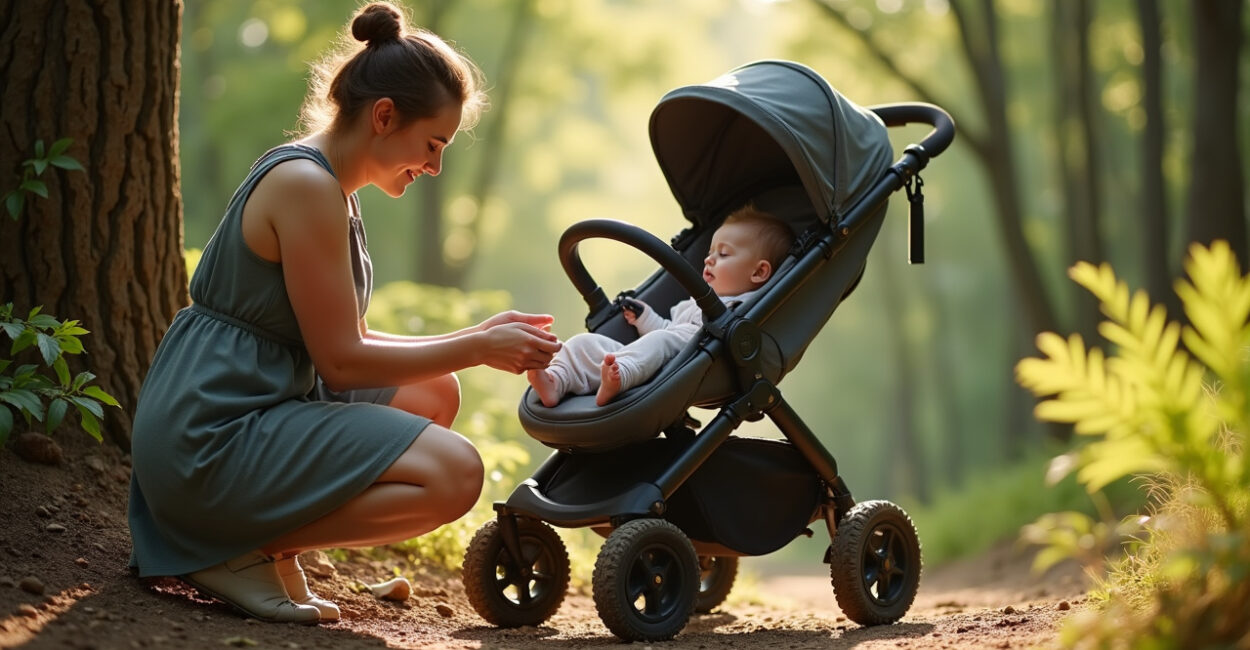
The stroller skids sideways on a root and your heart does that quick little jump parents know too well. Nature walks should feel like fresh air, not a balancing act. These stroller gear tips will stop that vertigo: from swapping wheels to an all-terrain set, to sunscreen hacks that keep naps peaceful under dappled light. Read fast — the first three tips are the ones that save the outing most often.
The Single Upgrade That Changes Every Trail
Swap the wheels first. Outfitting a city stroller with all-terrain wheels is the one change that turns a wobbly stroller into a steady ride. Think bigger tires, low air pressure, and better tread. I once switched a compact stroller’s plastic wheels for pneumatic tires and the stroller handled a sandy beach like a champ. Expect: fewer jolts, fewer interrupted naps, and less torque on your wrists. If your model accepts aftermarket wheels, this is your priority.
What Grown-up Suspension Actually Does for Your Kid
Smoother suspension keeps naps longer and tantrums shorter. Good suspension absorbs the shock that would otherwise wake your baby or make them cry. Not all “suspension” is equal — some strollers have visible springs; others use small dampers hidden in the frame. Try pushing the stroller empty on rough pavement and feel the difference. If the stroller bounces a lot, look for models or parts with better damping. It’s the difference between a calm nap and a ruined afternoon.
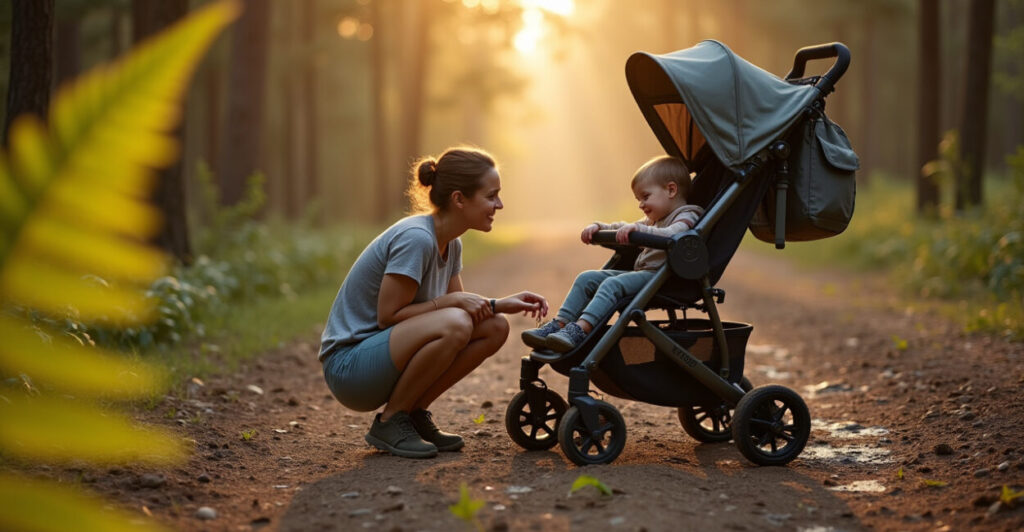
11 Practical Stroller Gear Tips for Uneven Nature Paths
Here are the must-do, hands-on moves.
- All-terrain or pneumatic wheels — first upgrade.
- Locking front wheels for straight-line rolling.
- Check and adjust tire pressure before long walks.
- Invest in a wrist strap to prevent runaway strollers downhill.
- Use a foam seat liner for small bumps and insulation.
- Rain cover that vents to prevent overheating.
- Large sun canopy and a detachable sunshade for naps.
- Lightweight foldable trekking poles or a stroller leash for steep trails.
- Compact first-aid kit stashed in the basket.
- Reflective tape for low-light hikes.
- Secure storage bag keeping snacks and essentials reachable.
These tips combine to make rough terrain manageable and safe.
The Little Hacks That Keep Your Kid Cool or Warm
Temperature matters more than you think. Simple hacks like a breathable liner in warm weather and a fleece footmuff when it’s chilly keep your child comfortable and reduce mid-walk changes. Sunscreen and a UPF canopy do different jobs: sunscreen protects exposed skin; the canopy keeps direct rays off eyes and face. Use both on bright days. A thin muslin cover can block wind without overheating. Small choices mean fewer stops and happier kids.
What Most Parents Get Wrong (and What to Avoid)
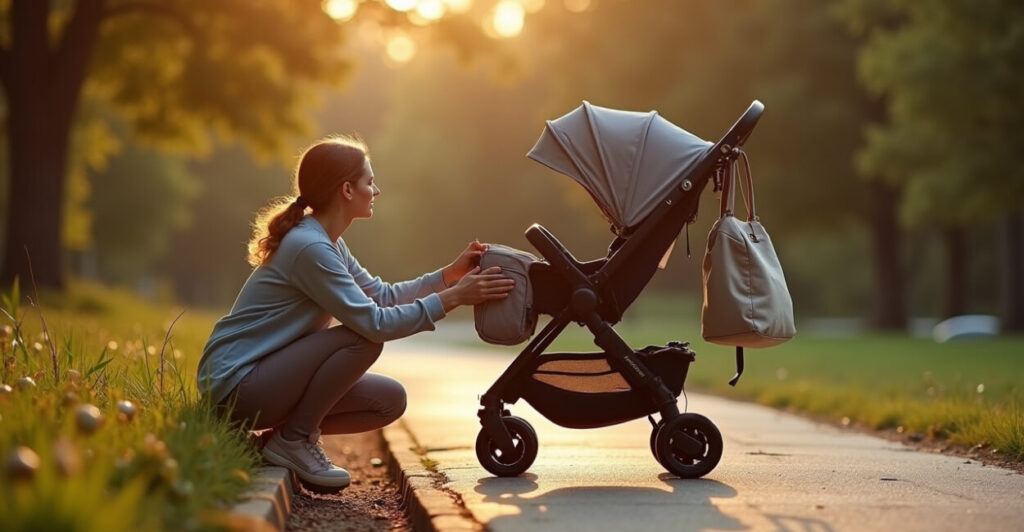
Stop treating stroller gear like optional extras. Three common errors derail outings: overloading the basket (makes tipping likely), leaving the handbrake off on slopes, and assuming folding equals stability. Don’t hang heavy bags on the handles. Avoid cheap covers that trap heat. And don’t assume all “all-terrain” claims are true — test them on the exact surface you plan to use. These mistakes cost time and stress. Fix them and your walks improve immediately.
How to Choose Gear That Fits Your Lifestyle
Your stroller should match your trails. If you hike once a month, durable wheels and a rain cover are enough. If you’re on trails weekly, prioritize suspension and a rugged frame. Ask: Will I carry this often? Does it fit my car? Test folds, one-handed if possible. Look for modular systems so parts can be upgraded. And prioritize safety features: a five-point harness, reliable brakes, and visible reflectors. Practical choices beat flashy features every time.
Quick Checklist Before You Step on the Trail
One-minute prep prevents one-hour meltdowns.
- Check tire pressure and wheel locks.
- Secure harness and remove loose toys.
- Pack water, snacks, sunscreen, and a light blanket.
- Attach wrist strap and test the brake on a small slope.
- Foldable stool or changing pad in case you need a break.
Do this every time and you’ll notice fewer surprises.
For evidence-based safety tips on outdoor family activities, see the CDC’s child safety pages. For guidance on sun protection and skin cancer prevention, the National Cancer Institute offers clear, research-backed advice.
There’s an easy test to know if your stroller setup is ready: push it over the roughest 100 feet you can find. If you arrive smiling and so does your kid, you’re set. If not, upgrade one thing and try again.
Final Provocation
Choose one upgrade this week and make nature walks feel effortless. One small change can turn a stressful outing into a habit your family keeps for years.
What Wheel Type is Best for Mixed Terrain?
For mixed terrain, pneumatic (air-filled) wheels usually offer the best balance of comfort and traction. They absorb shocks from roots, gravel, and uneven pavement much better than hard plastic wheels. Tunable tire pressure lets you adapt to sand or rocks: lower pressure on soft ground, higher on pavement. Consider wheel diameter too—larger wheels roll over obstacles more easily. If your stroller accepts aftermarket wheels, swapping is often cheaper than buying a new model and gives you a clear performance boost on varied trails.
Can I Use a Regular Stroller on Hiking Trails Safely?
You can use a regular stroller on easy, well-maintained trails, but be cautious. City strollers often lack suspension, large tires, and secure brakes, which increases jostling and the chance of tipping. Limit outings to smooth paths, avoid steep slopes, and don’t overload the stroller. Adding a foam liner and a wrist strap helps. If you plan frequent hikes, invest in an all-terrain stroller or upgrade wheels and brakes. Safety comes from gear suited to the conditions and mindful handling on rough terrain.
How Do I Protect My Child from Sun and Heat During Hikes?
Layer sun-protection: use a UPF-rated canopy, lightweight clothing that covers skin, a wide-brim hat, and SPF 30+ sunscreen on exposed areas. Keep the stroller ventilated to avoid trapping heat — a mesh sunshade helps. Offer water frequently and schedule walks for cooler parts of the day. Note that dark fabrics absorb more heat; choose light colors for liners and covers. If your route gets intense sun, plan shaded breaks and watch for signs of overheating like flushed cheeks or rapid breathing.
Which Stroller Storage Tricks Save the Day on Long Walks?
Organize essentials into reachable pouches: snacks, wet wipes, a small first-aid kit, and a compact rain cover. Heavy items should go low in the basket to avoid tipping. Use a detachable organizer on the handle for quick access to your phone and keys. A bungee cord can secure a water bottle or extra blanket without hanging weight from the handle. For longer hikes, a lightweight hiking backpack for you plus a minimal gear setup in the stroller keeps balance and mobility optimal.
When Should I Replace Stroller Parts Versus Buying a New Stroller?
Replace parts like wheels, canopies, and harnesses when damage or wear reduces safety or usability. Upgrades such as all-terrain wheels or improved suspension can extend a stroller’s life and improve performance at lower cost than a new purchase. Consider a full replacement if the frame is bent, the brake fails, or the stroller lacks modern safety standards. If maintenance keeps costing more than half the price of a new, safer model, it’s time to shop for a replacement that better fits your needs.