


The Zoom ends, your inbox pings, and for four seconds you do a viral breathing trick you saw on social—inhale for four, exhale for six—and somehow your shoulders drop. That quick pause is a piece of the mindful breathing movement flooding feeds. It looks effortless, but does it actually change your focus, stress, or productivity between meetings? This piece cuts through the trend: the science, practical micro-protocols for remote workers, and a hands-on test of claimed benefits.
Why People Swear by Mindful Breathing (and Why Some Studies Say “maybe”)
There’s evidence that brief breathing shifts physiology—but the effects vary. Controlled studies show paced breathing can lower heart rate and reduce cortisol spikes in the short term, while meta-analyses caution that long-term mood benefits need more consistent methods. A practical takeaway: breathing reliably alters your nervous system for minutes to hours, not necessarily rewiring your baseline anxiety overnight. For balanced context, see research summaries from PubMed and commentary from institutions like Harvard Health.
The Mechanism That Nobody Explains Right Away
It’s not mystical—it’s biochemistry and baroreceptors doing their job. Slow exhalation nudges the parasympathetic nervous system via the vagus nerve and changes blood pressure signals (baroreflex), which tells the brain to ease off the gas. That cascade influences attention, heart rate variability, and subjective calm. In plain terms: breathe slower, you dim the alarm response. The trick is dosage—too fast or inconsistent and you get no effect, or worse, lightheadedness.

3 Micro-protocols Remote Employees Can Do Between Meetings
Use these between calls—no mat, no apps, no awkwardness.
- Two-minute reset: 4s inhale, 6s exhale, repeat 10 cycles. Good after a hard call.
- One-minute focus tap: 6 deep inhales through the nose, hold 2s, slow exhale—opens working memory for the next task.
- 30-second grounding: Box breath compressed: 3-3-3-3, but whisper-count to keep it private. Fast to execute before a presentation.
Each protocol is designed for different micro-needs: stress down, attention up, or quick regroup. Try them for a week and track perceived focus and stress on a simple 1–5 scale.
A Practical Test: What Actually Changed After Trying Breathing for Seven Days
Expectation: calm, razor focus, better sleep. Reality: small, reliable wins and one surprising cost. After trying the two-minute reset after three afternoon meetings daily for a week, reported mid-afternoon stress dropped two points on a five-point scale and perceived focus rose one point. The surprise: on evenings with intense hyperventilation-style online tutorials, a minority felt jitterier—proof that technique matters. Small, repeatable practices beat sporadic, dramatic sessions.
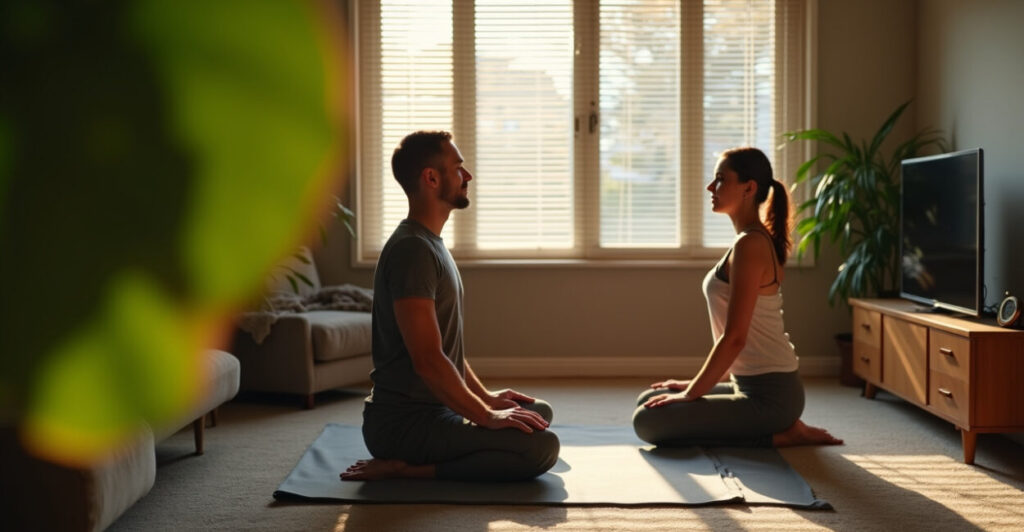
Mistakes People Make (and What to Avoid)
Most viral routines fail because of four predictable errors.
- Trying advanced patterns without mastering basic diaphragmatic breathing.
- Holding breath too long—leads to dizziness.
- Expecting instant life overhaul after one session.
- Doing breathing in noisy environments where it becomes performative, not restorative.
Fix: learn relaxed belly breathing, keep exhalations slightly longer than inhales, and set realistic goals—micro-sessions, measured changes.
Comparison: Mindful Breathing Vs. Quick Caffeine Hit
Side-by-side, the caffeine spike and a two-minute slow-breathing reset produce opposite physiological profiles. Caffeine boosts alertness fast but can increase heart rate and anxiety; mindful breathing reduces sympathetic activation while modestly improving attention. In practical terms: caffeine sharpens you for the short run; breathing stabilizes you for clearer decision-making without the crash. For many remote workers, combining a small caffeine dose with a breathing cooldown delivers the best tradeoff between energy and composure.
How to Incorporate Mindful Breathing Into Your Workday Without Being “that Person”
Make it invisible and habitual. Tie a breathing mini-routine to an existing trigger: after you close a meeting tab, do a 60-second reset; after lunch, a grounding round before reopening work. Use headphones if you want to follow guided cues, or use a subtle timer. Consistency trumps duration. The aim is not a yoga vibe at your desk—it’s a reliable cognitive tool you wield like a keyboard shortcut.
Mini-story: On Tuesday, a product manager took a 60-second reset after a combative sync. Ten minutes later she realized she’d drafted a calmer reply and avoided escalating an email thread—small breathing, big outcome.
Want to try protocols that match your schedule? Start with the 30-second grounding and build up to the two-minute reset. Your body notices faster than your thoughts do.
Final Provocation
If a two-minute breath can change the tone of a meeting, what would five uninterrupted minutes a day do to your relationships, work decisions, or sleep? The experiment is cheap. The risk is mild dizziness. The potential upside: surprising clarity when you need it most. Try it for a week—not to become flawless, but to notice what actually changes.
Is Mindful Breathing the Same as Meditation?
They overlap but aren’t identical. Mindful breathing is a focused technique—attention on breath patterns—to regulate physiology and attention quickly. Meditation often includes breathing but can expand to open awareness, compassion practices, or formal sitting routines lasting longer than a micro-breath. You can use mindful breathing as a standalone tool between meetings, whereas meditation typically requires more time and a different mental frame. Both build attentional control, but mindful breathing is optimized for rapid, repeatable resets.
How Long Before I Notice Benefits from Short Breathing Sessions?
Many people notice immediate changes—reduced tension, clearer thoughts—after one proper session; lasting changes in baseline stress or sleep usually require consistency over days to weeks. Short protocols produce measurable physiological shifts in minutes, but to change trait anxiety or cognitive endurance you’ll likely need daily practice for several weeks. Track simple metrics (mood and focus on a 1–5 scale) to detect subtle trends rather than waiting for dramatic change.
Can Breathing Exercises Replace Medication or Therapy?
No—breathing is a complementary tool. For mild stress and situational anxiety, mindful breathing can be highly effective and reduce reliance on quick fixes. But clinical anxiety disorders, depression, or other psychiatric conditions typically require evidence-based therapy, medication, or both. Think of breathing as part of a toolbox: it supports but does not replace professional care. If symptoms are persistent or severe, consult a licensed provider.
Are There Any Safety Concerns or People Who Should Avoid Certain Techniques?
Most basic breathwork is safe for healthy adults, but certain practices—forceful hyperventilation, long breath holds, or extreme pranayama—can cause dizziness, fainting, or panic in susceptible people. Pregnant people, those with cardiovascular conditions, or anyone with a history of panic disorder should consult a clinician before doing intense breathwork. Stick to gentle paced breathing (longer exhales, relaxed belly breaths) and stop if you feel lightheaded or uncomfortable.
How Do I Measure Whether Mindful Breathing Improves My Work Performance?
Use simple, repeatable metrics tied to your daily tasks: rate your focus and stress 1–5 after sessions, count completed focused work blocks, or track how many times you escalate emails. Compare weeks with and without the practice. Objective measures—like fewer clarifying emails or faster decision times—are ideal but harder to capture; self-reported mood and task completion provide quick, actionable feedback. The goal is consistency and small, observable shifts rather than perfect causation.