

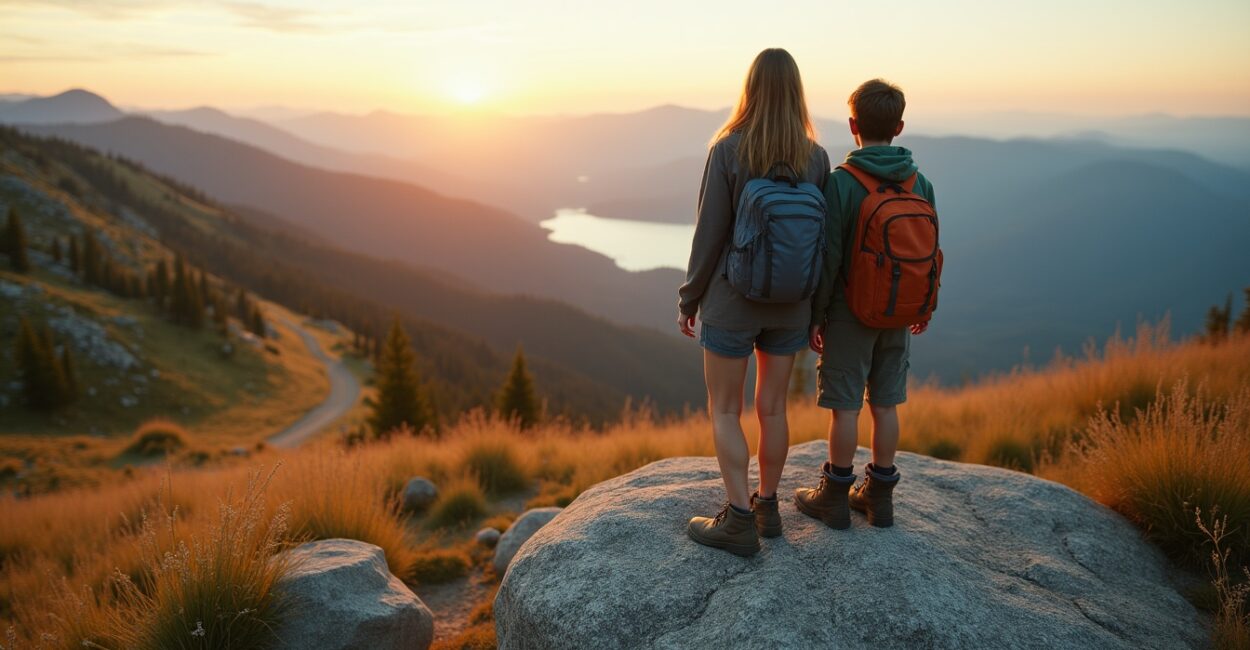
There’s a particular kind of magic at the top of a short climb: you stand for five minutes, the air opens up, and a panoramic view repays everything you just did. If you crave those moments but don’t want a day-long slog, these easy mountain hikes are your cheat code—short approaches, friendly grades, clear turnaround points, and summits that are unapologetically photo-ready.
Contents
ToggleWhy a 30–60 Minute Climb Can Feel More Rewarding Than a Full-day Summit
Short hikes concentrate the good parts of mountaineering: ascent, view, return—without the fatigue. Expect 300–600 vertical feet, well-marked trails, and a clear summit that delivers a 180–360° vista. That compression makes the payoff immediate: you hike, you arrive, you linger. Families and beginners get the emotional high of reaching a crest without sunscreen-smeared exhaustion. For research on outdoor participation patterns and health benefits, see the National Park Service and a recreational hiking study at NPS and USDA Forest Service.
How to Read Trailgrade Like a Local (and Pick Hikes You’ll Actually Finish)
Trailgrade tells you if a route is a pleasant walk or a thigh-burner in disguise. Look for grades listed as “easy/moderate” or numerical slopes under 10–12% for family-friendly outings. Broken stone steps and switchbacks usually mean steady but manageable ascent. For flat-but-views options, favor ridgelines or old fire roads. Expect some short steeper pitches near summits; they’re often only 50–100 yards. Bring trekking poles for balance if you have kids or older adults in your group—they turn surprises into steady steps.
Five Curated Hikes Under Two Miles That Feel Like Summits
These are not wandering loops—each one ends with a distinct, camera-ready top.
- Beacon Ridge Loop — 1.2 miles roundtrip, 450 ft gain, stone cairn summit with 270° view. <li=Pine Knob Lookout — 0.9 miles RT, 350 ft gain, small wooden platform turnaround (great for photos).
- Lakeview Bluff Trail — 1.8 miles RT, 600 ft gain, overlooks alpine lake (perfect sunset spot).
- Eagle’s Perch — 1.0 mile RT, 300 ft gain, sandy summit—easy for toddlers to reach.
- Old Fire Road Ascent — 2.0 miles RT, 500 ft gain, gradual grade with bench at crest.
The One Comparison That Changes How You Choose a Hike: Expectation Vs. Reality
Expectation: “easy” equals flat; Reality: “easy” often means short and steep in parts but with generous rest spots. Many map labels mislead—“easy” might be 0.8 mile with a sudden 200-foot scramble. Choose based on turnover points and summit type: granite ledge summits versus forested knolls give very different experiences. If you want uninterrupted views, prioritize an exposed rock crest. If you want shade, pick a tree-ringed top. This simple shift—summit type over length—will change your weekend decisions.
Turnaround Points and Timing: When to Keep Going and When to Head Back
The comeback is as important as the climb—design a clear turnaround so no one gets “a few more steps” fatigue. Set physical markers: a cairn, a bench, or a distinctive boulder as your true summit. For families, use time-based rules: if you haven’t reached the crest in 45 minutes, regroup and decide. Weather matters—turn back if clouds drop visibility or wind exceeds comfortable levels. These are short hikes; being conservative preserves the “we nailed it” vibe rather than “we barely escaped.”
Common Mistakes on Easy Mountain Hikes (and How to Avoid Them)
People underestimate exposure, overpack, or skip micro-navigation—those are the quick ways a short trip becomes stressful.
- Underestimating sun and wind—pack layers and sunscreen.
- Ignoring trail confusion—carry a simple map or use a downloaded route.
- Starting too late—afternoon storms can arrive fast in mountains.
- Not setting a clear turnaround—avoid the “one-more-ridge” trap.
When a Mini-story Proves the Point: The Three-phone Summit
We reached a tiny granite knob in 40 minutes, each of us with a different agenda: one to photograph, one to sketch, one to sit quietly. The knot of people at the top laughed when all three phones showed different light—golden, flat, stormy—over the same ridge. We stayed 20 minutes, shared snacks, and walked down satisfied. That’s the core promise of easy mountain hikes: you can arrive varied, and still leave with the same, unmistakable reward—a view that rewires your day.
Closing Provocation: What If Your Best Hike is the One Under an Hour?
Big panoramas don’t require big sacrifices. The next time you scroll past another long-route guide, remember: a compact climb can reset your mood, connect the family, and give you a travel-sized triumph. Go find a summit that fits your morning or your lunch hour—and treat the view like the main event.
How Fit Do I Need to Be for Easy Mountain Hikes?
Most easy mountain hikes are accessible to people with basic fitness: think steady walking, occasional short steeper pitches, and 300–600 feet of elevation gain. If you can walk briskly for 30–60 minutes on paved or gravel paths, you’re likely ready. For beginners, start with the shortest option, bring a small daypack with water and snacks, and take breaks. Use trekking poles if you have knee concerns. Always check trail descriptions and grades—some “easy” trails include short rock steps that might require careful footing.
What Should I Pack for a Short Summit That’s Photo-ready?
Packing for a short but scenic hike should be light and purposeful: one liter of water per person, a wind shell or light jacket, sunscreen, sunglasses, a small first-aid kit, and snacks. Add a phone power bank if you plan to photograph extensively, and a microfiber towel if there’s water nearby. For families, include a small emergency blanket and extra layers for kids. Keep everything in a compact daypack—overpacking turns an easy route into a chore. Check weather forecasts before leaving and adjust layers accordingly.
How Do I Choose a Summit That’s Best for Kids and Older Adults?
Choose trails under two miles roundtrip, with gradual switchbacks or old fire roads and clear, non-technical summits—rock slabs with gentle edges or grassy knolls are ideal. Look for amenities: parking close to trailhead, benches, and short exposed sections rather than long scrambles. Read recent trail reports for footing and shade, and pick a time of day when temperatures are mild. Break the hike into small goals—reach the next bench or cluster of trees—and celebrate each one so motivation stays high for both kids and seniors.
Are Dogs Allowed and How Should I Manage Them on Short Mountain Hikes?
Many short mountain hikes allow dogs, but rules vary by park—always check trail regulations in advance. Keep dogs on leash where wildlife or cliffs are present, and bring extra water and a collapsible bowl. Short hikes can be deceptively hot on paws; avoid midday sun on exposed granite. Pack waste bags and practice Leave No Trace. If your dog is inexperienced, treat the route as an introduction: short segments, frequent rests, and a slow pace until you know how they handle elevation and terrain.
Where Can I Find Reliable, Official Trail Info Before Heading Out?
Before you go, consult official trail sources for current conditions and closures—national park or forest websites are best. Local ranger stations often post up-to-date alerts and parking rules. For broader planning, government and university resources offer data on trail use and safety; the National Park Service and USDA Forest Service sites provide authoritative maps and advisories. Cross-reference a recreational trail app with official pages, and download maps for offline use: cell service can fail in remote ridgelines, and printed maps never need charging.