

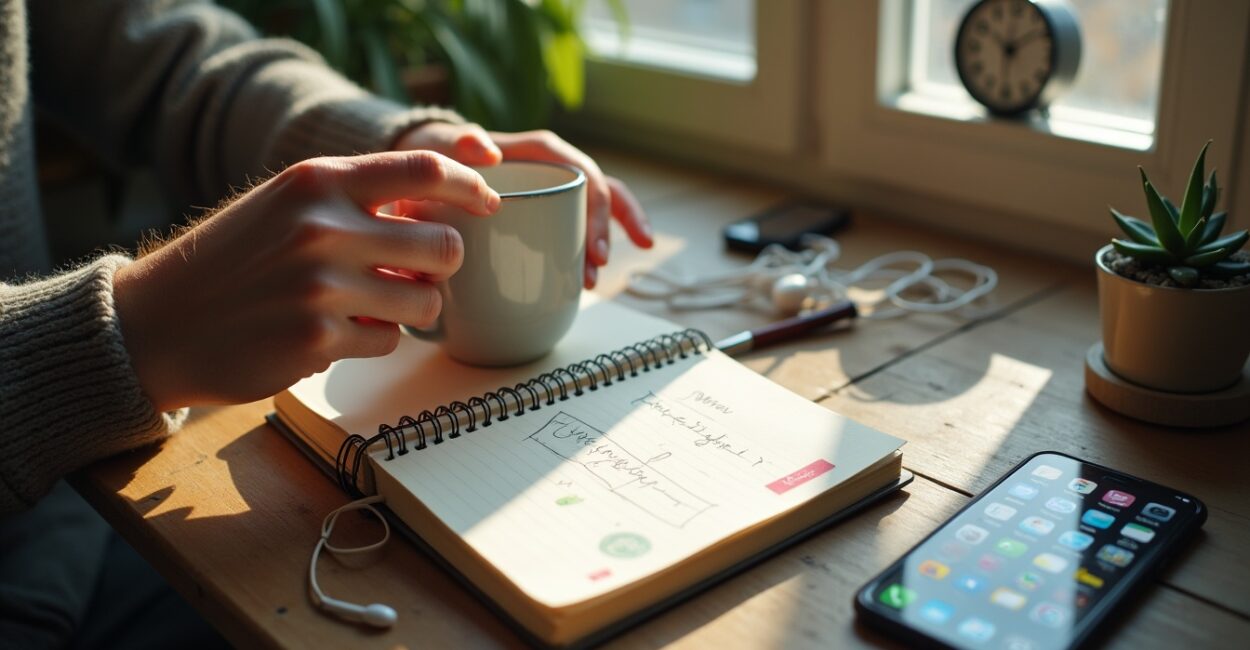
You wake up with plans, then your phone hijacks the morning, leaving you frustrated and behind, right? You’re not lazy, you’re sabotaged—by scattered tools, tiny tasks, and no clear first hour. The good news, you can fix this fast with small changes that actually stick.
Here’s the promise, simple and honest, Simple Productivity Hacks to Add to Your Morning Routine Now will give three evidence-based moves you can start tomorrow, plus device and app picks like iPhone shortcuts, Todoist and Forest, and a tight 3-day test plan to prove it works.
Why These Productivity Hacks Change Mornings
Think about the last time one tweak saved you an hour, felt brilliant, and made the rest of the day easier. That’s what these productivity hacks aim for, focused, evidence-backed, and tiny enough to start now.
Time-block the First Hour, Here’s Exactly How
- Block 25–45 minutes for your top MIT on your iPhone calendar
- Reserve 10 minutes for email triage with the two-minute rule
- Finish with a 10-minute power walk or stretch
Time-blocking primes your brain, and the first hour sets the tempo. Use Todoist to capture MITs, then lock them on your calendar. Here’s the secret, treat that block as a meeting with yourself and make it non-negotiable.

The Two-minute Inbox Rule and the Science Behind It
Here’s the quick win, if an email takes less than two minutes, do it now, otherwise defer with a label. Research on task switching shows reducing tiny decisions saves mental energy, and you’ll notice fewer micro-interruptions.
10-minute Power Walk and Why Movement Matters
- Walk outside if possible, sunlight boosts alertness
- Keep pace brisk, not exhausting
- Use Forest app to lock your phone and get the full benefit
Movement increases BDNF and focus, so a short walk is not optional, it’s performance medicine. Pair it with Forest on your phone to avoid scrolling and build a small win early.
Tools That Make These Productivity Hacks Actually Work
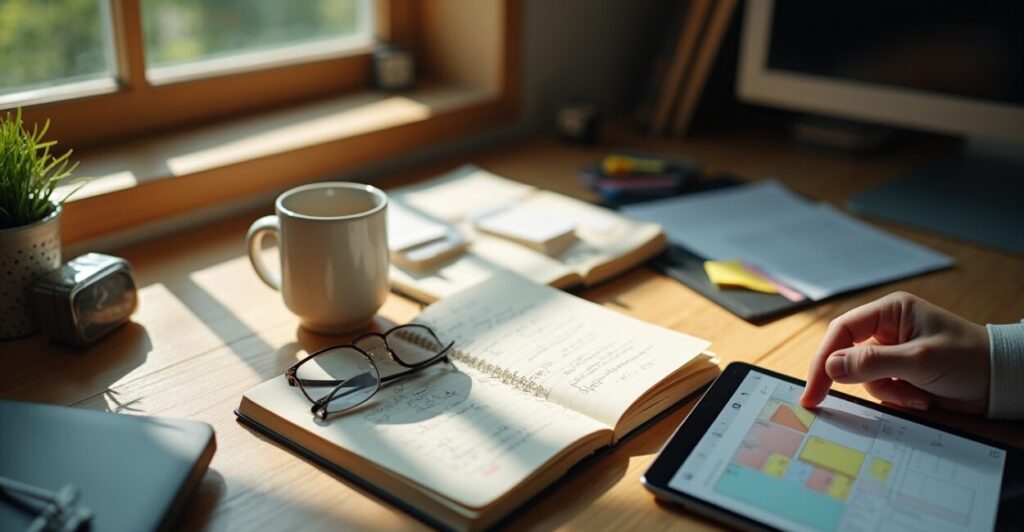
Use Todoist for tasks, iPhone calendar for blocks, Forest to prevent distraction, and a simple timer for the two-minute rule. But not all tools fit everyone, so test fast and iterate.
What to Avoid When You Try This
- Over-scheduling every minute
- Checking social apps during your first hour
- Using too many task apps at once
Over-scheduling kills flexibility, social apps erode focus, and multiple tools lead to context switching. Keep it ruthless, one task list and one calendar for the 3-day test, then adjust.
3-day Test Plan That Proves It to Yourself
| Day | Morning Routine | Measure |
|---|---|---|
| 1 | Time-block first hour on iPhone, two-minute inbox, 10-min walk | Tasks completed, mood (1–5) |
| 2 | Tweak timings, keep Todoist and Forest active | Distractions logged, time on task |
| 3 | Repeat best sequence, lock phone during focus | Output quality, ease of start |
Quick note, record simple metrics each morning and compare. This eliminates guesswork and turns subjective feelings into data. Want reliable sources, check research on habit formation at American Psychological Association and productivity studies at NCBI.
- Keep the first hour sacred
- Use one task app, avoid app-juggling
- Make movement non-negotiable
These three core rules reduce decision fatigue and give you a repeatable framework. The apps and devices are just scaffolding, the routine is the real asset.
But not everything needs to be perfect, start with small wins, test three days, then lock the parts that work. Here’s the kicker, a tiny consistent morning beats an elaborate routine you never follow.
Ready to try it tomorrow? Set one block on your iPhone for 45 minutes, open Todoist, start a two-minute inbox sweep, and take a 10-minute walk with Forest active. Report back after three days and see what actually changed.
How Long Should I Time-block My First Hour
Start with 45 minutes focused on one Most Important Task, it’s long enough to build momentum but short enough to avoid burnout. Use a timer, and protect that block on your iPhone calendar. If 45 minutes feels long, try 25 then build up—consistency matters more than duration.
Can These Productivity Hacks Work with a Busy Commute
Yes, adapt the walk into a brisk stretch or stand on transit, and use commute time to plan or listen to a focused 10-minute briefing. Use Todoist to capture MITs while queuing, and sync across devices so your iPhone or laptop has the next step ready when you arrive.
Which Apps Actually Help, and Which Waste Time
Todoist and Forest are practical because Todoist captures tasks and Forest enforces focus. Avoid habit apps that send constant badges and social apps that reward distraction. The best tools are the ones that remove choices, not add them, so pick one app for tasks and one for focus.
Is the Two-minute Rule Evidence-based or Just Anecdote
The two-minute rule is grounded in research on task initiation and decision friction, showing small actions lower resistance and increase follow-through. It’s practical and measurable, and when combined with time-blocking it reduces context switching and preserves willpower for higher-value tasks.
How Do I Measure Success After the 3-day Test
Track three simple metrics: tasks completed, distractions logged, and subjective mood rating each morning. Compare day three to day one—if you complete more MITs and feel less scattered, the routine worked. Keep what helps and drop what adds friction.