


You feel the tension the moment you step onto the patio, right You want calm but don’t know where to start or what actually works
Here’s the promise, plain and simple, you’ll get seven sensory-soothing plants that turn a noisy balcony into a true quiet garden, placement tips, upkeep hacks and what to avoid so every breath you take feels like a small reset
How the Quiet Garden Trick Actually Calms You
Think of this as a short cheat sheet for the senses, not a gardening textbook
Plants below were chosen for low rustle, fragrant notes and tactile softness, so your patio becomes a private pause button
Lavender That Pulls You Into Slow Mode
Place lavender near seating so scent drifts when you breathe, not blows away
- Best spot, sun-drenched edge of patio
- Water sparingly to avoid root rot
- Prune after bloom for more flowers next season
Lavender is low-maintenance and gives predictable scent cycles that cue the brain to relax, try a row behind seating and you’ll notice stress levels drop after a single deep inhale

Bamboo as a Soft Privacy Screen
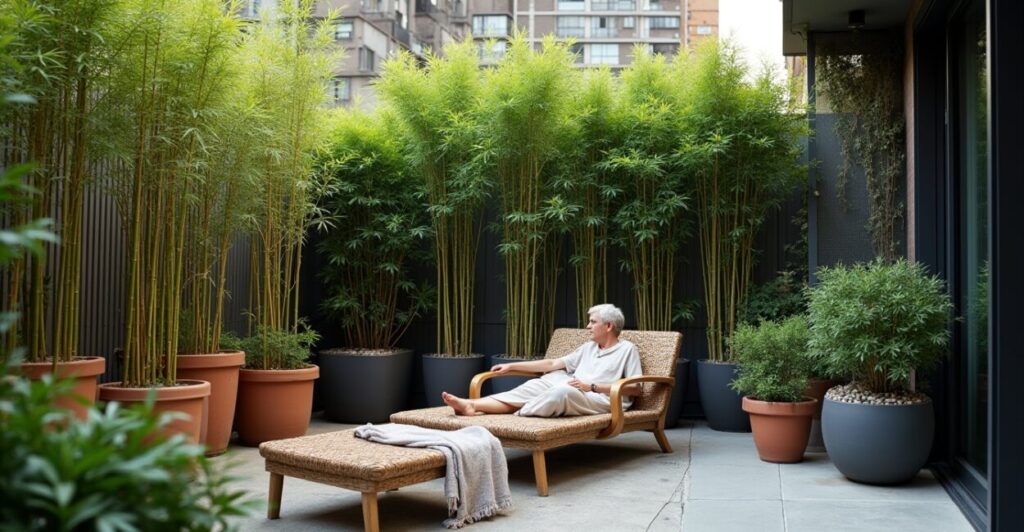
Bamboo blocks sightlines and muffles city noise without harsh leaves that slap in the wind
- Use clumping bamboo in containers to control spread
- Taller varieties belong at the back of the patio
Bamboo creates a vertical green wall that reduces visual clutter and creates a microclimate that feels cooler and quieter, plant it in staggered pots for layered sound buffering
Scented Geraniums for Touchy-feely Calm
Rub a leaf, smell citrus or rose notes, and you’ll see why sensory gardeners swear by Pelargonium
- Great in pots near seating for easy leaf access
- Pinch back to keep compact and fragrant
Scented geraniums reward you with immediate sensory feedback, the act of brushing leaves is calming and the aroma is subtle, perfect when you don’t want a dominating perfume

Hostas and Ferns for Tactile Ground-level Calm
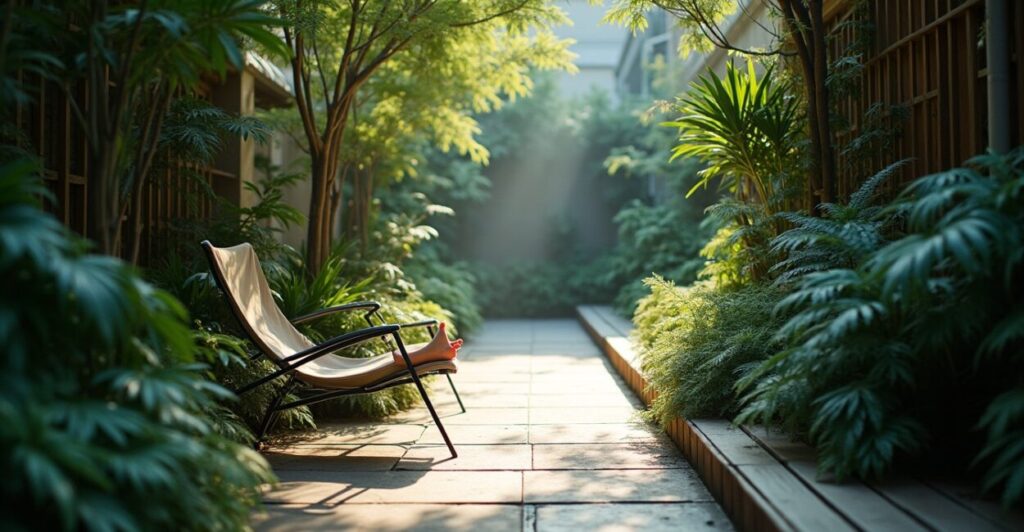
Shade lovers that offer soft textures and minimal noise when breezes pass
| Plant | Light | Maintenance |
|---|---|---|
| Hosta | Partial shade | Moderate, watch slugs |
| Fern | Shade | Keep evenly moist |
These plants work as a visual anchor near footpaths or under chairs, they reduce hard surfaces and make each step feel softer which matters more than you think
The Hidden Power of Rosemary and Other Low-noise Aromatics
Rosemary gives scent without constant shedding, it’s a winner for a quiet garden
Place near entryways or along railings so a breeze nudges scent your way, prune to keep it from becoming woody
Water Features That Whisper, Not Roar
Here’s the secret, a small bubbler cleverly placed behind greenery can mask street noise and enhance plant scents
- Choose a recirculating fountain under 40 dB
- Hide it among plants to soften the sound
A gentle water sound becomes part of the sensory palette, it pulls attention away from distractions and pairs beautifully with lavender and bamboo, for technical guidance consider checking EPA noise resources or landscape ideas at Royal Horticultural Society
What to Avoid So Your Quiet Garden Actually Stays Quiet
- High-friction grasses that clap in the wind
- Large leaf trees that drop constant debris
- Overhead speakers or wind chimes near seating
Avoiding these common mistakes keeps the sensory balance intact, choose low-rustle foliage and container placement that reduces maintenance, the goal is consistent calm not more chores
Placement quick wins think in layers, ground, mid-height and tall elements to trap sound and scent
Maintenance quick wins prune lightly, water thoughtfully and rotate pots seasonally to keep scents fresh
Ready to try one plant today
Pick the one that matches your light and touch it by evening, notice what calms you and double down
Can I Build a Quiet Garden on a Small Balcony
Yes you can, start with containers and vertical planters to maximize green without taking floor space, choose compact plants like lavender, scented geranium and clumping bamboo, arrange them in layers to create visual depth and acoustic buffering, use a small recirculating bubbler for gentle sound and prioritize easy-care species so the space remains a low-effort refuge you actually use
How Often Should I Water Lavender in a Quiet Garden
Lavender prefers infrequent deep watering, allow the top inch of soil to dry between waterings, in hot weather that may mean once a week and less during cool seasons, ensure pots have excellent drainage to prevent root rot, overwatering is a common mistake that reduces fragrance and plant health so err on the drier side
Which Plants Are Best for Noise Reduction in a Quiet Garden
Bamboo, dense evergreen shrubs and layered plantings reduce perceived noise by blocking sightlines and creating a microclimate that absorbs sound, combine tall bamboo at the back, mid-height rosemary or geraniums near seating and ground-level hostas to soften surfaces, this mix changes the acoustic profile and makes external sounds less intrusive
Can I Mix Scented and Non-scented Plants in a Quiet Garden
Absolutely mix them for balance, scented plants like lavender and rosemary give targeted aroma while non-scented textures like hostas and ferns provide visual calm, staggered placement prevents one scent from overpowering, this mixed approach creates a nuanced sensory environment that’s more relaxing than a single-note garden
Where Can I Find Reliable Plant Care Guides for My Quiet Garden
Look to authoritative sources for region-specific advice, university extension sites and major horticultural organizations provide research-backed tips, start with university extension pages for soil and zone info and use trusted gardening portals for design inspiration, these resources help you match plant choice to climate and avoid common pitfalls