

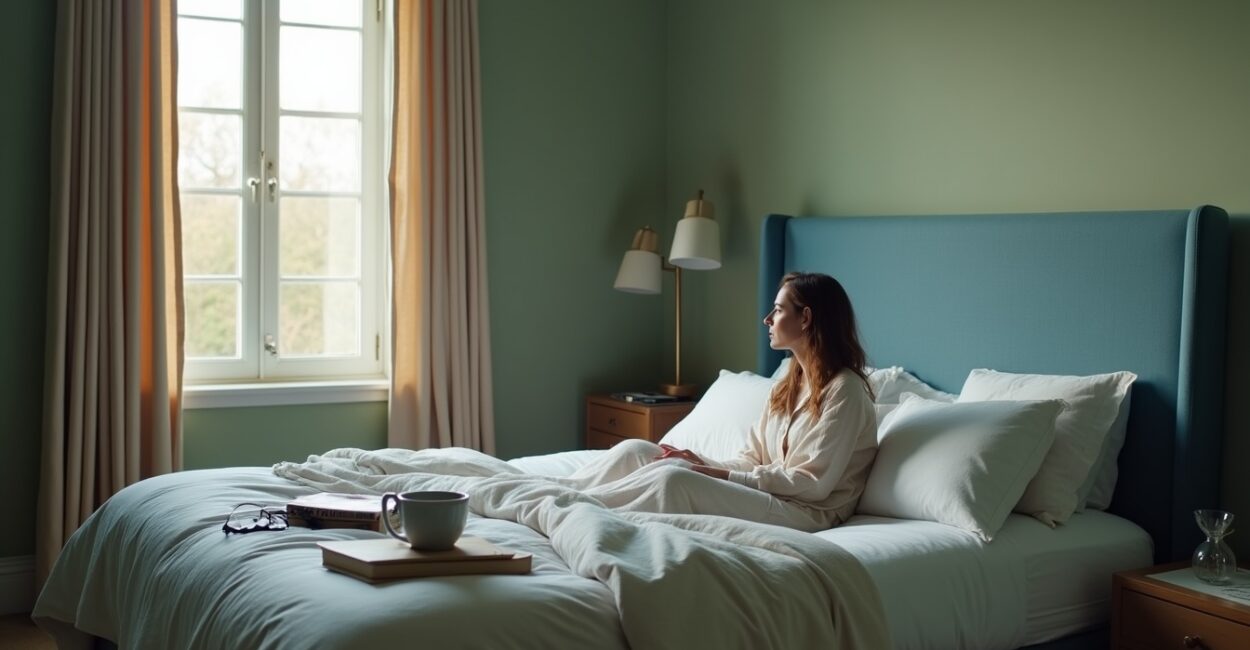
You lie awake again, replaying the day while your room feels like an accusation. You want sleep that actually repairs you, not just naps between screens.
Here’s a fast, doable plan to turn your space into a calm bedroom that helps you fall and stay asleep. I’ll show simple Farrow & Ball hues that lower arousal, blackout curtain swaps that work tonight, and mattress tips that stop midnight tossing.
How a Calm Bedroom Starts with Color
Science says color affects physiology, yes it’s real, and Farrow & Ball has palettes that nudge your nervous system toward rest.
Choose Cooler, Muted Farrow & Ball Hues
Go for greens like Farrow & Ball’s Calke Green or muted blues such as Hague Blue in a less saturated finish, they calm heart rate and breathing. Paint the largest surfaces in soft, low-sheen formulas to avoid glare and visual stimulation.
A Quick Blackout Curtain Swap That Actually Works
Don’t underestimate blackout curtains, they reduce light-driven cortisol spikes and make melatonin flow easier.
- Install floor-to-ceiling blackout panels
- Overlap seams and close gaps at the sides
- Use a double-rail for sheer + blackout combo
Small fixes like sealing edge gaps cut stray light that tricks your brain into thinking it’s daytime. The double-rail gives you daytime softness and nighttime darkness without heavy lifting.


Mattress Moves That Stop Tossing
Your mattress is the stage for sleep, don’t let it sabotage calm. Minor changes, big gains.
- Top with a breathable mattress topper
- Flip or rotate based on manufacturer guidance
- Replace if you have sagging or pain after waking
A breathable topper lowers surface heat and pressure points, which reduces micro-arousals. Rotating extends life and keeps your spine aligned, small steps that add up to deeper sleep.
Lighting, Temperature, and Ritual That Lock It In
Ponder this, light and temp are louder than you think, they set the stage for sleep chemistry.
Evening Light for a True Calm Bedroom
Shift to warm, dim lamps after sunset, avoid overhead LED glare. Use smart bulbs or dimmers to lower lux gradually, this mimics dusk and signals your brain it’s time to downshift.


What to Avoid When Creating Calm
- Bright walls in saturated warm hues
- Thin curtains that leak streetlight
- A mattress that sags or traps heat
- Keeping electronics in bed or on nightstand
- Too many patterns or reflective surfaces
These common mistakes increase nighttime arousal and interrupt sleep architecture. Removing them is often faster than buying new furniture, and the effect can be immediate when combined with color and blackout fixes.
One-room Staging Plan You Can Do Tonight
Here’s the secret, start simple and build. Do the low-effort swaps first for immediate wins.
| Action | Time | Immediate Effect |
|---|---|---|
| Hang blackout panels | 30–60 min | Less light, faster melatonin |
| Swap bedside lamp bulbs | 10 min | Lower arousal, calmer mood |
| Add breathable topper | 15 min | Less tossing, cooler sleep |
These moves stack: darker room + warmer light + cooler surface equals fewer awakenings. If you want manufacturer-backed specs, check sleep research at NHLBI and practical guidelines at Sleep Foundation.
Design Tweaks That Feel Luxurious but Are Cheap
Think texture and restraint, not expensive decor. A soft rug, monochrome bedding, and a single upholstered headboard calm the visual field.
- Limit contrast near the bed
- Use one focal art piece instead of many
- Stick to three complementary tones max
These design rules reduce mental load and let your eyes rest. When your visual environment is predictable, your brain spends less energy processing it and more on repairing you overnight.
Small Studies, Big Takeaways
Short lab studies link cooler blues/greens to lower sympathetic activity, and field studies show blackout sleep improves sleep duration. Here’s the practical part, you don’t need a full remodel, a paint sample, curtain swap, and topper often make measurable difference.
For deeper reading on environmental sleep factors, reputable sources include CDC.
FAQ 1: Can Painting My Bedroom with Farrow & Ball Really Change Sleep?
Yes, paint can change sleep by altering visual stimulation and perceived temperature. Choose muted Farrow & Ball greens or desaturated blues in low-sheen finishes to reduce arousal. Pair color with blackout curtains and warm, dim lighting to maximize effect. The combination is more effective than any single change.
FAQ 2: How Quickly Will Blackout Curtains Improve My Sleep?
Many people notice reduced awakenings the first night after installing quality blackout curtains because melatonin release is less disrupted by light. Full adaptation may take a week as circadian rhythms adjust, but immediate gains in perceived restfulness are common.
FAQ 3: What Mattress Features Are Most Important for a Calm Bedroom?
Look for breathability to reduce overheating, appropriate support for spinal alignment, and pressure relief to lower micro-arousals. A breathable mattress topper can transform a too-firm or slightly warm mattress quickly and affordably, improving sleep continuity.
FAQ 4: Are There Farrow & Ball Colors to Avoid for a Calm Bedroom?
Avoid high-chroma warm hues like bright oranges, vivid reds, or saturated yellows, they tend to increase alertness. Very dark, high-contrast colors can also be jarring unless balanced with soft textures and ample indirect lighting.
FAQ 5: What’s the Fastest Routine to Try Tonight for Better Sleep?
Start by dimming overhead lights after dinner, switch bedside bulbs to warm 1800–2700K, hang blackout panels or use an eye mask, and add a breathable topper. These immediate swaps lower physiological arousal and often lead to deeper sleep the same night.