


You feel restless, distracted, or overloaded — right when you need to reset. You’re not alone, and you don’t always need a plane ticket to Kyoto to find relief. Japanese gardens have a quiet grammar that soothes attention almost instantly.
Here’s the promise: I’ll show you the exact layout tricks — borrowed scenery, stone placement, water choreography, and sightlines — that create calm. Read on and you’ll leave with concrete ways to spot, copy, or seek out minimalist designs that calm you fast.
How Japanese Gardens Use Borrowed Scenery to Make Space Feel Larger
Have you noticed how a garden can feel boundless even if it’s tiny? That’s borrowed scenery: using the distant mountain, temple roof, or a tree outside the fence as part of the composition.
Think of it like framing someone in a photograph — everything beyond the frame becomes part of the scene. It expands your mind before you even step inside.
- Look outward: gates and paths point to features outside the plot.
- Keep edges subtle: fences and walls are low or artfully obscured.
- Plant for framing: branches and bamboo coax your gaze outward.
The Secret of Stones: Placement That Tethers the Mind
Stones in Japanese gardens aren’t random. They act as anchors for your eye and your breath.
Place a stone where your gaze naturally rests, then design sightlines that lead to and from it. It’s like choreography for your attention.
- Use asymmetry to avoid visual boredom.
- Cluster stones to create “pause points.”
- Contrast textures — rough stone next to smooth moss.
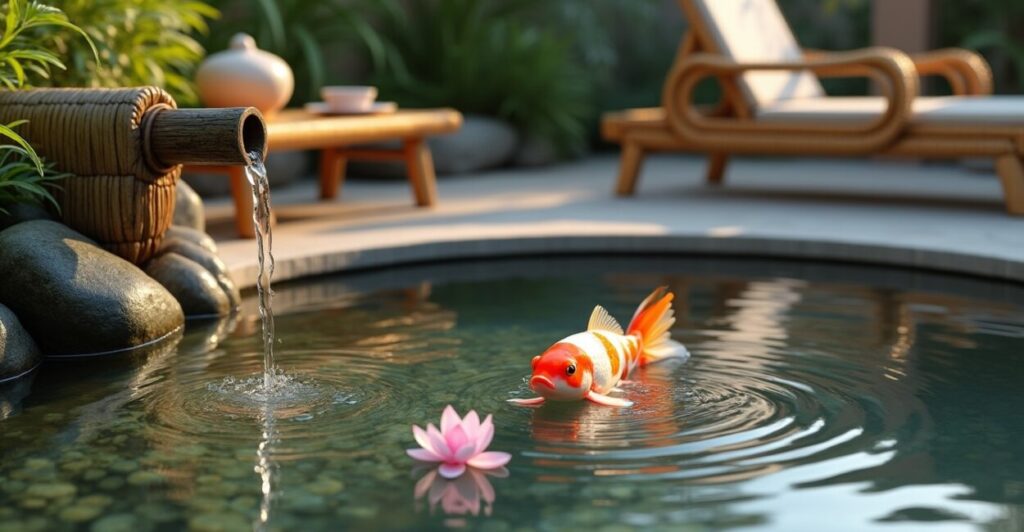
Water Features That Signal Calm: Sound, Sight, and Pace
Water does three things: it reflects light, layers sound, and prescribes tempo.
A slow drip or a koi pond slows your heartbeat more reliably than a meditation app. But placement matters — water should be visible from a comfortable sitting spot.
Intentional Sightlines: The Route That Calms Before You Arrive
Paths in Japanese gardens rarely go straight to a destination. They meander on purpose, controlling revelation and extending curiosity.
Here’s the point: your brain engages curiosity over and over, which paradoxically leads to calm. You expect the next view, so stress eases.

Major Styles That Shape Mood: Which Garden Soothes You Fastest
From the dry simplicity of karesansui to the lush stroll gardens, each style primes a different emotional response.
| Style | Mood | Best for |
|---|---|---|
| Karesansui (rock) | Minimal, contemplative | Small urban spaces |
| Chaniwa (tea) | Intimate, focused | Meditation and ritual |
| Tsukiyama (stroll) | Exploratory, restorative | Parks and estates |
Seasonal Swaps and Sensory Planting That Keep Calm Year-round
Japanese gardens are designed to change, not stay static. That seasonal choreography is a kind of therapy.
Spring’s cherry blossoms give you soft euphoria; autumn’s maples sharpen silence. Planters swap textures and scents so the garden always speaks in a new, soothing voice.
- Spring: sakura and early bulbs for gentle uplift.
- Summer: bamboo shade and cool-leaved hostas.
- Autumn/Winter: maples and evergreens for structure.
Where to Find Minimalist Japanese Gardens That Calm in Minutes
Want instant calm? Seek karesansui and tea gardens in museums, temples, or modern minimalist homes and hotels.
Tip: look for small, framed views, a single water sound, and a clear stone anchor. Those cues trigger the calming layout in under five minutes.
Common Mistakes to Avoid When Copying Japanese Gardens
Trying to recreate a Japanese garden without understanding its rules often yields something flat or kitschy. Don’t overcrowd with exotic plants, copy superficially, or place water where you can’t hear it. Authenticity comes from restraint, sightlines, and respect for seasonal change, not from a long shopping list of ornaments.
- Overplanting
- Ignoring sightlines
- Using cheap ornaments
Minimalist Design Cues: Quick Checklist for Calm
Here’s a fast checklist: one anchor stone, one water sound, a framed view, three plant textures, and a meandering path. Short on space? Prioritize sightlines and a single water feature — you’ll get more calm than with many small decorative pieces.
Japanese Gardens and Modern Wellness: Why They Still Work
Research ties natural patterns, fractal forms, and gentle sound to reduced stress. Japanese gardens pack those elements into a compact, intentional design. In short: they’re old-school neuroscience dressed as art. Try observing one for five minutes — it’s a mini reset.
Final thought: The secret layout of Japanese gardens isn’t mystical — it’s deliberate. It trains your eyes, ears, and expectations to slow down.
Now imagine applying one element today: a single stone, a simple path, or a small water sound. Go test it and see how quickly your mind follows.
FAQ 1: What Are the Essential Elements of Japanese Gardens?
Essential elements include borrowed scenery (shakkei), well-placed stones, water features, intentional sightlines, and seasonal plantings. Each element performs a functional role: stones anchor attention, water sets tempo, sightlines direct curiosity, and plants provide sensory change. Together they craft a layered experience that calms attention and invites slow observation.
FAQ 2: How Do Japanese Gardens Use Borrowed Scenery?
Borrowed scenery means intentionally incorporating external views — mountains, trees, roofs — into the garden’s composition. Designers frame those distant elements with gates, paths, or trees so your eye extends beyond the plot. This technique expands perceived space and creates continuity that feels naturally calming and surprising.
FAQ 3: Can a Small Backyard Achieve the Calming Effect of a Japanese Garden?
Yes. Focus on sightlines, a focal stone, and one water sound. Use pruning to suggest larger space and adopt asymmetry to avoid clutter. Minimalist choices — a single framed view and seasonal plants — often produce more calm in small areas than trying to pack in many features or exotic plants.
FAQ 4: What Should I Avoid When Designing a Japanese-style Garden?
Avoid overdecorating with ornaments, copying styles superficially, and cluttering sightlines. Don’t plant wildly without regard for seasonality or place water where it can’t be heard. Restraint and intentional placement matter more than authenticity of every plant or accessory. Less is usually more for calm.
FAQ 5: Where Are the Best Places to Experience Minimalist Japanese Gardens?
Visit temple gardens, museum courtyards, and tea gardens in cities or look for modern hotels and private homes that commission karesansui designs. Many botanical gardens also maintain Japanese sections. Seek small framed views and quiet corners — those deliver the quickest calming effect.