

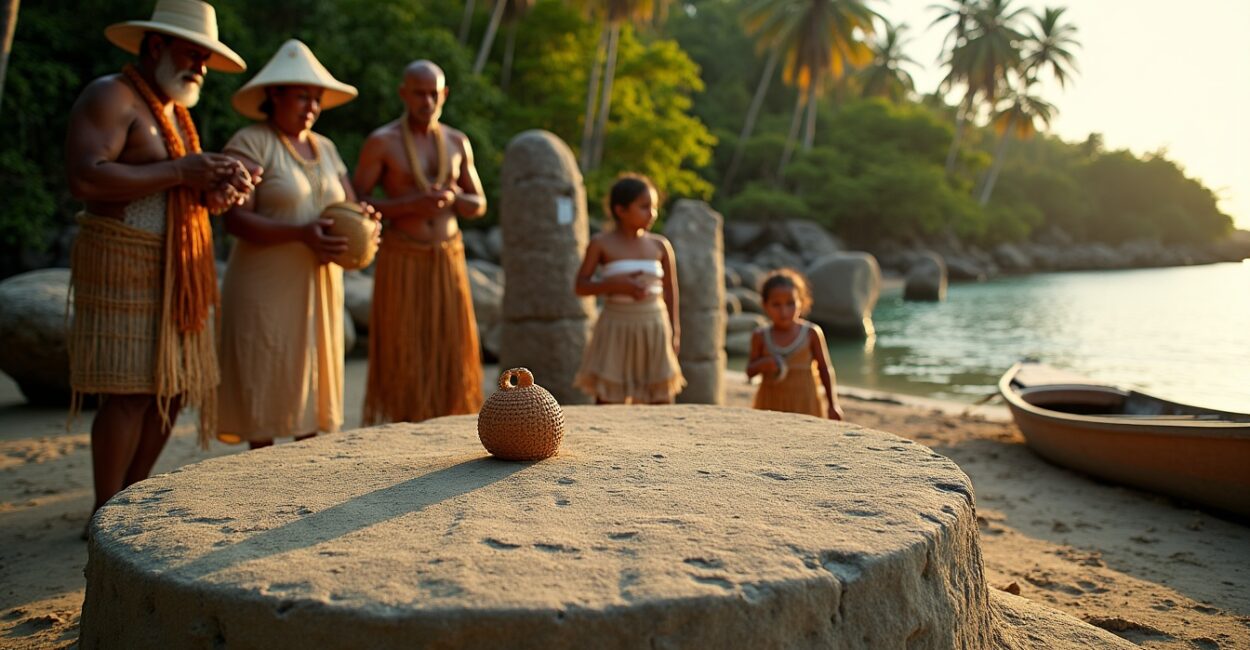
The mystic sight of giant circular stones stacked against jungle backdrops sparks curiosity and reverence: Yap stone money holds stories of identity, exchange, and ceremony. This article explains what Yap stone money is, why it matters to cultural heritage, and how evolving rules in 2025 affect visitors.
As tourism returns to remote Pacific islands, local traditions in Yap—like rai stone ceremonies on Gagil—gain renewed attention. Visitors now find a blend of living ritual, community guardianship, and clearer access protocols shaped by the community and conservation priorities.
Read on to discover the origin of rai stones, how ceremonies are held, what 2025 access updates mean, practical visitor guidance, and respectful ways to witness Yap stone money without disrupting local life.
Origins and Meaning of Yap Stone Money
From Coral to Currency
The first stones were carved from limestone quarried on distant islands and transported back to Yap. Yap stone money symbolizes value beyond commerce, tied to lineage, status, and memory.
These large rai stones, often with a hole at their center, function as physical records of transactions and social agreements in Yapese society.
Cultural Symbolism and Identity
Yap stone money anchors community memory: ownership links families to stories, voyages, and ancestral deeds. The stones act as a living archive.
They also mark social occasions—marriage settlements, land agreements, and chiefly honors—carrying deep, intergenerational significance.
Rai Stone Ceremonies on Gagil: Ritual and Meaning
Process and Participants
- Local chiefs and elders lead ritual proceedings.
- Family groups attest to ownership and history.
- Community gathers to sing, speak, and witness transfers.
- Respectful observation is expected from visitors.
On Gagil, ceremonies can transform an exchange into a communal memory. The ritual formalizes ownership in the presence of witnesses and oral record-keepers.
Ritual Symbols and Storytelling
Chants, directional references, and familial names are woven into ceremonies. Storytelling embeds the stone’s journey into community history.
Understanding these symbols helps visitors appreciate how Yap stone money is more than material wealth—it is cultural narrative.

How Yap Stone Money Functions Socially and Economically
Non-tangible Ownership and Social Credit
Ownership of a rai stone confers social credit that can be used for alliances, conflict resolution, or prestige. Transactions often rely on reputation, not physical relocation.
The community’s collective memory and witness mechanisms make the stones effective as trustworthy stores of value.
Modern Intersections with Cash Economy
Today, cash and goods interact with traditional systems. Families may use rai stones symbolically while conducting practical exchanges in currency for daily needs.
Balancing respect for tradition with modern economic realities is a local, ongoing negotiation.
Tourist Access Rules for 2025 and Respectful Visitation
Updated Access Guidelines
- Obtain community permission before attending ceremonies.
- Follow local guides and stay within designated areas.
- Do not touch or sit on rai stones unless explicitly invited.
- Photography rules vary—ask consent first.
In 2025, local councils have clarified visitation protocols to protect both cultural integrity and visitor safety. Permissions and guided visits are emphasized.
Why Rules Changed
Increased interest from travelers prompted communities to formalize access to protect sacred practices and prevent commodification of culture. Conservation and respect guided new measures.
Rules also help ensure tourism supports local priorities, including economic benefits and cultural preservation.

Practical Tips for Visitors Who Want to Witness Rai Stone Ceremonies
Before You Go
Research community protocols and hire a local guide. Learn a few respectful phrases and arrive with humility and patience.
Bring small gifts only if appropriate; ask local contacts to avoid misunderstandings about intentions.
During Ceremonies
- Listen attentively and remain quiet during formal parts.
- Ask permission before any recording or photos.
- Follow seating and movement cues from hosts.
- Respect elders and avoid interrupting storytellers.
Your behavior can either strengthen cross-cultural trust or cause offense—choose to be an ally of preservation and respect.
Conservation and Community Stewardship of Yap Stone Money
Local Guardianship and Cultural Education
Families, chiefs, and community councils steward rai stones and educate younger generations. Oral histories and ceremonies reinforce care-taking responsibilities.
Community-led education programs help visitors and youth understand why stones are treated with reverence and how stories pass forward.
Partnerships and Sustainable Tourism
Collaborations with cultural NGOs and researchers support documentation, signage, and visitor programs that center local priorities. External partners must follow community directives.
Revenue-sharing models and community-run guides are increasingly used to ensure tourism benefits remain local and sustainable.
Comparative Context and Further Reading
Similar Cultural Currencies Worldwide
Across Oceania and beyond, objects—shells, beads, textiles—have functioned as social currency. Yap stone money is unique in scale and ceremony but shares themes of memory and status.
Comparative study highlights the universal human practice of embedding value in objects that carry social meaning.
Authoritative Sources and Next Steps
For deeper study, consult academic and conservation resources to complement community knowledge. Always prioritize community voices in interpretation.
Recommended reads and resources below link to further context and current research.
| Resource | Focus | Link |
|---|---|---|
| Britannica | Historical overview of Yap stone money | Britannica: Yap stone money |
| UNESCO/Regional Cultural Reports | Heritage protection and cultural policies | UNESCO |
| Local Council Notices | Latest 2025 visitor protocols | Yap State Government |
Yap stone money remains a living tradition—a bridge between past and present. By honoring local rules and learning before visiting, travelers can witness meaningful rituals without causing harm. The stones themselves ask for patience: their value is measured in stories, not speed.
Conclusion
Yap stone money and Gagil ceremonies teach us that value is woven from memory, community, and ritual. As 2025 brings clearer visitor guidelines, respectful engagement can deepen understanding rather than dilute tradition.
Return to the image of those round, silent stones and remember they speak—a language of belonging, responsibility, and continuity that invites careful listening.
Faq
What Exactly is Yap Stone Money and How is Ownership Recorded?
Yap stone money refers to large, carved limestone discs called rai stones used historically in Yap for major transactions and social transactions. Ownership is recorded through oral testimony, witnessed ceremonies, and collective memory within families and chiefs. Transfers are formalized publicly; community recognition and storytelling serve as the ledger rather than physical relocation of the stone in many cases, preserving social credit and lineage ties.
Can Tourists Attend Rai Stone Ceremonies on Gagil in 2025, and What Permissions Are Needed?
Visitors may attend some ceremonies with prior permission from local leaders or when events are designated as public. In 2025, Yap councils emphasize guided visits, consent from hosting families, and cultural briefings. Tourists should coordinate with local guides, respect photography rules, and follow instructions from elders to ensure attendance is appropriate and non-disruptive.
Are Visitors Allowed to Touch or Photograph Yap Stone Money?
Touching or climbing on rai stones is generally discouraged unless explicitly invited by the hosting community. Photography policies vary by ceremony and family; always ask consent first. Respect for local rules preserves both physical artifacts and the dignity of rituals. If a guide or elder grants permission, follow their guidance closely and act respectfully.
How Does Yap Balance Tourism with Protecting Cultural Integrity of Its Stone Money?
Yap balances tourism and cultural integrity through community-led governance, visitor protocols, and partnerships that prioritize local benefit. Updated 2025 rules emphasize permissions, guided experiences, and revenue-sharing models. Education initiatives help visitors understand context while supporting stewardship and preventing commodification of sacred practices.
Where Can I Learn More from Authoritative Sources About Yap Stone Money?
Authoritative resources include academic articles, cultural heritage organizations, and regional government pages. Start with encyclopedias like Britannica for historical context, UNESCO for heritage frameworks, and Yap State Government notices for current visitor rules. Supplement these with local oral histories and community-led publications for authentic perspectives.