

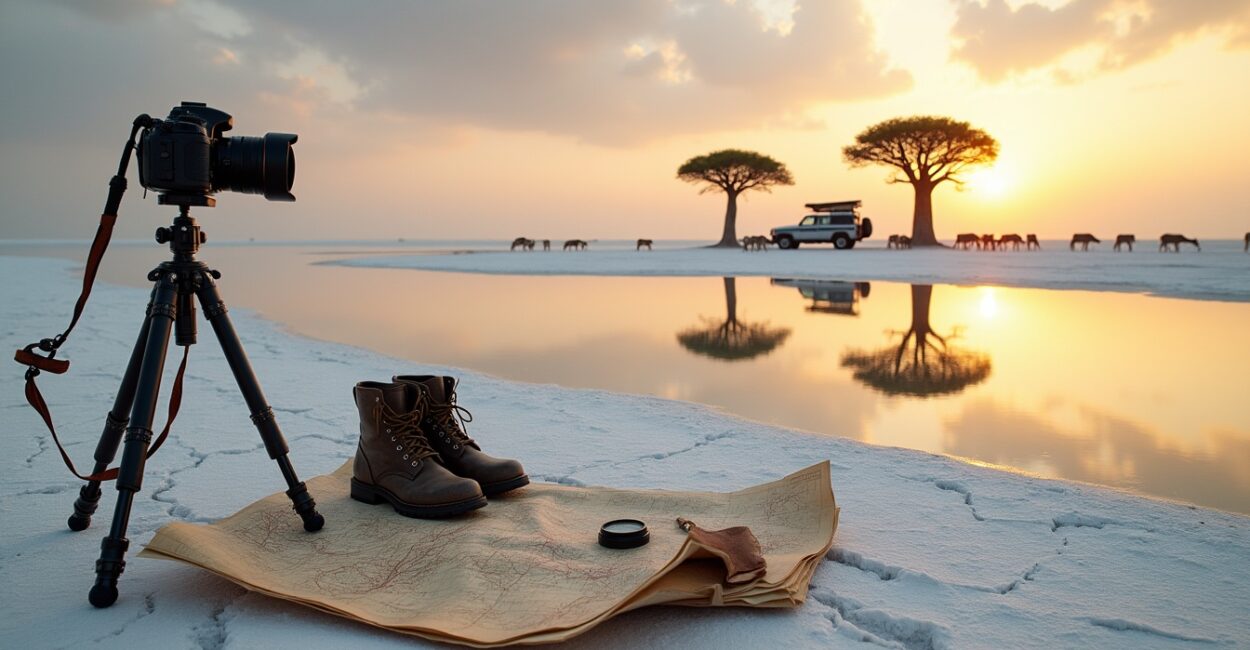
The Makgadikgadi pans can feel like another planet: endless white salt, the hush of wind, and miles of mirror-like water after rains. Photographers chase light here for epic landscapes, baobab silhouettes, and zebra migrations—this is why Makgadikgadi pans matter.
Right now, planning standout Makgadikgadi pans locations for 2025 photography means knowing seasonal shifts, vehicle access, and the best vantage points. This guide delivers precise locations, timing, and practical steps to capture the iconic baobab-lined flats and zebra migration flats.
Read on to pinpoint where to shoot, how to prepare, and which moments make the Makgadikgadi pans unforgettable for your 2025 portfolio.
Why Makgadikgadi Pans Belong on Every Photographer’s List
The Makgadikgadi pans are a photographer’s dream for dramatic scale, hyper-contrasting light, and epochal wildlife events. These salt flats and seasonal wetlands create rare visual opportunities for landscape and wildlife imagery.
Expect vast horizons, reflective surfaces during flood season, and the solitude of baobabs standing like guardians—ideal for storytelling shots that resonate on social feeds and in galleries.
Visual Drama and Seasonal Shifts
After rains, shallow water spreads across the pans, producing perfect reflections and long leading lines for wide-angle work. Dry seasons reveal cracked salt textures and infinite negative space.
Light changes rapidly at sunrise and sunset; dawn provides cooler tones and mist, while golden hour sculpts the baobab silhouettes into bold, emotional frames.
Wildlife Spectacle and Timing
Zebra and wildebeest migrations pass through specific flats on predictable windows—capture movement, dust, and linear herds against minimalist backdrops. Timing is everything.
Birds congregate in flooded basins; flamingos, pelicans, and migratory species add surprising color to otherwise monochrome scenes, creating powerful focal points.
Top Makgadikgadi Pans Locations for 2025 Photography
For standout Makgadikgadi pans locations for 2025 photography, scout the baobab-lined flats, Linyanti fringe wetlands, and the zebra migration corridors. Each spot offers distinct moods and subjects.
These locations balance accessibility with unique compositions—some require guided 4×4 access while others reward patient hiking and timing.
Baobab-lined Flats and Iconic Silhouettes
Seek out isolated baobabs on raised islands—these frame perfectly against vast skies. Early morning fog often intensifies their sculptural forms.
Bring a tele to compress perspective or a wide lens to emphasize scale; low-angle shots emphasize roots and textures for intimate portraits of these ancient trees.
Zebra Migration Flats and Herd Dynamics
Identify seasonal migration corridors north of the pans to photograph dense zebra lines crossing reflective surfaces. Movement, pattern, and rhythm create compelling compositions.
Use continuous autofocus and burst mode; aim for diagonal herd lines to lead the viewer into the frame and showcase the scale of migration.
- Scout vantage points before golden hour.
- Coordinate with local guides for safe herd approaches.
- Pack polarizing filters and plenty of memory cards.
Gear, Settings, and Lighting Strategies for Dramatic Shots
Optimal gear choices and exposure techniques turn wide flats into cinematic photos. Light and reflexivity demand deliberate settings and simple yet robust equipment.
Plan for extremes: strong sun, fine salt spray, and wet mud. Protect gear and prioritize versatility—your best lens choices are a fast wide and a mid-tele zoom.
Essential Lenses and Protection
Carry a 16–35mm for panoramas and an 70–200mm for compressed wildlife portraits. Weather-sealed bodies or rain covers are essential during wet seasons.
Bring microfiber cloths and silica packs; salt will etch glass and metal if left unchecked. Regularly wipe lenses between frames to prevent spot artifacts.
Exposure, Composition, and Filters
Expose carefully for highlights on reflective water to avoid blown whites; use spot metering and bracket where needed. A graduated ND helps balance sky and foreground.
Compose with strong leading lines and negative space; a polarizer increases saturation and cuts glare, while long exposures can smooth water during calm conditions.
Access, Permits, and Local Logistics
Reaching remote Makgadikgadi pans locations often requires 4×4 travel and local permits. Advance planning avoids closed roads during rainy seasons and improves safety.
Engage reputable guides familiar with seasonal tracks and wildlife behavior; they’ll know the best windows for zebra crossings and baobab lighting.
Transport and Seasonal Access
Track conditions vary dramatically—dry seasons allow easier access, while wet seasons can sever roads. Reserve 4x4s and camps early for high season.
Check local park updates and road reports; flight-and-drive combinations from Maun or Nata shorten transit and increase shooting time on site.
Permits, Fees, and Local Partnerships
Secure any required park permits and photography permissions ahead of arrival. Supporting local operators sustains conservation and opens insider locations.
Hire certified guides to navigate conservancy rules; they will also handle safety around migrating herds and negotiate respectful wildlife distances.
Best Times to Shoot and Weather Patterns
Timing your trip is critical for capturing the dramatic phases of the Makgadikgadi pans: dry salt desert, flooded mirror lakes, and migratory pulses. Each season offers unique visual stories.
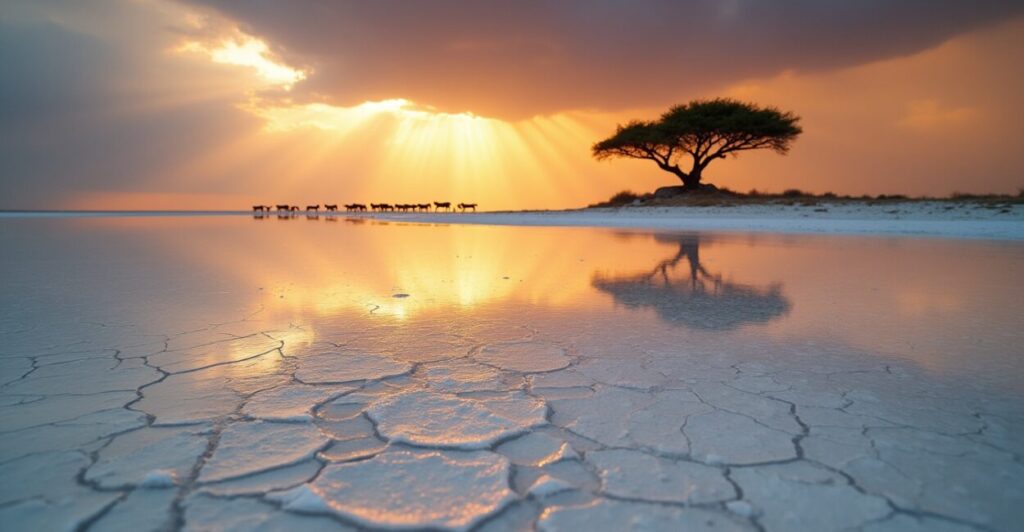
Plan with the calendar: dry season for crisp salt textures, and the rainy season for reflective panoramas and wildlife concentrations, especially zebra migrations.
Dry Season Advantages
During dry months, cracked salt plains and deep blue skies create minimalistic frameworks. Midday contrasts are harsh—favor sunrise and sunset for softer tones.
Dry seasons allow broader ground access and easier hiking; expect strong heat and always carry water and sun protection for long shoots.
Flood Season and Reflections
After rains, shallow flooding transforms pans into mirrors that double skies and herd silhouettes—this is prime time for surreal images and unique compositions.
Monitor local weather closely; brief storms can create dramatic skies, but mud and inaccessible tracks may limit locations—plan alternate sites with guides.
Practical Shooting Plans and a Step-by-step Field Workflow
Field discipline boosts success in the pans: scout, set up, execute, and preserve your images. A concise workflow helps capture decisive moments under challenging conditions.
Use a repeatable routine for each shoot to maximize golden-hour output and keep gear safe from salt and moisture.
Pre-dawn Scouting and Composition Setup
Arrive before first light to choose compositions and test exposures. Scout from higher ground to locate herd movement and reflective pools early.
Set histograms and white balance manually; shooting RAW gives flexibility for recovering highlights and preserving subtle tones in reflections.
On-site Camera Routine
Lock exposure modes for consistency during bursts. Alternate between landscape and telephoto frames to document context and detail for storytelling edits.
Back up images daily to multiple drives; a cloud or off-site copy reduces the risk of losing irreplaceable frames from rare migration events.
- Plan dates with a local guide for migration windows.
- Scout locations at golden hour for composition.
- Set camera for RAW and auto-bracketing.
- Approach herds slowly; prioritize safety and distance.
- Back up files nightly and maintain battery rotations.
Showcase Locations, Sample Shot List, and Recommended Routes
Targeted routes and a compact shot list help you return with a cohesive series. Map out baobab clumps, flamingo flats, and zebra corridors before departure.
Combine east-west transects for variable light and plan alternating wide and compressed sequences to tell a complete visual story.
Sample Shot List Essentials
Include panoramic mirrored skies, low-angle baobab portraits, diagonal zebra herd shots, and close wildlife behavior frames. Variety strengthens editorial appeal.
Capture process images—camp life, vehicle tracks, and guide portraits—to add narrative depth in portfolios and social posts.
Recommended Driving and Walking Routes
Begin near Nata for southern pans, then progress north into larger flats where migrations concentrate. Use conservancy roads to access secluded islands.
Coordinate morning hikes and late-afternoon drives to maximize golden-hour shooting while minimizing fatigue and exposure to midday heat.
| Location | Best Season | Highlights |
|---|---|---|
| Baobab clumps (southern pans) | Dry & early wet | Silhouettes, texture, isolated trees |
| Zebra migration corridors (north) | Late wet to early dry | Herd dynamics, reflective crossings |
| Flooded basins & flamingo flats | Peak wet season | Reflections, bird concentrations |
Conservation, Ethics, and Storytelling Responsibility
Photographing the Makgadikgadi pans carries a duty: respect wildlife, support local communities, and preserve the landscape you document. Ethical practices safeguard both subjects and access.
Prioritize low-impact approaches, avoid disrupting migrations, and credit local knowledge and guides in any published work to reinforce trust and conservation outcomes.
Respectful Wildlife Practices
Keep distance from herds, avoid chase behavior, and rely on guides for safe framing. Disturbance affects migration timing and stress levels, so prioritize animal welfare over the shot.
Use telephoto lenses to tell intimate stories without intrusion and follow local regulations about vehicle proximity and route restrictions.
Supporting Local Communities
Book local guides, camps, and services to distribute tourism benefits. Share prints or workshops with communities to deepen relationships and fund conservation efforts.
Credit local names and locations in captions; honest attribution strengthens EEAT and builds long-term access for photographers.
Conclusion
Makgadikgadi pans reward patience and planning with otherworldly imagery: baobab silhouettes, mirror-like skies, and the raw choreography of zebra migrations. Approach with respect, a clear plan, and a flexible schedule to capture your best 2025 work.
Return home with more than photos—carry stories of place, conservation, and the fragile beauty of one of Africa’s most cinematic landscapes.
Faq
When is the Best Time to Photograph the Makgadikgadi Pans for Reflections and Zebra Migrations?
The best period for reflections typically follows the rainy season—when shallow water creates mirror surfaces—while zebra migrations peak as pools begin to recede. Plan with local guides between late wet and early dry seasons to capture floods, bird concentrations, and herd crossings for dramatic imagery in 2025.
How Do I Reach Remote Baobab-lined Flats and Are Permits Required?
Access usually requires a 4×4 and sometimes guided transfers from Maun or Nata; road conditions depend on season. Permits can be necessary for conservancies and commercial photography—secure permissions in advance and book reputable local operators for safe, lawful access and expert local knowledge.
What Gear Should I Prioritize for Shooting Wide Reflections and Migrating Herds?
Prioritize a fast wide-angle lens for panoramas and a 70–200mm for compressed wildlife shots, plus sturdy tripods and weather protection. Bring polarizers, extra batteries, ample storage, and RAW capture. Backup drives and daily offloads are essential when documenting rare migration events and limited windows.
Are There Guided Tours Suited for Professional Photographers in the Makgadikgadi Pans?
Yes—several experienced operators offer photography-focused safaris with tailored itineraries, 4×4 support, and local knowledge of migration timing. Choose guides with strong conservation ethics, client references, and flexible schedules to maximize golden-hour opportunities and unique compositions.
How Can I Minimize Environmental Impact While Photographing in the Pans?
Minimize impact by staying on established tracks, avoiding night drives that disturb wildlife, and keeping safe distances from herds. Use local guides to follow rules, pack out all waste, and prioritize ethical storytelling—this preserves the pans and maintains community access for future photographers and conservationists.
External resources: Botswana Tourism for practical travel updates Botswana Tourism, and deep context from National Geographic.