

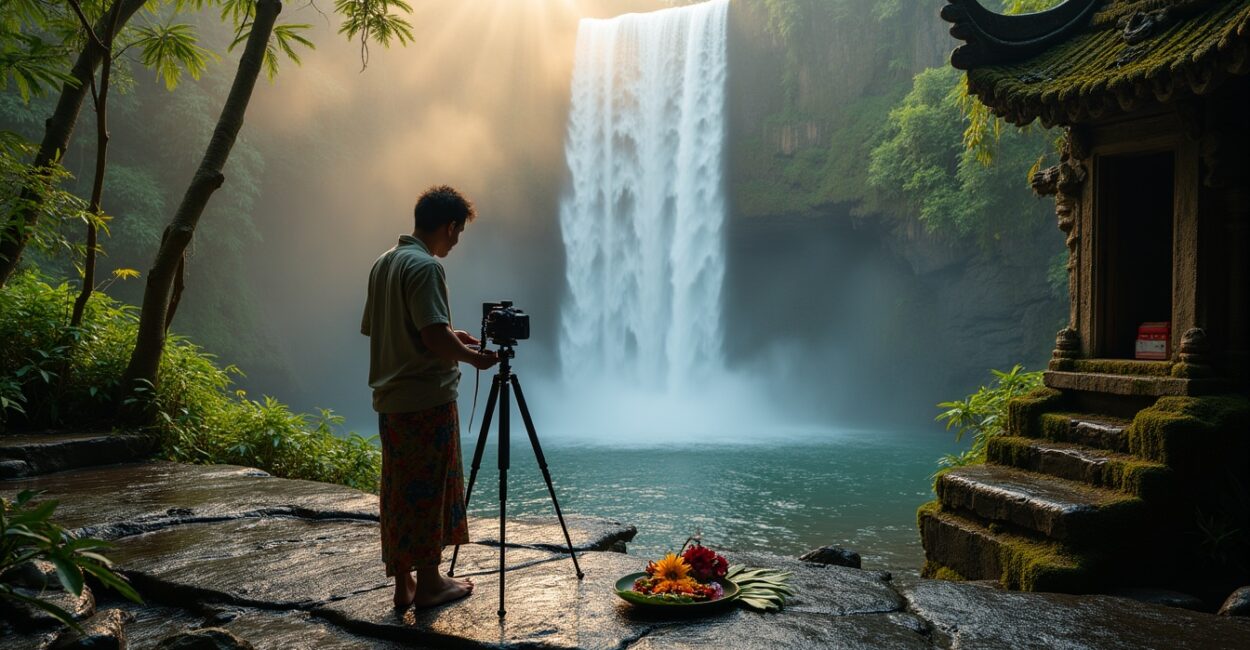
Imagine stepping into a living postcard where moss-draped cliffs spill silver curtains into jade pools — this is the world of Balinese waterfalls. These wild cascades, from the thunder of Gitgit to the layered drama of Sekumpul, promise misty long-exposure photos and soulful moments in nature.
Balinese waterfalls are not only photographic gold; they’re cultural touchstones, refreshment for the tropical heat, and micro-ecosystems teeming with life. This guide maps the best spots, times, and techniques so you can capture those dreamy, mist-laden exposures responsibly.
Read on to discover exact locations, golden-hour windows, camera settings for silky water, access tips, and emotional reasons to visit — everything you need to plan a mindful, unforgettable waterfall adventure in Bali.
Why Balinese Waterfalls Captivate Photographers and Travelers
Natural Drama and Cultural Context
Balinese waterfalls combine raw geological beauty with local rituals and lush flora, making each visit visually and culturally rich. Photographers find endless compositions among palms and volcanic rock.
Visitors encounter more than water: small temples, offerings, and community stories often frame the falls, deepening the travel experience beyond a simple snapshot.
Ideal Subjects for Long-exposure Photography
Soft, milky streams serve as dynamic subjects for long exposures, especially at Gitgit and Sekumpul. Tripods and neutral density filters make silky water possible even in bright conditions.
Light, mist, and green surroundings create depth. Adjust shutter speed and aperture to balance motion blur with crisp foreground detail for emotionally engaging images.
Top Balinese Waterfalls to Prioritize (maps, Access, and Brief Vibes)
Gitgit — Approachable and Photogenic
Gitgit offers a broad, powerful drop with easy access from central Bali. The surrounding rainforest and boardwalks make composition straightforward and visitor-friendly.
Expect moderate crowds; shoot early to catch soft morning light and diffuse mist for long-exposure effects without too many people in frame.
Sekumpul — Dramatic, Multi-tiered Spectacle
Sekumpul feels cinematic: several ribbons of water pour down a steep amphitheater. The terrain is rugged, rewarding photographers with layered perspectives and dramatic veil-like falls.
Plan for a hike, slippery steps, and shaded ravines. The payoff is isolation and powerful compositions ideal for slow-shutter, moody images.
- Bring waterproof bags and good hiking shoes.
- Use a local guide to find the best vantage points.
- Respect offerings and cultural sites near falls.

Planning Visits: Best Times, Seasons, and Lighting for Misty Shots
Seasonal Overview and Water Flow Patterns
Wet season (Nov–Mar) yields the most powerful cascades, richer mist, and saturated greens. Dry season (Apr–Oct) offers easier access and clearer skies for sunrise shots.
Choose wet months for volume and drama; choose shoulder seasons for balanced access and better trail conditions while keeping an eye on local forecasts.
Daily Timing for Long-exposure Photography
Golden hour and early morning deliver soft side light and fewer visitors; overcast mornings are ideal for even exposure and reduced dynamic range, perfect for silky water shots.
Avoid harsh midday sun unless using strong neutral density filters. Scout for shaded pool foregrounds to anchor long-exposure compositions.
How to Shoot Misty Long-exposure Images at Gitgit and Sekumpul
Essential Camera Settings and Gear
Start with ISO 100–200, f/8–f/16, and shutter speeds from 0.5 to 4 seconds. Use an ND filter to extend exposure in brighter conditions without overexposing.
A sturdy tripod, remote release, and lens cloth for mist are non-negotiable. Protect gear from spray with rain covers and zip-lock bags for extra safety.
Composition Tips for Emotional Impact
Frame the cascade with foreground rocks or foliage to lead the eye. Use diagonal lines and negative space to emphasize motion and scale in your images.
Include tiny human figures when possible to convey scale and story. Shoot multiple exposures to blend highlights and shadows if needed.
| Waterfall | Best time of day | Season | Access difficulty |
|---|---|---|---|
| Gitgit | Early morning | Nov–Mar | Easy |
| Sekumpul | Morning to late morning | Nov–Mar | Moderate to difficult |
| Tegenungan | Sunset | Apr–Oct | Easy |
- Check local weather and stream conditions before travel.
- Respect restricted areas and cultural sites near cascades.
- Hire local guides for safe navigation and richer context.

Practical Access Tips: Safety, Transport, and Local Etiquette
Transport Logistics and Parking
Rent a scooter for flexibility or hire a driver for longer journeys between northern and central Bali. Some falls have small parking areas with minimal facilities.
Expect uneven trails and steps; allow extra time for walking and photo setups. Carry cash for entrance fees and local services.
Safety, Swimming, and Environmental Care
Respect strong currents and slippery rocks. Swim only where locals indicate it’s safe, and avoid cliff jumping. Pack out all trash to protect fragile ecosystems.
Follow marked paths and avoid trampling vegetation. Use reef-safe sunscreen if swimming to minimize chemical impact on waterways.
Gear Checklist and Workflow for Mobile-first Shooting
Minimalist Kit for Traveling Light
Essentials: compact tripod, ND filter, microfiber cloth, rain cover, and a versatile zoom or 24–70mm lens. A small drone can add aerial context where allowed.
For phone photographers, use a mini tripod and ND adapters. Bracket exposures and shoot RAW where possible for post-processing flexibility.
Workflow: from Arrival to Upload
Scout for 10–15 minutes, set up a base composition, and capture bracketed long exposures. Clean lenses frequently to avoid mist spots in images.
Process images on the go using mobile RAW editors, then upload during low-congestion hours. Tag locations and include cultural notes when sharing to add context.
- Arrive early to avoid crowds and harsh light.
- Scout composition and secure tripod on stable ground.
- Set base exposure, then attach ND filter for longer shutter speeds.
- Take multiple exposures and check framing; adjust as needed.
- Pack equipment safely and respect the site on exit.
Conservation and Cultural Respect at Balinese Waterfalls
Understand Local Customs and Offerings
Many falls sit near sacred sites. Observe offerings, avoid touching ceremonial objects, and ask permission before photographing people in ritual contexts.
Engaging a local guide supports communities and ensures respectful behavior while enhancing your understanding of place-based traditions.
Leave-no-trace Principles for Fragile Sites
Take all litter with you, avoid single-use plastics, and minimize noise to preserve wildlife. Stick to paths to prevent erosion and habitat damage.
Support local conservation by donating to reputable groups or choosing eco-conscious tour operators when possible.
Conclusion — What You’ll Take Home from Balinese Waterfalls
Balinese waterfalls reward patience, respect, and curiosity. Whether you capture a silken exposure of Sekumpul or the approachable drama of Gitgit, these sites offer layered stories in every frame.
Return home with more than images: you’ll carry memories of mist on your skin, local kindness, and a renewed appreciation for the delicate balance between travel and conservation.
Faq
When is the Best Time of Year to Photograph Balinese Waterfalls for Mist and Volume?
The optimal period to capture dramatic flow and abundant mist at Balinese waterfalls is during the wet season, roughly November through March. During this time rivers swell, foliage appears intensely green, and waterfalls like Gitgit and Sekumpul produce stronger cascades, enhancing long-exposure effects. Plan early-morning sessions for softer light, reduced crowds, and better chances of atmospheric mist for moody, cinematic photos while remaining mindful of slippery trails and safety.
How Do I Reach Sekumpul and Gitgit, and Are Guides Necessary for Access?
Sekumpul lies in northern Bali; reach it via car or scooter from Singaraja followed by a steep hike down to the falls. Gitgit is more accessible with easier paths and boardwalks. Hiring a local guide is highly recommended for Sekumpul’s difficult terrain, cultural insights, and safer navigation, while Gitgit can often be visited independently, though local guidance still enriches the experience.
What Camera Settings and Gear Produce the Best Misty Long-exposure Shots at These Falls?
Use low ISO (100–200), moderate aperture (f/8–f/16), and shutter speeds between 0.5 and 4 seconds, controlled with neutral density filters for bright conditions. A sturdy tripod, remote shutter, lens cloth, and rain protection are essential to manage spray. Bracket exposures for highlights, and include foreground elements for depth. Adapting settings to light and flow yields silky water while retaining crisp landscape detail.
Are There Safety or Cultural Guidelines I Should Follow When Visiting Balinese Waterfalls?
Respect local customs by avoiding offerings and sacred sites, asking permission before photographing ceremonies, and dressing modestly when required. For safety, wear good hiking shoes, avoid slippery rocks, never underestimate currents, and heed local advice about swimming. Preserve ecosystems by packing out litter, staying on trails, and supporting community-based guides and conservation initiatives whenever possible.
Can I Use Drones at Balinese Waterfalls, and Are There Restrictions I Should Know?
Drone use is increasingly regulated in Bali; national regulations and local restrictions vary by site. Many waterfalls are within areas where drones disturb wildlife or sacred spaces. Always check current rules, obtain permits if required, and respect signs and community wishes. When permitted, fly responsibly, avoid crowds, and prioritize privacy and cultural sensitivity to minimize impact on people and nature.
External resources: Official Bali tourism guidance at balitourismboard.org, and practical travel tips from Lonely Planet.