

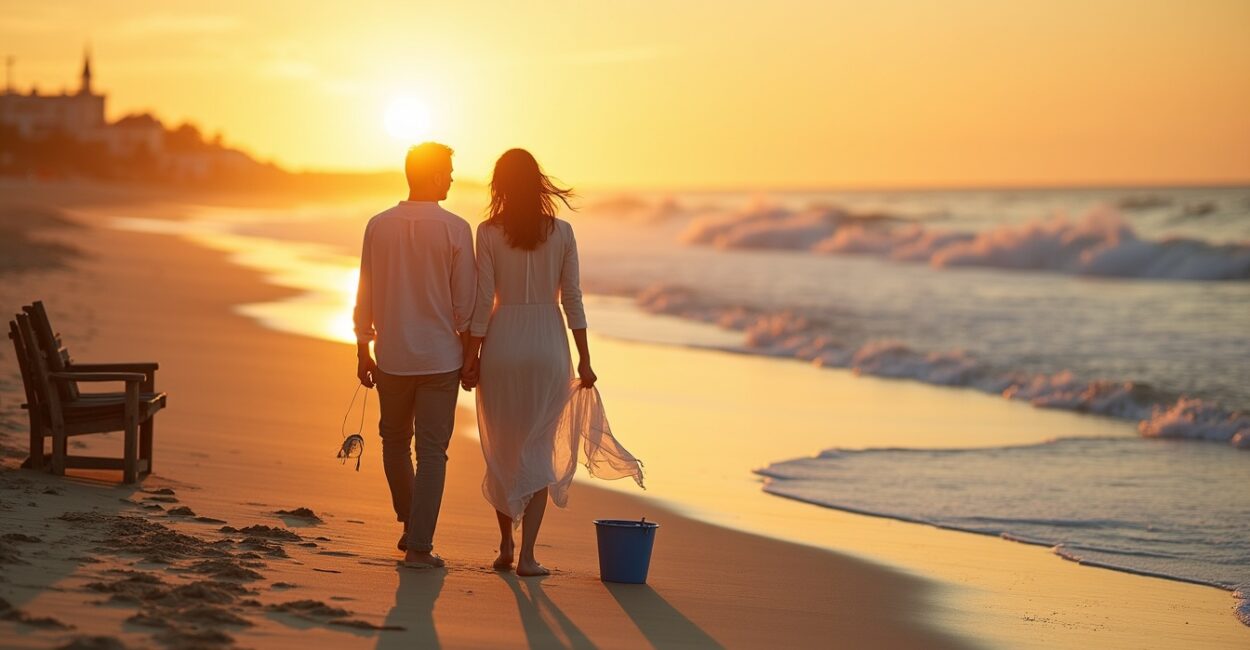
Sunset can turn simple beach portraits into unforgettable moments—golden light, wind-swept hair, and the hush of waves create intimate, emotive images. In this guide you’ll learn practical setups to capture natural, cinematic beach portraits at dusk.
Whether you shoot couples, families, or editorial subjects, understanding backlight, composition, and mood matters more than gear. This article focuses on five practical setups, lighting tricks, and posing tips to make the most of the golden hour.
Read on to discover location choices, camera settings, quick workflows, and emotional cues that help you craft evocative beach portraits the moment the sun kisses the horizon.
Five Practical Setups to Shoot Emotive Beach Portraits
Barbados Shoreline Backlight
Use strong rim light from the setting sun to separate subjects from waves and sand. Emphasize silhouette edges, soft hair highlights, and warm color tones for a dreamy mood.
Position the subject with sun behind and reflector in front for catchlights. This backlit technique creates natural glow, gentle lens flare, and cinematic separation from the shoreline.
Low-tide Wide-angle Environmental Shots
Shoot wide to include reflective wet sand and expansive sky. Capture candid movement and connection between subject and coastal landscape for narrative-rich portraits.
Use a low camera angle to enhance foreground textures and leading lines. Wide compositions showcase context and emotion, ideal for editorial and travel-focused work.
Essential Gear and Camera Settings for Golden-hour Portraits
Lenses, Filters, and Support
Bring a fast prime and a mid-zoom for flexibility. A circular polarizer and neutral density filter help control reflections and exposure during intense sunset color shifts.
A lightweight tripod or monopod steadies long exposures. Pack a small reflector and diffuser to shape natural light and preserve authentic skin tones in backlight.
Exposure, White Balance, and Autofocus
Shoot RAW, set a slightly warmer white balance, and use spot or face-detect AF. Underexpose by 0.3–1.0 EV for richer skies and deeper skin tones.
Choose wide apertures for soft background separation; increase shutter speed to freeze motion. Adjust ISO conservatively to avoid noise in shadow detail.
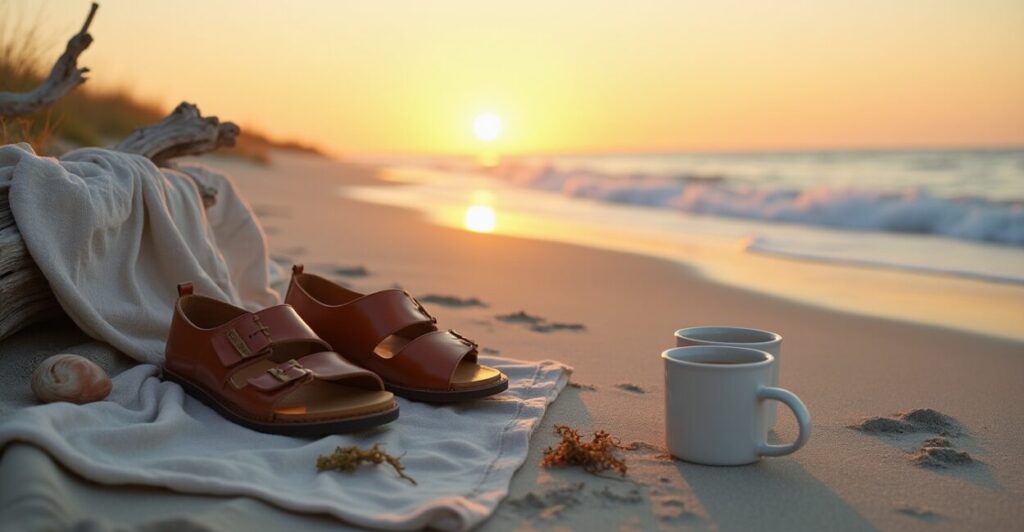
Posing, Mood Direction, and Emotional Connection
Natural Posing for Candid Emotion
Encourage small, real movements—laughs, a turn of the head, or a hand brushing hair. These micro-actions create authentic expressions for beach portraits.
Use prompts tied to memory or storytelling to draw honest reactions. Focus on timing and listening to the subject to reveal vulnerability and joy.
Facial Angles, Body Lines, and Interaction
Leverage slight three-quarter turns to flatter faces in side light. Keep shoulders relaxed and use body language to express intimacy or playfulness.
For couples, ask them to walk slowly, whisper, or look at each other—these natural interactions lead to emotive frames that feel unforced and true.
Quick Sunset Workflow (step-by-step for Fast Captures)
Pre-shoot Checklist
Scout low tide zones, mark safe shooting areas, and identify natural reflectors. Note sun angle and nearby features for backup compositions.
Plan outfit contrast against sand and sea. Communicate timing with subjects so you shoot peak color and dramatic silhouette windows without rush.
Fast Capture Routine
- Compose with sun behind subject and frame horizon on one-third line.
- Select wide aperture and spot meter on skin tones.
- Use reflector for catchlights or allow gentle rim light only.
- Shoot bursts during movement and pause for intimate stills.
- Review highlights and shadows, then adjust exposure quickly.
This fast routine helps secure the best frames during fleeting golden-hour windows. Prioritize emotion over perfection and adapt to changing light instantly.
| Scenario | Recommended Lens | Suggested Settings |
|---|---|---|
| Backlit close-ups | 85mm prime | f/1.8–2.8, 1/500–1/2000s, ISO 100–400 |
| Environmental wide shots | 24–70mm | f/4–8, 1/125–1/500s, ISO 100–200 |
| Golden-hour silhouettes | 50mm or 35mm | f/5.6–11, expose for sky, ISO 100 |
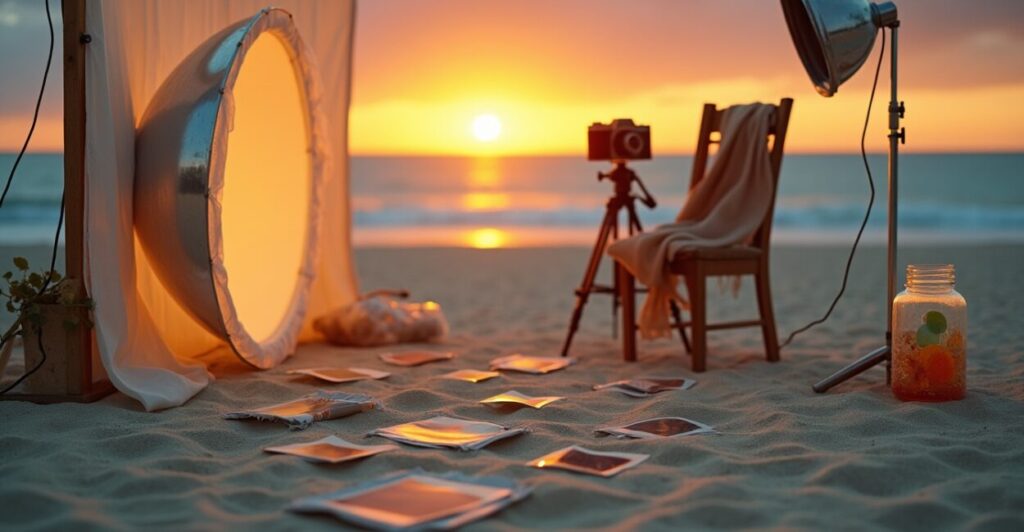
Light Shaping and Color—creating Mood at Sunset
Softening Harsh Backlight
Diffuse sun with a scrim or use a silver reflector to add subtle fill. Soft light preserves skin detail while keeping warm rim highlights in beach portraits.
Shoot at lower ISO to retain color fidelity. Minor underexposure deepens sky hues and enhances contrast between subject and sunset backdrop.
Color Grading and White Balance Choices
Keep in-camera color warm but avoid extreme orange casts. In post, slightly lift shadows and preserve mids for natural skin tones and authentic atmosphere.
Use split-toning subtly to enhance horizon warmth while keeping shadows neutral. Maintain emotional honesty; color should feel like memory, not fantasy.
Location Scouting, Safety, and Legal Considerations
Choosing the Right Shoreline
Look for distinctive foregrounds: rocks, tide pools, dunes. Vary textures and lines to complement poses and frame emotional narratives in beach portraits.
Avoid crowded areas during peak hours; early golden hour often yields cleaner horizons and calmer subjects. Scout for tide timing to prevent surprises.
Permissions, Drone Use, and Environmental Care
Check local rules for permits and drone regulations—beach photography often intersects with protected areas. Respect wildlife and avoid trampling dunes or vegetation.
Have model releases ready for commercial work and inform subjects about privacy expectations. Prioritize safety around slippery terrain and rising tides.
Conclusion — Craft Memories, Not Just Pictures
Beach portraits at sunset are about mood, movement, and honest connection. Use backlight, simple direction, and quick workflows to capture moments that feel lived-in and luminous.
Return to the setups and steps when you shoot next golden hour: the right light and a patient approach will transform ordinary moments into enduring images.
Faq
What Camera Settings Work Best for Beach Portraits at Sunset?
For beach portraits at sunset, shoot RAW with a wide aperture to separate the subject and a slightly faster shutter to freeze motion. Underexpose by around 0.3–1.0 EV to preserve sky colors. Keep ISO low, use spot metering for skin tones, and adjust white balance warmer to enhance golden hues.
How Do I Avoid Blown Highlights When Shooting Backlit Beach Portraits?
To avoid blown highlights, expose for the brightest part of the scene or use graduated ND filters. Meter off the subject’s skin for balanced exposure, and retain highlight detail by underexposing slightly. Bracketing exposures ensures you capture usable frames in changing sunset light.
What Poses Create Natural Emotion in Beach Portraits?
Encourage movement—walking, playful interaction, or looking away—to elicit genuine expressions. Use storytelling prompts or ask subjects to recall a memory for authentic emotion. Small gestures like a hand to hair or whispered laughter make portraits feel candid and personal.
When is the Best Time to Photograph Beach Portraits for Dramatic Color?
The best time is the golden hour and the period shortly after sunset known as blue hour. Arrive early to scout composition, then shoot through peak color and into dusk. This window yields rich skies, gentle light, and emotive backlight for beach portraits.
How Can I Protect Gear and Subjects When Shooting on the Beach?
Protect equipment with weather-sealed covers and silica packs; avoid placing gear directly on sand. Use a towel or bag as a barrier. Warn subjects about slippery rocks and tides, and schedule shoots at low tide when possible. Always have a safe exit plan in case conditions change.
Further reading: check composition and lighting techniques at National Geographic Photography and gear guides at B&H Photo.