
Warning: Cannot modify header information - headers already sent in /home/u278635817/domains/mymorninglife.com/public_html/wp-content/plugins/artigosgpt/artigosgpt.php on line 29509
Warning: Cannot modify header information - headers already sent in /home/u278635817/domains/mymorninglife.com/public_html/wp-content/plugins/artigosgpt/artigosgpt.php on line 29509
Heard that first yawn-ache where your neck feels glued to yesterday’s bad posture? Those are the moments morning stretches can solve in five minutes—no gym, no sweating, just simple moves that make standing and sitting feel easier. Keep reading; I’ll show seven targeted stretches that loosen stiffness, cut pain and nudge your posture back into alignment. Fast demos, timing cues, and mistakes to avoid so you don’t waste time or make things worse.
The One-cat-cow Tweak That Wakes Your Spine in 60 Seconds
Start here if your back feels stiff after sleep. Cat-cow is a classic, but the tweak that matters is a slower exhale into the cow—hold the extension for two seconds. That small change reduces back tension faster than bouncing through reps. Do 6 slow cycles: inhale arch, exhale round. This version of morning stretches wakes the whole spine.
Why it works: the slow hold lets spinal discs rehydrate gently. If you’ve had back pain before, move slowly and stop if sharp pain appears.
Thoracic Rotation: The 30‑second Trick That Opens Your Chest
Most people twist from their lower back. Thoracic rotation targets the mid-back, the area that really controls posture. Lie on your side with knees bent, open the top arm to the ceiling and rotate it behind you, five reps each side, 30 seconds total. These morning stretches combat the rounded‑shoulder slump from phones and laptops.
Comparison: expectation — big gym moves fix posture; reality — small thoracic mobility saves your shoulders. Try it for two weeks and you’ll feel the difference.

Hip-flexor Stretch to Stop Low-back Nagging Pain
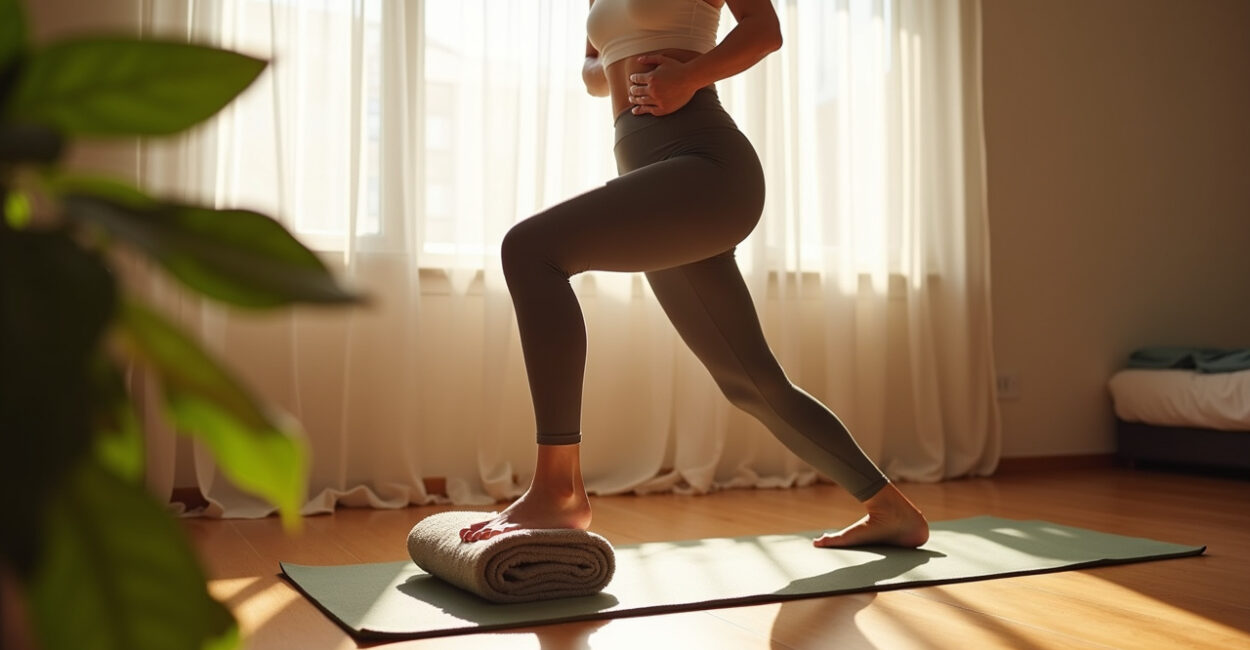
When hips are tight, the low back compensates. This lunge stretch—knee down, hips forward, tuck the pelvis slightly—releases the whole front chain. Hold 30 seconds per side. Add a gentle pelvic tilt during the hold to increase the reach.
- Do: breathe and relax the glutes
- Don’t: overarch the lower back
- Beginners: support the knee with a towel
These morning stretches prevent the slow build-up of hip-related lower-back pain that sneaks up over months.
Neck Release That Beats Morning Stiffness in Under a Minute
Most neck pain comes from holding tension, not from damage. Try a side-neck release: sit tall, drop one ear to the shoulder, use your hand to add a gentle extra 10–15% of stretch, hold 20 seconds each side. Repeat twice.
If you feel tingling or real numbness, stop and consult a clinician. For most people, these morning stretches relieve the “pillow‑stiff” feeling quickly and safely.
Hamstring Opener for Standing Comfort and Lower-back Relief
Tight hamstrings pull your pelvis backward and shorten your stride. A standing hamstring stretch—heel on a low step, soft knee, hinge from the hips—gives immediate relief. Hold each side for 30 seconds. Do three rounds if you sit all day.
Mini-story: I had a friend who thought running was the problem. Two weeks of these morning stretches and his knee pain vanished. Sometimes the simplest link—tight hamstrings—was the real cause.
Shoulder Roll Sequence That Fixes Rounded Shoulders in Minutes
Rounded shoulders are silent posture thieves. Try 10 shoulder rolls forward, then 10 back, then 5 scapular squeezes (pinch the shoulder blades together for two seconds). This quick routine is one of the most underrated morning stretches for posture correction.
- Error to avoid: lifting shoulders toward ears during rolls
- Pro tip: add a wall stretch after rolls to reinforce better alignment
Do this daily and the forward-shoulder posture that steals energy will ease noticeably.
Full-body Flow: Chain These Moves Into a 5-minute Routine
All the single moves are useful. The magic is linking them. Try: cat-cow (6), thoracic rotations (30s), hip-flexor lunge (30s/side), neck release (20s/side), hamstring hinge (30s/side), shoulder rolls (20s). Total under five minutes. These morning stretches become a habit when they’re short and sensible.
Consistency beats intensity. Even three minutes every morning beats one long session on Sunday.
Two reliable sources back gentle mobility work for daily pain relief. For evidence on back pain and exercise see National Institute of Neurological Disorders and Stroke, and for practical guidance on stretches check resources from Mayo Clinic. Use those as a baseline and adapt to your body.
Ready to try? Pick three moves and do them for a week. If one causes sharp pain, stop and see a professional. Small daily shifts in flexibility change how you stand, sit and feel—faster than you think.
Closing Thought
Stretching isn’t vanity. It’s the quiet work that keeps your body efficient and pain-free. Do a tiny bit every morning and your day will carry less tension. That’s the real win.
How Long Should a Beginner Spend on Morning Stretches Daily?
A sensible beginner routine takes 3–7 minutes. Start with three moves you can do comfortably—cat‑cow, a hip lunge, and shoulder rolls—and spend about 30–60 seconds on each side or cycle. Consistency matters far more than duration: five minutes every day beats a single long session once a week. If you have chronic pain or a medical condition, check with a clinician first. Increase time gradually as your mobility improves, aiming for a relaxed 10‑minute flow after a few weeks.
Can Morning Stretches Reduce Chronic Low‑back Pain?
Yes, morning stretches can reduce chronic low‑back pain for many people by improving mobility, easing tight hip flexors, and reducing compensation patterns. The key is targeted moves that address the common contributors: tight hips, weak core, and limited spinal mobility. Pairing gentle stretches with basic strengthening and better daily posture amplifies results. If your pain involves numbness, weakness or severe flare-ups, consult a healthcare provider—those symptoms need professional assessment rather than self‑stretching alone.
What Are Common Mistakes People Make When Doing Morning Stretches?
Common mistakes include bouncing in stretches, holding the breath, overextending through pain, and skipping the hips when focusing only on the back. Another frequent error is doing too many moves inconsistently. For morning stretches to help, keep movements slow, breathe evenly, avoid sharp pain, and repeat the same short routine daily. Also, don’t expect instant fixes; mobility builds over weeks. If something feels wrong, reduce intensity or stop and seek advice from a physical therapist.
When Should I Avoid These Morning Stretches?
Avoid these stretches if you have an acute injury, recent surgery, unexplained joint swelling, severe osteoporosis, or neurological symptoms like tingling and numbness. Also skip any move that triggers sharp or radiating pain. In those cases, get a professional assessment before continuing. For most people with mild stiffness, gentle progressions are safe. If you’re pregnant, tailor stretches with a provider’s guidance—modify positions and avoid deep lying twists or heavy compressions of the abdomen.
How Quickly Will I Notice Posture Improvements from Morning Stretches?
Many people feel immediate relief in stiffness after a session, but visible posture improvements usually take two to six weeks of consistent practice. Small changes—less rounded shoulders, easier neck movement, reduced low‑back tension—often appear within days. Lasting structural changes require steady work: daily morning stretches combined with mindful posture, ergonomic tweaks at your desk, and some strengthening work. Think of this as maintenance: short daily reps protect posture and prevent the slow drift back into bad habits.