
Warning: Cannot modify header information - headers already sent in /home/u278635817/domains/mymorninglife.com/public_html/wp-content/plugins/artigosgpt/artigosgpt.php on line 29509
Warning: Cannot modify header information - headers already sent in /home/u278635817/domains/mymorninglife.com/public_html/wp-content/plugins/artigosgpt/artigosgpt.php on line 29509
There are mornings when the inbox looks like a wall of fire before your feet hit the floor. In those minutes, a short, smart 5-Minute Routine can change the entire tone of your day. This routine mixes tiny stretches, two breath tweaks, and a fast prioritization trick to lower cortisol and get your head straight — even when your schedule is savage.
Why Five Minutes Beats an Hour of Chaos
Most people assume stress needs long fixes. It doesn’t. A focused five-minute sequence calms your nervous system faster than doom-scrolling or trudging through a coffee-only wake-up. Breath alone shifts cortisol in minutes. Add quick mobility and a cognitive reset, and you’ve bought your morning back. Think of it like rebooting your phone: you don’t need a full factory reset, just the right combination of taps.
The Exact 5-minute Sequence (step-by-step)
Do this standing beside your bed or at the sink. Total time: five minutes.
- 0:00–1:00 — Box breaths: Inhale 4, hold 4, exhale 4, hold 4. Repeat 3×.
- 1:00–2:00 — Neck and shoulder openers: gentle tilt, roll each side 3×.
- 2:00–3:00 — Hip opener + forward fold: lunge weight shifts and a 20-second fold.
- 3:00–4:00 — Spinal twist and chest opener: reach arms back, twist each side 10–15 sec.
- 4:00–5:00 — The 1-3 Prioritize hack: name 1 must-do, 3 nice-to-dos, breathe once.
It’s short, physical, and ends with a decision. That last tiny cognitive step drops the “what now?” loop.
The Breathing Tweaks That Actually Lower Cortisol
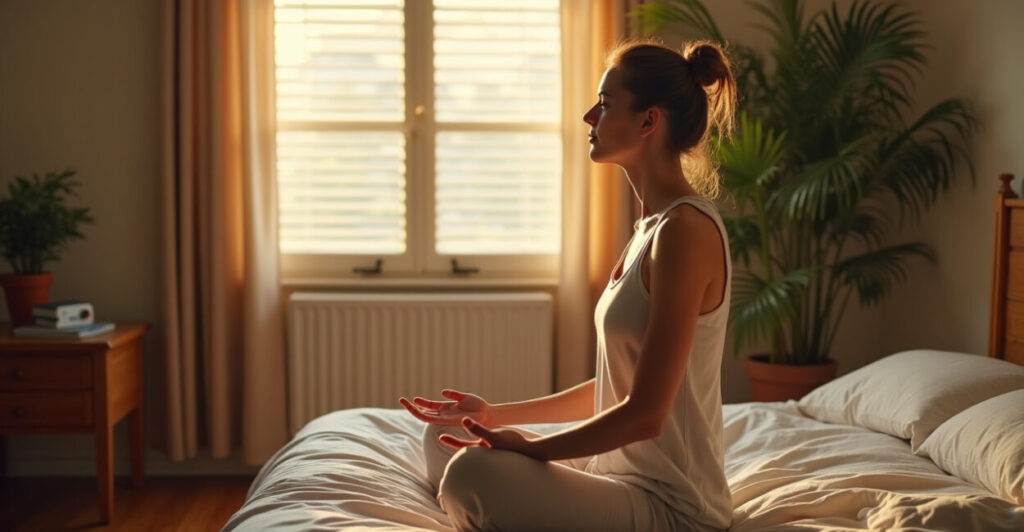
Fast facts: controlled breathing reduces sympathetic “fight-or-flight” activity. Box breathing is simple and science-backed. Another trick is extended exhale: inhale 4, exhale 7. Longer exhales cue your vagus nerve and signal safety to the brain. Use box breathing to steady the heart, then one extended exhale to send the “I’ve got this” message. These two tweaks alone can cut the adrenaline spike that comes with reading email first thing.
How the Tiny Stretches Reset Your Posture and Mood
Sitting at a desk all day tightens hips and rounds shoulders. A minute of targeted movement loosens that tension and changes how your brain feels. A forward fold lowers blood pressure; a chest opener improves breathing depth. Movement alters perception — you literally feel less overwhelmed when your body is open and mobile. Expect more energy and fewer shallow breaths. It’s not yoga class; it’s a practical reset you can do in socks.
Prioritization Hacks for People Who Hate to Plan
The 1-3 Prioritize hack is brutal and kind. Pick 1 non-negotiable that moves the needle. List 3 smaller wins that are realistic. Stop. Don’t make a 12-item to-do list before coffee — that’s a stress bomb. This trick forces clarity. Use a single line in your notes app or a sticky note. When pressure hits at 9:00, you can act instead of spiraling. Small planning = big calm.
Common Mistakes — And What to Avoid
People sabotage short routines in predictable ways:
- Doing breath work while scrolling — defeats the purpose.
- Making the routine optional every morning — inconsistency kills benefits.
- Overcomplicating moves — simple is fast and sustainable.
- Expecting immediate magic — cortisol drops are real but subtle; trust repetition.
Avoid those and this five-minute habit will stick and deliver.
Before and After: A Surprising Comparison
Expectation: you’ll need a long meditation to feel calm. Reality: five minutes of structured breath and movement reduces stress markers and sharpens focus. Imagine two starts to a workday: one with frantic email triage and tight shoulders; the other with an open chest, steady breath, and a single prioritized task. The latter wins. It’s not fluff — it changes your physiology and how you approach the morning.
For context and evidence, studies on breath regulation and stress reduction are well documented by institutions like the National Institute of Mental Health and breathing research summarized by universities such as Harvard University. Use those findings to trust the tiny practice.
Try this for a week. Notice one small difference: less reactivity at 9 a.m. That’s the change that compounds.
Final thought: Big results don’t require big time. Five minutes of intention can reshape an entire day. Start tomorrow. No gear, no perfect posture — just a deliberate five minutes before the noise begins.
How Soon Will I Notice Less Stress After Doing This Routine?
Most people report feeling calmer within the first session because breathing and movement change nervous system signals quickly. Physiological markers like heart rate and respiration can shift in minutes. Psychological benefits — clearer thinking and lower perceived stress — often show after a few repeated mornings. Do it daily for a week to see consistent change. The key is repetition: five minutes every morning beats one long session every few days.
Can I Do the Sequence If I’m Stiff or Injured?
Yes, with tweaks. The moves are intentionally gentle. If you have a specific injury, avoid anything that causes pain and focus on breathing and small mobility in safe ranges. Replace lunges with seated hip lifts or sit-to-stand repetitions. If in doubt, check with a medical professional or physical therapist. The breathing work is universally helpful and low risk, so you can gain benefits even when movement must be limited.
What If I Miss a Morning — Does That Ruin the Habit?
Missing once doesn’t break the habit. Habits grow by repetition, not perfection. If you miss a day, do two small sessions the next morning or simply restart. Avoid the all-or-nothing mindset that turns a single miss into abandonment. Track wins, not failures: each successful five-minute practice reinforces the loop that lowers stress and improves focus.
How Do I Fit This Into Travel Mornings or Hotel Stays?
The routine is travel-friendly by design. You don’t need a mat or much space — even a hotel room corner works. Use the breath sequence and seated stretches if standing space is tight. The prioritize hack fits on a phone note. If time is fragmented, split the five minutes into two short bursts. The adaptability is what makes the routine reliable on the road.
Can I Combine This with Caffeine or Meditation Without Losing Benefits?
Yes. Do the five-minute routine before caffeine to get the physiological calm baseline. If you already drank coffee, it still helps — breath work counters the jittery effects. You can also layer this routine into a longer mindfulness practice later. Think of it as a primer: it prepares your body and mind for deeper meditation or focused work, enhancing whatever comes next.